
Advanced Synthesis of D-2-Chloropropionyl Chloride for Commercial Scale-Up
The pharmaceutical industry continuously seeks robust synthetic routes for critical intermediates that balance high purity with economic viability. Patent CN112479853B introduces a groundbreaking preparation method for D-2-chloropropionyl chloride, a pivotal building block for parenteral nutrition alanyl glutamine and the anti-inflammatory drug loxoprofen sodium. This technology addresses long-standing challenges in the field by utilizing L-ethyl lactate as a stable starting material, bypassing the polymerization issues associated with anhydrous lactic acid. The innovation lies in a sophisticated three-step sequence involving parameter-optimized chlorination, a novel resin-catalyzed hydrolysis, and final chloroacylation. For R&D directors and procurement specialists, this patent represents a significant leap forward, offering a pathway to achieve 99.4% purity with an impressive average yield of 93.4% at the 10 kg scale, all while eliminating the need for costly rectification equipment.
The Limitations of Conventional Methods vs. The Novel Approach
The Limitations of Conventional Methods
Historically, the synthesis of D-2-chloropropionyl chloride has been plagued by inefficiencies and safety hazards inherent to traditional raw materials. One common approach utilizes anhydrous L-lactic acid reacted directly with thionyl chloride in the presence of organic bases like pyridine. However, anhydrous L-lactic acid is prone to self-polymerization, which reduces the effective concentration of the reactant and complicates stoichiometry. Furthermore, commercially available lactic acid often contains water, which is incompatible with the water-sensitive thionyl chloride system, leading to violent reactions and reduced yields. Another prior art method employs L-methyl lactate followed by hydrolysis using sodium hydroxide. This alkaline hydrolysis step carries a severe risk of attacking the chloro group itself, necessitating complex post-treatment with hydrochloric acid for pH regulation and multiple chloroform extractions. These legacy processes not only generate substantial hazardous waste but also require energy-intensive rectification towers to separate the resulting complex mixture of byproducts.
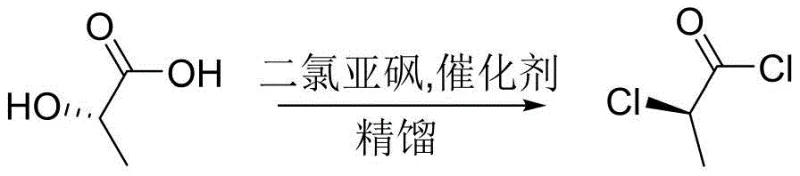

The Novel Approach
In stark contrast, the methodology disclosed in CN112479853B revolutionizes the production landscape by introducing a resin/formic acid catalytic system for the hydrolysis step. This approach begins with the chlorination of L-ethyl lactate, a stable and commercially abundant ester, avoiding the pitfalls of lactic acid polymerization. The core innovation occurs during the hydrolysis of the intermediate D-2-ethyl chloropropionate. Instead of harsh alkaline conditions, the process employs a cation exchange resin (such as 732 type) combined with anhydrous formic acid and optimized water content (7-15%). This specific catalytic environment effectively inhibits the hydrolysis of the ortho-chloro group, a common side reaction in older methods. Consequently, the intermediate D-2-chloropropionic acid is obtained with exceptional purity, allowing the final product to be isolated via simple conventional distillation rather than complex rectification. This shift not only simplifies the operational workflow but also drastically reduces the capital expenditure required for plant infrastructure.

Mechanistic Insights into Resin-Catalyzed Hydrolysis and Chloroacylation
The success of this synthesis hinges on the precise control of reaction parameters and the unique role of the solid acid catalyst. In the initial chlorination step, L-ethyl lactate reacts with thionyl chloride at cryogenic temperatures ranging from -10 to 10 °C. This low-temperature addition is critical for managing the exothermic nature of the reaction and preventing the formation of elimination byproducts. Following the addition, the mixture is heated to 65-70 °C to ensure complete conversion to D-2-ethyl chloropropionate. The subsequent hydrolysis step is where the chemical elegance of the patent shines. The sulfonic acid groups on the resin surface provide localized acidic sites that activate the carbonyl oxygen of the ester, facilitating nucleophilic attack by water molecules. Crucially, the presence of formic acid modulates the acidity and solubility, creating a homogeneous-like environment that enhances mass transfer without compromising the stability of the chlorine atom. This selective hydrolysis mechanism ensures that the ester bond is cleaved efficiently while the C-Cl bond remains intact, a balance that is difficult to achieve with liquid acids or bases alone.
Impurity control is further enhanced by the recyclability of the resin catalyst. Unlike homogeneous catalysts that remain in the solution and require neutralization, the solid resin can be filtered off, regenerated, and reused, thereby removing a potential source of metallic or organic contamination from the final product stream. The final chloroacylation step mirrors the first, reacting the purified D-2-chloropropionic acid with thionyl chloride at 0-5 °C before heating to 45-65 °C. The high purity of the acid intermediate, secured by the previous resin-catalyzed step, ensures that the final distillation yields D-2-chloropropionyl chloride with a purity exceeding 99%. This mechanistic robustness translates directly into a cleaner impurity profile, reducing the burden on downstream purification and quality control laboratories.
How to Synthesize D-2-Chloropropionyl Chloride Efficiently
Implementing this synthesis route requires strict adherence to the thermal and stoichiometric parameters defined in the patent to maximize yield and safety. The process is designed to be scalable, moving seamlessly from laboratory verification to industrial production. Operators must carefully monitor the water content during the hydrolysis phase, maintaining it between 7% and 15% to optimize the resin activity without promoting side reactions. The following guide outlines the standardized operational procedure derived from the patent examples, ensuring reproducibility and high-quality output for commercial manufacturing.
- Chlorinate L-ethyl lactate with thionyl chloride and a catalyst at -10 to 10 °C, then heat to 65-70 °C to form D-2-ethyl chloropropionate.
- Hydrolyze the intermediate using a recyclable resin and anhydrous formic acid system at 70-100 °C to obtain D-2-chloropropionic acid.
- React the acid with thionyl chloride at 0-5 °C, heat to 45-65 °C, and distill to isolate the final D-2-chloropropionyl chloride product.
Commercial Advantages for Procurement and Supply Chain Teams
For procurement managers and supply chain heads, the transition to this novel synthesis route offers compelling economic and logistical advantages that extend beyond simple yield improvements. The elimination of rectification towers represents a significant reduction in capital expenditure (CAPEX) for new production lines and lowers energy consumption for existing facilities. By replacing hazardous sodium hydroxide and complex extraction protocols with a recyclable resin system, the process inherently reduces the volume of chemical waste and the associated disposal costs. This aligns perfectly with modern green chemistry initiatives and environmental compliance standards, mitigating regulatory risks for manufacturing sites.
- Cost Reduction in Manufacturing: The ability to recycle the resin catalyst and anhydrous formic acid creates a closed-loop system that significantly lowers raw material consumption over time. Furthermore, the omission of rectification equipment reduces both the initial investment in specialized glass-lined steel columns and the ongoing utility costs for heating and cooling. The simplified work-up procedure, which avoids multiple solvent extractions and pH adjustments, reduces labor hours and solvent purchase volumes, leading to substantial overall cost savings in the production of this high-value intermediate.
- Enhanced Supply Chain Reliability: Utilizing L-ethyl lactate as a starting material provides a more stable supply chain compared to anhydrous lactic acid, which is sensitive to moisture and storage conditions. The robustness of the resin-catalyzed hydrolysis means the process is less susceptible to batch-to-batch variability caused by raw material fluctuations. This consistency ensures reliable delivery schedules for downstream API manufacturers, reducing the risk of production stoppages due to intermediate shortages or quality failures.
- Scalability and Environmental Compliance: The process has been successfully verified at the 10 kg level, demonstrating its readiness for commercial scale-up to multi-ton capacities. The reduction in hazardous waste generation, particularly the avoidance of chloroform extractions and alkaline wastewater, simplifies effluent treatment requirements. This environmental friendliness facilitates easier permitting for new plants and ensures long-term operational continuity in regions with strict environmental regulations.
Frequently Asked Questions (FAQ)
The following questions address common technical and commercial inquiries regarding the implementation of this patented technology. These insights are derived directly from the experimental data and beneficial effects described in the patent documentation, providing clarity for technical teams evaluating this route for adoption.
Q: Why is the resin/formic acid system superior to sodium hydroxide for hydrolysis?
A: Traditional sodium hydroxide hydrolysis poses a significant risk of hydrolyzing the sensitive chloro group, leading to impurities and requiring complex pH regulation and extraction. The novel resin/formic acid system operates under milder, controlled acidic conditions that specifically target the ester bond while preserving the chloro functionality, significantly improving yield and purity without hazardous waste generation.
Q: How does this method reduce equipment costs for large-scale production?
A: Conventional methods often require complex rectification towers to separate difficult byproducts formed during harsh hydrolysis. By optimizing the catalytic system and moisture content, this patent enables the separation of high-purity D-2-chloropropionyl chloride using conventional distillation. This eliminates the need for expensive rectification columns, drastically lowering CAPEX and energy consumption for manufacturing facilities.
Q: What is the scalability potential of this synthesis route?
A: The process has been verified at the 10 kg level with an average single-step yield of 93.4% and purity of 99.4%. The use of recyclable resin catalysts and the avoidance of water-sensitive anhydrous lactic acid make the process robust and highly scalable for industrial tonnage production, ensuring consistent supply chain reliability.
Partnering with NINGBO INNO PHARMCHEM: Your Reliable D-2-Chloropropionyl Chloride Supplier
At NINGBO INNO PHARMCHEM, we recognize the critical role that high-purity intermediates play in the global pharmaceutical supply chain. Our team of expert chemists has extensively analyzed the technological breakthroughs presented in CN112479853B and possesses the capability to implement this advanced resin-catalyzed route immediately. We boast extensive experience scaling diverse pathways from 100 kgs to 100 MT/annual commercial production, ensuring that your project transitions smoothly from pilot scale to full industrial output. Our state-of-the-art facilities are equipped with rigorous QC labs capable of meeting stringent purity specifications, guaranteeing that every batch of D-2-chloropropionyl chloride meets the exacting standards required for parenteral nutrition and analgesic drug manufacturing.
We invite you to collaborate with us to leverage this cost-effective and environmentally sustainable synthesis method. By partnering with our technical procurement team, you can request a Customized Cost-Saving Analysis tailored to your specific volume requirements. We encourage you to contact us today to obtain specific COA data and comprehensive route feasibility assessments, ensuring that your supply chain is optimized for both performance and profitability in the competitive global market.