
Scalable Biocatalytic Synthesis of Silodosin Intermediates Using Engineered ω-Transaminase Mutants
The pharmaceutical industry is constantly seeking more efficient and sustainable pathways for the production of critical urological agents, particularly for the synthesis of Silodosin, a potent alpha-1A adrenergic receptor antagonist used in the treatment of benign prostatic hyperplasia. A significant technological breakthrough in this domain is documented in Chinese Patent CN115896060A, which discloses a novel class of ω-transaminase mutants derived from Arthrobacter species. This patent details the rational design and application of specific enzyme variants, namely H62A and S223A, which demonstrate superior catalytic performance in the asymmetric synthesis of Silodosin intermediates. Unlike traditional chemical methods that often struggle with stereocontrol and environmental impact, this biocatalytic approach leverages protein engineering to achieve conversion rates exceeding 92% and exceptional optical purity with ee values greater than 99.29%. For a reliable silodosin intermediate supplier, adopting such advanced enzymatic technologies represents a paradigm shift towards greener chemistry and robust manufacturing capabilities. The structural complexity of the target molecule requires precise stereochemical control, which these engineered enzymes provide naturally.
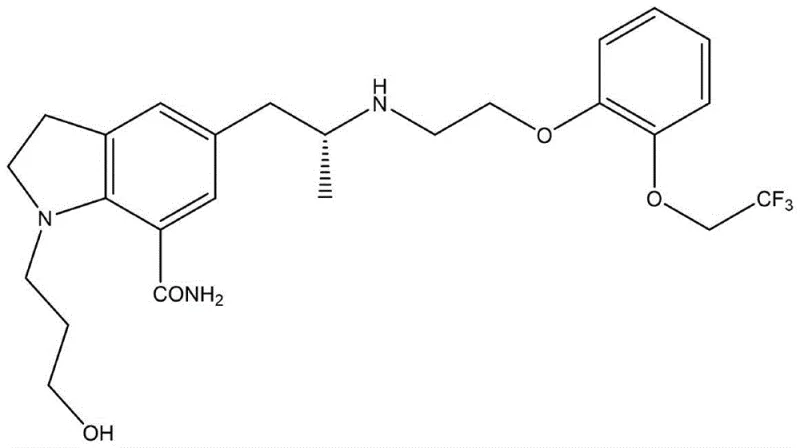
The implementation of this technology addresses the growing demand for high-purity silodosin intermediate products that meet stringent regulatory standards. By utilizing site-directed mutagenesis to optimize the active site of the transaminase, the inventors have created a biocatalyst that operates efficiently under mild conditions, specifically at an optimum temperature of 30°C. This not only reduces energy consumption but also minimizes the formation of thermal degradation by-products. The ability to directly convert the silodosin intermediate ketone into the corresponding chiral amine in a single pot simplifies the downstream processing significantly. As global supply chains face pressure to reduce carbon footprints, this patent offers a viable route for cost reduction in pharmaceutical intermediates manufacturing by replacing hazardous reagents with benign biological catalysts. The implications for commercial scale-up are profound, offering a pathway to consistent quality and reduced operational risks.
The Limitations of Conventional Methods vs. The Novel Approach
The Limitations of Conventional Methods
Historically, the preparation of optically pure Silodosin intermediates has been fraught with significant technical and economic challenges that hinder efficient commercial scale-up of complex pharmaceutical intermediates. Traditional synthetic routes often rely on chiral resolution methods, as described in various prior art patents, which inherently suffer from a maximum theoretical yield of 50% unless dynamic kinetic resolution is employed, leading to substantial material loss and increased waste generation. Alternatively, methods utilizing chiral auxiliaries or induction agents introduce expensive reagents that drive up the raw material costs and require additional synthetic steps for installation and removal, thereby complicating the process flow. Furthermore, approaches that construct the chiral center through multi-step coupling reactions often result in cumulative yield losses and difficulties in controlling impurity profiles, which can compromise the safety and efficacy of the final drug product. These conventional chemical strategies frequently necessitate harsh reaction conditions, including extreme temperatures or pressures, and the use of heavy metal catalysts that pose severe environmental disposal issues and require rigorous purification to meet residual metal specifications. Consequently, manufacturers face prolonged production cycles and inflated operational expenditures, making it difficult to maintain competitiveness in a price-sensitive generic pharmaceutical market.
The Novel Approach
In stark contrast, the novel biocatalytic approach disclosed in the patent utilizes engineered ω-transaminase mutants to overcome these historical bottlenecks through a streamlined, one-pot enzymatic transformation. By employing the H62A and S223A mutants, the process achieves a direct asymmetric amination of the ketone precursor with conversion rates surpassing 92%, effectively doubling the efficiency compared to standard resolution techniques. This method eliminates the need for expensive chiral pool starting materials or auxiliary groups, relying instead on inexpensive amino donors such as isopropylamine or D-alanine, which drives down the overall cost of goods sold. The reaction proceeds in an aqueous buffer system at a mild 30°C, drastically reducing energy requirements and enhancing process safety by avoiding volatile organic solvents and hazardous reagents. Moreover, the by-product generated, typically acetophenone when using methylbenzylamine, is easily separated from the aqueous phase, facilitating a cleaner work-up and higher isolation yields of the desired amine. This technological leap not only ensures reducing lead time for high-purity silodosin intermediates but also aligns perfectly with modern green chemistry principles, offering a sustainable alternative that is readily adaptable to large-scale fermenters and reactor systems.
Mechanistic Insights into ω-Transaminase Catalyzed Asymmetric Amination
The success of this synthetic route lies in the sophisticated protein engineering strategy employed to modify the ω-transaminase active site, specifically targeting steric hindrance that limits substrate accessibility in the wild-type enzyme. Through homology modeling and molecular docking simulations, the inventors identified that amino acid residues at positions 62 and 223 created a spatial bottleneck that prevented the bulky Silodosin intermediate ketone from optimally aligning with the pyridoxal phosphate (PLP) cofactor. By mutating Histidine at position 62 to Alanine (H62A) and Serine at position 223 to Alanine (S223A), the steric bulk was significantly reduced, creating a more open and accommodating binding pocket. This structural modification allows the substrate to enter the active site with greater freedom, facilitating the formation of the external aldimine intermediate, which is the crucial step in the transamination mechanism. The alanine substitutions, being smaller and less polar than the original residues, minimize unfavorable steric clashes and electrostatic repulsions, thereby lowering the activation energy required for the hydride transfer and subsequent hydrolysis steps. This rational design results in a mutant enzyme that exhibits specific activities 1.4 times and 1.24 times higher than the wild type for H62A and S223A respectively, demonstrating the power of structure-guided enzyme evolution in optimizing industrial biocatalysts.
From an impurity control perspective, the high stereoselectivity of these mutants is paramount for ensuring the quality of the final pharmaceutical ingredient. The engineered active site imposes strict geometric constraints on the transition state, favoring the formation of the (R)-enantiomer with an enantiomeric excess (ee) consistently above 99%. This high level of chiral discrimination prevents the formation of the unwanted (S)-isomer, which would otherwise act as a difficult-to-remove impurity requiring costly recrystallization or chromatographic purification steps. The mechanism ensures that the protonation of the quinonoid intermediate occurs exclusively from one face of the planar structure, dictated by the precise orientation of the substrate within the mutated binding pocket. Furthermore, the use of whole-cell biocatalysts or crude enzyme extracts in a buffered aqueous system minimizes side reactions such as non-enzymatic hydrolysis or racemization that are common in harsh chemical environments. The result is a reaction profile characterized by high fidelity and cleanliness, where the primary impurity is the unreacted ketone or the simple ketone by-product from the amine donor, both of which are easily managed during downstream processing. This mechanistic robustness provides R&D teams with confidence in the reproducibility and scalability of the process across different batches and production scales.
How to Synthesize Silodosin Intermediate Efficiently
The practical implementation of this biocatalytic route involves a series of well-defined steps that bridge the gap between genetic engineering and chemical manufacturing. The process begins with the construction of recombinant E. coli strains harboring the mutated transaminase genes, followed by fermentation to produce the biocatalyst in sufficient quantities. Once the enzyme is prepared, either as a cell suspension or a purified lysate, it is introduced into a reaction vessel containing the silodosin ketone substrate, an appropriate amino donor, and the essential PLP cofactor. The reaction is maintained under controlled pH and temperature conditions to maximize enzyme stability and turnover number. While the specific parameters such as buffer concentration and co-solvent percentage can be optimized based on substrate solubility, the core principle remains the utilization of the H62A or S223A mutant to drive the equilibrium towards the desired chiral amine. For detailed operational protocols regarding strain construction, fermentation conditions, and specific reaction setups, please refer to the standardized synthesis guide below.
- Preparation of recombinant E. coli strains expressing H62A or S223A ω-transaminase mutants via site-directed mutagenesis and fermentation.
- Formulation of the reaction system containing silodosin ketone substrate, amino donor (e.g., isopropylamine), PLP cofactor, and cell suspension in phosphate buffer.
- Execution of the one-pot reaction at 30°C followed by separation and purification to isolate the chiral amine intermediate with >99% ee.
Commercial Advantages for Procurement and Supply Chain Teams
For procurement managers and supply chain directors, the adoption of this enzymatic technology offers compelling strategic advantages that extend beyond mere technical feasibility. The shift from multi-step chemical synthesis to a concise biocatalytic process fundamentally alters the cost structure and risk profile of the supply chain. By eliminating the need for precious metal catalysts and expensive chiral resolving agents, the raw material costs are significantly reduced, providing a buffer against market volatility in chemical pricing. Furthermore, the simplified workflow reduces the number of unit operations, which translates to lower capital expenditure on equipment and reduced labor hours per kilogram of product. The mild reaction conditions also imply lower energy bills and reduced wear and tear on reactor vessels, contributing to long-term operational savings. From a supply continuity standpoint, the reliance on fermentation-derived enzymes ensures a renewable and scalable source of the catalyst, mitigating the risks associated with the supply of rare earth metals or specialized chemical reagents that are often subject to geopolitical constraints. This resilience is critical for maintaining uninterrupted production schedules for key pharmaceutical ingredients.
- Cost Reduction in Manufacturing: The elimination of expensive chiral auxiliaries and the reduction in synthetic steps lead to a drastic simplification of the production process, which inherently lowers the cost of goods sold. The high conversion efficiency means less raw material is wasted, and the ease of by-product removal reduces the consumption of solvents and energy during purification. Additionally, the ability to use cheaper amino donors like isopropamine instead of costly chiral amines further drives down the variable costs associated with each production batch. These cumulative savings allow for more competitive pricing strategies in the generic drug market while maintaining healthy profit margins.
- Enhanced Supply Chain Reliability: The use of robust, engineered bacterial strains for enzyme production ensures a stable and consistent supply of the biocatalyst, independent of fluctuating chemical markets. The process tolerance to varying substrate concentrations and the stability of the enzyme under reaction conditions reduce the likelihood of batch failures, thereby improving on-time delivery performance. Moreover, the aqueous nature of the reaction reduces the dependency on large volumes of hazardous organic solvents, simplifying logistics and storage requirements for raw materials. This reliability is essential for securing long-term contracts with major pharmaceutical companies that prioritize supply security.
- Scalability and Environmental Compliance: The 'one-pot' nature of the reaction facilitates easy scale-up from laboratory benchtop to industrial fermenters without the need for complex process re-engineering. The reduction in hazardous waste generation and the avoidance of heavy metals align with increasingly stringent environmental regulations, reducing the costs associated with waste disposal and compliance reporting. The biodegradable nature of the enzyme and the aqueous waste stream minimizes the environmental footprint of the manufacturing site, enhancing the corporate sustainability profile. This eco-friendly approach not only meets regulatory standards but also appeals to socially responsible investors and customers.
Frequently Asked Questions (FAQ)
The following questions address common inquiries regarding the technical specifications and commercial viability of this patented biocatalytic process. Understanding these details is crucial for stakeholders evaluating the integration of this technology into their existing manufacturing portfolios. The answers are derived directly from the experimental data and beneficial effects reported in the patent documentation, ensuring accuracy and relevance for technical decision-makers. These insights cover aspects ranging from enzyme performance metrics to downstream processing considerations, providing a comprehensive overview of the technology's capabilities.
Q: What are the advantages of the H62A and S223A mutants over the wild-type enzyme?
A: The H62A and S223A mutants exhibit significantly higher specific activity (1.4x and 1.24x respectively) compared to the wild type, allowing for faster conversion rates and reduced enzyme loading in industrial applications.
Q: How does this biocatalytic method improve optical purity?
A: The engineered active sites reduce steric hindrance, enabling highly stereoselective amination that consistently achieves an enantiomeric excess (ee) value greater than 99%, eliminating the need for costly chiral resolution steps.
Q: Is this process suitable for large-scale manufacturing?
A: Yes, the process utilizes a 'one-pot' strategy with mild reaction conditions (30°C) and readily available substrates, making it highly scalable and environmentally friendly for commercial production.
Partnering with NINGBO INNO PHARMCHEM: Your Reliable Silodosin Intermediate Supplier
At NINGBO INNO PHARMCHEM, we recognize the transformative potential of the ω-transaminase mutant technology described in Patent CN115896060A for the production of high-quality Silodosin intermediates. As a leading CDMO partner, we possess the extensive experience scaling diverse pathways from 100 kgs to 100 MT/annual commercial production, ensuring that the transition from laboratory innovation to industrial reality is seamless and efficient. Our state-of-the-art facilities are equipped with advanced fermentation suites and downstream processing units capable of handling sensitive biocatalytic reactions with precision. We adhere to stringent purity specifications and operate rigorous QC labs to guarantee that every batch of Silodosin intermediate meets the highest international pharmacopeial standards. Our team of expert chemists and biologists is dedicated to optimizing reaction parameters to maximize yield and minimize impurities, delivering a product that supports the efficacy and safety of the final drug formulation.
We invite pharmaceutical companies and contract manufacturers to collaborate with us to leverage this cutting-edge technology for their supply chains. By partnering with our technical procurement team, you can obtain a Customized Cost-Saving Analysis tailored to your specific volume requirements and quality targets. We encourage you to reach out to request specific COA data and route feasibility assessments to understand how our biocatalytic capabilities can enhance your project's timeline and budget. Let us help you secure a sustainable and cost-effective supply of critical urological intermediates, driving your business forward with innovation and reliability.