
Advanced TbSADH Mutants for Commercial Scale-up of Complex Pharmaceutical Intermediates
The pharmaceutical industry continuously seeks robust biocatalytic solutions for the synthesis of chiral building blocks, particularly for antihistamine precursors like (S)-(4-chlorophenyl)pyridine-2-methanol. Patent CN111100851B discloses a groundbreaking advancement in this field by engineering alcohol dehydrogenase TbSADH derived from Thermoanaerobacter brockii. While the wild-type enzyme exhibits hyperthermophilic stability, it historically lacked activity towards bulky biaryl ketones. Through semi-rational directed evolution, researchers have successfully mutated key amino acid residues within the catalytic center pocket, specifically at positions 39, 42, 84, 85, 86, 104, 110, and 294. This innovation transforms an inactive wild-type protein into a highly efficient biocatalyst capable of asymmetric reduction with unprecedented conversion rates and enantiomeric excess. For R&D directors and procurement specialists, this represents a pivotal shift from traditional chemical synthesis to sustainable enzymatic processes, offering a reliable pharmaceutical intermediate supplier pathway that aligns with green chemistry principles.
The Limitations of Conventional Methods vs. The Novel Approach
The Limitations of Conventional Methods
Traditionally, the synthesis of chiral biaryl alcohols has relied heavily on chemical asymmetric reduction or non-engineered biological systems, both of which present significant operational hurdles. Chemical methods often employ precious metal catalysts such as Ruthenium or Rhodium complexes under high hydrogen pressure (8-10 bar), necessitating specialized high-pressure equipment and stringent safety protocols. Furthermore, these routes frequently require multi-step protection and deprotection strategies for functional groups like the pyridine nitrogen, drastically increasing material costs and waste generation. On the biological front, earlier attempts using wild-type yeasts or unmodified carbonyl reductases resulted in poor stereocontrol, with enantiomeric excess values often below 60%, or insufficient activity towards sterically hindered substrates. These limitations create bottlenecks in cost reduction in pharmaceutical intermediate manufacturing, as purification becomes complex and yields remain suboptimal for commercial viability.
The Novel Approach
The novel approach detailed in the patent leverages directed evolution to reshape the substrate-binding pocket of TbSADH, enabling it to accommodate large biaryl structures that were previously inaccessible. By introducing specific mutations such as A85G/I86L or I86P/L294I, the enzyme achieves conversion rates exceeding 98% and enantiomeric excess values greater than 99% for the desired (S)-enantiomer. This biocatalytic route operates under mild conditions (30°C, atmospheric pressure) in aqueous buffers, eliminating the need for hazardous organic solvents during the reaction phase. The process utilizes isopropanol as a hydrogen donor, which serves the dual purpose of driving the equilibrium forward and regenerating the necessary NADP+ cofactor in situ. 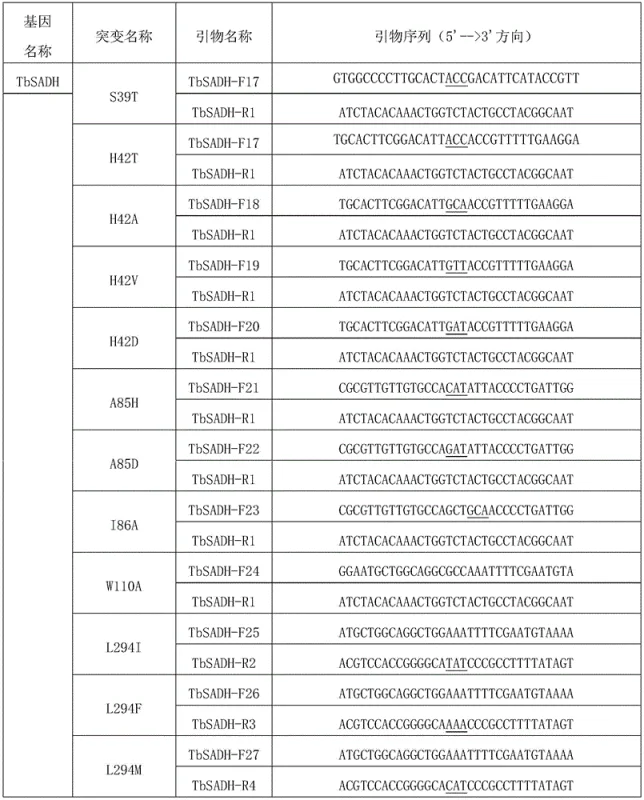 This streamlined methodology not only enhances the purity profile of the final product but also significantly simplifies the downstream processing requirements, making it an ideal candidate for the commercial scale-up of complex pharmaceutical intermediates.
Mechanistic Insights into TbSADH-Catalyzed Asymmetric Reduction
The success of this biocatalytic system lies in the precise modification of the enzyme's active site architecture. The wild-type TbSADH possesses a catalytic pocket that is too restrictive for bulky diaryl ketones, leading to steric clashes that prevent substrate binding. The patent identifies critical residues, particularly Alanine 85 and Isoleucine 86 located in the small pocket of the catalytic center, as primary targets for mutation. Substituting these residues with smaller or differently charged amino acids (e.g., Glycine, Leucine, Valine) expands the pocket volume and alters the hydrophobic interactions, allowing the bulky aryl rings of the substrate to orient correctly for hydride transfer. Additionally, mutations at position 42 in the large pocket further fine-tune the enantioselectivity by stabilizing the transition state of the preferred enantiomer. This rational design ensures that the pro-chiral ketone is reduced exclusively to the (S)-alcohol configuration, which is the pharmacologically active form required for downstream drug synthesis.
Impurity control is inherently managed through the high specificity of the engineered enzyme. Unlike chemical catalysts that may promote side reactions such as over-reduction or dehalogenation of the chloro-substituent, the TbSADH mutants exhibit strict chemoselectivity for the carbonyl group. The use of whole-cell biocatalysts or crude enzyme powders further minimizes the introduction of extraneous contaminants, as the cellular matrix acts as a natural barrier against non-specific interactions. The reaction environment, maintained at a physiological pH of 7.4 using phosphate buffers, ensures enzyme stability throughout the 24-hour reaction window. This robustness reduces the formation of degradation by-products, resulting in a cleaner reaction profile that facilitates easier isolation of the target chiral alcohol. For quality assurance teams, this means a more consistent impurity profile and reduced risk of genotoxic impurities often associated with transition metal catalysts.
How to Synthesize (S)-(4-chlorophenyl)pyridine-2-methanol Efficiently
The synthesis protocol outlined in the patent provides a scalable framework for producing high-purity chiral alcohols using recombinant E. coli strains expressing the optimized TbSADH mutants. The process begins with the cultivation of the engineered bacteria in TB medium followed by induction with IPTG at low temperatures to maximize soluble protein expression. Once the biomass is harvested, it can be used directly as whole cells or processed into crude enzyme powder, offering flexibility depending on the specific reactor setup and downstream purification capabilities. The biotransformation is conducted in a simple aqueous system containing the ketone substrate, a catalytic amount of NADP+, and excess isopropanol. This modular approach allows manufacturers to adapt the process from laboratory screening to industrial fermentation with minimal re-optimization, ensuring a smooth technology transfer.
- Construct recombinant E. coli BL21(DE3) strains carrying the optimized TbSADH mutant genes (e.g., A85G/I86L) in pRSFDuet-1 vectors.
- Induce protein expression at 20°C with 0.1 mmol/L IPTG for 18 hours to ensure soluble enzyme production.
- Perform biocatalysis in phosphate buffer (pH 7.4) with substrate, isopropanol as hydrogen donor, and NADP+ cofactor at 30°C.
Commercial Advantages for Procurement and Supply Chain Teams
For procurement managers and supply chain heads, the adoption of this TbSADH mutant technology offers substantial strategic advantages beyond mere technical performance. The shift from chemical catalysis to biocatalysis fundamentally alters the cost structure of manufacturing chiral intermediates. By eliminating the reliance on expensive noble metal catalysts and high-pressure hydrogenation equipment, the capital expenditure (CAPEX) and operational expenditure (OPEX) are significantly reduced. Furthermore, the removal of protection and deprotection steps shortens the overall synthetic route, leading to substantial cost savings in raw materials and labor. The ability to use crude enzyme preparations or whole cells avoids the costly purification of the enzyme itself, further driving down the unit cost of the biocatalyst. These factors collectively contribute to a more competitive pricing model for the final API intermediate, enhancing margin potential for downstream drug manufacturers.
Supply chain reliability is another critical benefit derived from this biological platform. The recombinant strains are based on E. coli, a well-characterized and robust host organism that can be fermented to high cell densities using standard industrial infrastructure. This ensures a consistent and scalable supply of the biocatalyst, mitigating risks associated with the sourcing of rare earth metals or specialized chemical reagents that are often subject to geopolitical volatility. The mild reaction conditions also reduce energy consumption, as there is no need for heating to high temperatures or maintaining high pressures, aligning with corporate sustainability goals. Additionally, the aqueous nature of the reaction minimizes the generation of hazardous organic waste, simplifying environmental compliance and waste disposal logistics. This enhanced supply chain reliability ensures reducing lead time for high-purity pharmaceutical intermediates, allowing for faster response to market demands.
Scalability and environmental compliance are seamlessly integrated into this process design. The patent demonstrates successful conversion at substrate concentrations up to 50 mmol/L using whole cells, indicating readiness for kilogram-to-ton scale production. The use of isopropanol as a co-substant generates acetone as a by-product, which is easily removed due to its volatility, simplifying the work-up procedure. From an environmental perspective, the process adheres to green chemistry principles by operating in water, avoiding toxic solvents, and utilizing renewable biocatalysts. This reduces the environmental footprint of the manufacturing process, which is increasingly important for regulatory approvals and corporate social responsibility reporting. The combination of high efficiency, low waste, and scalable biology makes this technology a superior choice for modern pharmaceutical manufacturing.
Frequently Asked Questions (FAQ)
The following questions address common technical and commercial inquiries regarding the implementation of TbSADH mutants in industrial settings. These insights are derived directly from the experimental data and embodiments provided in the patent documentation, ensuring accuracy and relevance for process development teams. Understanding these nuances is crucial for evaluating the feasibility of integrating this biocatalytic route into existing production lines. Engaging with these details early in the project lifecycle can help identify potential optimization opportunities and mitigate technical risks.
Q: What is the stereoselectivity of the optimized TbSADH mutants?
A: The optimized mutants, such as A85G/I86L, demonstrate exceptional stereoselectivity, achieving >99% ee for the (S)-enantiomer of (4-chlorophenyl)pyridine-2-methanol, significantly outperforming wild-type enzymes.
Q: Can these mutants accept bulky biaryl substrates?
A: Yes, through directed evolution targeting the catalytic pocket (positions 85, 86, etc.), the substrate spectrum was expanded to accept bulky diaryl ketones that the wild-type TbSADH could not process.
Q: Is cofactor regeneration required for this process?
A: The process utilizes isopropanol as a sacrificial hydrogen donor, which effectively regenerates the NADP+ cofactor in situ, eliminating the need for additional expensive coupling enzymes.
Partnering with NINGBO INNO PHARMCHEM: Your Reliable (S)-(4-chlorophenyl)pyridine-2-methanol Supplier
At NINGBO INNO PHARMCHEM, we recognize the transformative potential of the TbSADH mutant technology in streamlining the production of critical chiral intermediates. As a leading CDMO partner, we possess extensive experience scaling diverse pathways from 100 kgs to 100 MT/annual commercial production, ensuring that your project transitions smoothly from benchtop discovery to full-scale manufacturing. Our facilities are equipped with state-of-the-art fermentation and biocatalysis units capable of handling recombinant E. coli strains under strict GMP guidelines. We maintain stringent purity specifications and operate rigorous QC labs to guarantee that every batch of (S)-(4-chlorophenyl)pyridine-2-methanol meets the highest quality standards required for pharmaceutical applications. Our commitment to excellence ensures that you receive a product with consistent optical purity and minimal impurities, ready for the next step in your synthesis.
We invite you to collaborate with our technical team to explore how this advanced biocatalytic route can optimize your supply chain and reduce overall production costs. By leveraging our expertise in enzyme engineering and process optimization, we can provide a Customized Cost-Saving Analysis tailored to your specific volume requirements and quality targets. We encourage you to contact our technical procurement team to request specific COA data and route feasibility assessments for your upcoming projects. Together, we can accelerate the development of life-saving medications while adhering to the highest standards of sustainability and efficiency.