
Advancing (R)-Citronellal Production: Engineered OYE2p Mutants for Industrial Biocatalysis
The global demand for high-purity chiral intermediates in the flavor, fragrance, and pharmaceutical sectors continues to drive innovation in sustainable manufacturing technologies. A pivotal advancement in this domain is detailed in Chinese Patent CN113481175B, which discloses a novel ethylenic bond reductase mutant with significantly improved activity and stereoselectivity. This intellectual property focuses on the engineering of the Old Yellow Enzyme homolog OYE2p, specifically targeting the 84th amino acid residue to create variants such as Y84V, Y84A, and Y84L. These engineered biocatalysts offer a robust solution for the asymmetric reduction of citral to produce (R)-citronellal, a critical precursor for L-menthol and Vitamin E synthesis. By shifting away from traditional chemical methods, this technology enables manufacturers to achieve superior enantiomeric purity while adhering to stricter environmental regulations.
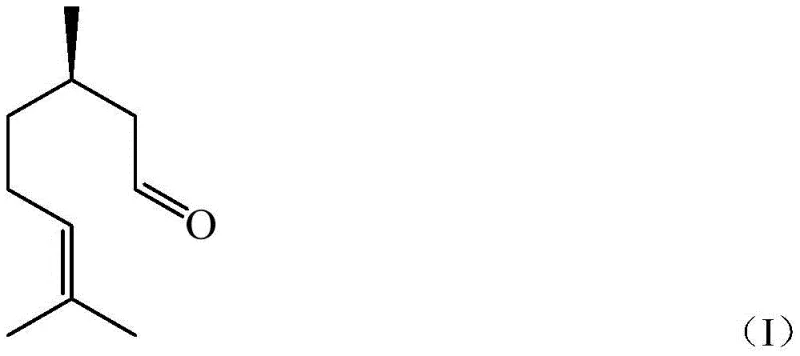
The production of (R)-citronellal has historically relied on extraction from natural essential oils or chemical synthesis, both of which present distinct limitations for large-scale industrial application. Natural extraction is constrained by agricultural variability and high costs, while conventional chemical hydrogenation often requires harsh conditions and expensive transition metal catalysts. Furthermore, standard chemical reduction frequently yields racemic mixtures, necessitating complex and yield-loss-inducing chiral resolution steps to isolate the desired (R)-enantiomer. The reliance on heavy metals also introduces significant supply chain risks regarding catalyst recovery and waste disposal compliance. Consequently, there is an urgent industry need for a reliable flavor & fragrance intermediate supplier capable of delivering bio-based alternatives that bypass these structural and economic bottlenecks.
The Limitations of Conventional Methods vs. The Novel Approach
The Limitations of Conventional Methods
Traditional synthetic routes for citronellal production predominantly utilize heterogeneous metal catalysis, often employing nickel or palladium under elevated hydrogen pressures and temperatures. This approach frequently suffers from poor stereocontrol, inherently generating racemic mixtures that require costly downstream chiral resolution steps to isolate the pharmacologically and organoleptically active (R)-isomer. Additionally, the use of transition metals introduces significant supply chain vulnerabilities related to volatile commodity pricing and stringent regulatory requirements for heavy metal residue limits in final consumer products. The necessity for high-pressure equipment also escalates capital expenditure (CAPEX) and operational safety risks, creating a barrier to entry for flexible, multi-purpose manufacturing facilities seeking to optimize their asset utilization.
The Novel Approach
In stark contrast, the biocatalytic strategy outlined in the patent leverages the precision of enzyme engineering to achieve exquisite stereocontrol under ambient conditions. By utilizing the OYE2p-Y84V mutant, the process eliminates the need for precious metal catalysts and high-pressure hydrogenation infrastructure entirely. The enzymatic route operates in an aqueous buffer system at mild temperatures, drastically reducing energy consumption and simplifying reactor design requirements. This shift not only enhances the safety profile of the manufacturing process but also aligns with green chemistry principles by minimizing hazardous waste generation. For procurement teams, this translates to a more stable cost structure insulated from the volatility of the precious metals market, ensuring consistent supply continuity for high-value chiral intermediates.
Mechanistic Insights into OYE2p-Mediated Asymmetric Reduction
The core of this technological breakthrough lies in the rational design of the enzyme's active site, specifically the mutation of the tyrosine residue at position 84. Structural analysis suggests that the bulky side chain of the wild-type tyrosine imposes steric hindrance that limits substrate access and optimal orientation within the catalytic pocket. By substituting this residue with smaller or differently shaped amino acids like valine (Y84V), the mutant enzyme creates a more favorable microenvironment for the binding of citral isomers. This modification facilitates a more efficient hydride transfer from the reduced cofactor NADH to the beta-carbon of the alpha,beta-unsaturated aldehyde, thereby accelerating the reaction rate. The result is a biocatalyst that not only processes substrates faster but also enforces a strict geometric constraint that favors the formation of the (R)-enantiomer over the (S)-form.
Furthermore, the stability and efficiency of this system are bolstered by a coupled cofactor regeneration mechanism involving glucose dehydrogenase (GDH). In this cascade, the oxidation of glucose provides the necessary reducing equivalents to recycle NAD+ back to NADH, allowing the ene-reductase to function catalytically rather than stoichiometrically. This design is critical for commercial viability, as it removes the economic burden of adding expensive cofactors in large quantities. The patent data indicates that this system maintains high activity even at substrate concentrations as high as 200mM, demonstrating robustness against substrate inhibition. Such kinetic resilience is essential for scaling up to industrial volumes, ensuring that the biocatalyst remains effective throughout the duration of the batch process without significant loss of turnover number.
How to Synthesize (R)-Citronellal Efficiently
The implementation of this biocatalytic route involves a streamlined workflow that integrates molecular biology with process chemistry. It begins with the construction of recombinant E. coli strains harboring the specific mutant genes, followed by optimized fermentation to produce the biocatalyst. The subsequent reduction reaction is performed in a controlled aqueous environment, leveraging the enzyme's high specificity to minimize byproduct formation. This approach simplifies downstream purification, as the absence of metal contaminants and organic solvents reduces the complexity of work-up procedures. For detailed technical specifications regarding strain construction and reaction parameters, please refer to the standardized synthesis guide below.
- Construct recombinant E. coli BL21(DE3) strains harboring the plasmid encoding the OYE2p-Y84V mutant gene via site-directed mutagenesis and seamless cloning.
- Cultivate the engineered bacteria in LB medium, induce expression with IPTG at 20°C, and harvest cells via centrifugation to obtain the biocatalyst.
- Perform the asymmetric reduction reaction using citral substrate, glucose dehydrogenase for cofactor regeneration, and phosphate buffer at 30°C to achieve >95% conversion and ee.
Commercial Advantages for Procurement and Supply Chain Teams
Adopting this enzymatic technology offers profound strategic benefits for organizations focused on cost reduction in flavor & fragrance intermediate manufacturing. The transition from metal-based catalysis to biocatalysis fundamentally alters the cost drivers of production, moving away from expensive reagents and energy-intensive conditions toward renewable biological systems. This shift not only lowers the direct cost of goods sold (COGS) but also mitigates regulatory risks associated with heavy metal usage. For supply chain leaders, the ability to produce high-purity materials using scalable fermentation processes ensures a more resilient supply network capable of adapting to fluctuating market demands without the lead time constraints of traditional chemical synthesis.
- Cost Reduction in Manufacturing: The elimination of precious metal catalysts such as palladium or platinum removes a significant variable cost component that is subject to global market fluctuations. Furthermore, the mild reaction conditions (30°C, atmospheric pressure) drastically reduce energy consumption compared to high-pressure hydrogenation, leading to substantial operational savings. The high stereoselectivity of the Y84V mutant also negates the need for costly chiral resolution steps, effectively doubling the theoretical yield of the desired isomer and maximizing raw material efficiency.
- Enhanced Supply Chain Reliability: Biocatalytic processes rely on fermentable sugars and standard laboratory reagents, which are widely available and less prone to geopolitical supply disruptions than specialized chemical catalysts. The use of recombinant E. coli allows for rapid scale-up from laboratory to commercial production using established fermentation infrastructure. This flexibility ensures that manufacturers can respond quickly to increased demand for (R)-citronellal, securing a steady flow of materials for downstream synthesis of menthol and vitamins.
- Scalability and Environmental Compliance: Operating in an aqueous buffer system significantly reduces the volume of organic solvents required, simplifying waste treatment and lowering the environmental footprint of the facility. The absence of toxic heavy metals in the waste stream facilitates easier compliance with increasingly stringent environmental regulations regarding effluent discharge. This eco-friendly profile enhances the brand value of the final product, appealing to consumers and partners who prioritize sustainability and green chemistry initiatives in their sourcing strategies.
Frequently Asked Questions (FAQ)
The following questions address common technical inquiries regarding the implementation and performance of the OYE2p mutant technology. These insights are derived directly from the experimental data and beneficial effects described in the patent documentation, providing clarity on the practical advantages of this biocatalytic system for industrial applications.
Q: How does the Y84V mutation improve catalytic performance compared to wild-type OYE2p?
A: The Y84V mutation significantly enhances both catalytic activity and stereoselectivity. Experimental data indicates a 40.0% increase in catalytic activity and an improvement in enantiomeric excess (ee) to greater than 95%, addressing the low selectivity issues of the wild-type enzyme.
Q: What are the optimal reaction conditions for this biocatalytic process?
A: The process operates under mild conditions, typically at 30°C in a phosphate buffer system (pH 8.5). It utilizes a coupled enzyme system with glucose dehydrogenase for NADH regeneration, allowing for high substrate loading up to 200mM.
Q: Can this method handle both E-citral and Z-citral isomers effectively?
A: Yes, unlike some previous biocatalysts that showed preference for specific isomers, the Y84V mutant demonstrates improved catalytic efficiency (kcat/Km) for both E-citral and Z-citral, making it suitable for processing commercial citral mixtures without prior separation.
Partnering with NINGBO INNO PHARMCHEM: Your Reliable (R)-Citronellal Supplier
At NINGBO INNO PHARMCHEM, we recognize the transformative potential of the OYE2p-Y84V mutant technology in reshaping the landscape of chiral intermediate production. As a premier CDMO partner, we possess extensive experience scaling diverse pathways from 100 kgs to 100 MT/annual commercial production, ensuring that innovative laboratory discoveries are seamlessly translated into robust industrial realities. Our state-of-the-art facilities are equipped with rigorous QC labs and advanced fermentation capabilities designed to meet stringent purity specifications required by the global flavor and pharmaceutical industries. We are committed to delivering high-quality (R)-citronellal that adheres to the highest standards of consistency and reliability.
We invite you to collaborate with our technical team to explore how this advanced biocatalytic route can optimize your supply chain and reduce manufacturing costs. Please contact our technical procurement team to request a Customized Cost-Saving Analysis tailored to your specific volume requirements. We are ready to provide specific COA data and comprehensive route feasibility assessments to support your R&D and sourcing decisions, ensuring a partnership built on transparency, scientific excellence, and mutual growth.