
Advanced Solid-Phase Synthesis of Bivalirudin for Scalable Pharmaceutical Manufacturing
Introduction to Advanced Bivalirudin Manufacturing
The pharmaceutical industry continuously demands more efficient and scalable routes for complex polypeptide therapeutics, particularly for anticoagulants like Bivalirudin. Patent CN112062835B introduces a groundbreaking preparation method that addresses longstanding challenges in polypeptide synthesis, specifically targeting the structural complexities of the 20-peptide sequence. This innovation leverages a hybrid strategy combining solid-phase peptide synthesis (SPPS) with fragment condensation, utilizing specialized resins such as 2-CTC and Wang resin to construct the molecule from C-terminus to N-terminus. By integrating specific protecting group strategies and optimized coupling conditions, this technology offers a robust pathway for producing high-purity Bivalirudin suitable for clinical applications. For procurement leaders and R&D directors, understanding this methodology is crucial for securing a reliable API intermediate supplier capable of meeting stringent regulatory standards while maintaining cost efficiency in pharmaceutical manufacturing.
The Limitations of Conventional Methods vs. The Novel Approach
The Limitations of Conventional Methods
Traditional synthesis routes for Bivalirudin have historically struggled with the formation of difficult-to-remove impurities, particularly those arising from the polyglycine sequences and asparagine degradation. Prior art, such as liquid-phase synthesis of tetrapeptide or pentapeptide fragments, often suffers from poor solubility, making purification via column chromatography or recrystallization exceptionally challenging and yield-limiting. Furthermore, the use of standard Trt protecting groups on Asn residues frequently leads to alkaline-induced rearrangement side reactions, generating Asp and beta-Asp impurities that compromise the safety profile of the final drug. These technical bottlenecks not only inflate production costs due to low yields but also create significant supply chain risks by extending lead times for high-purity polypeptide intermediates. The inability to effectively control racemization and polymerization impurities in conventional methods further complicates the regulatory approval process for generic manufacturers.
The Novel Approach
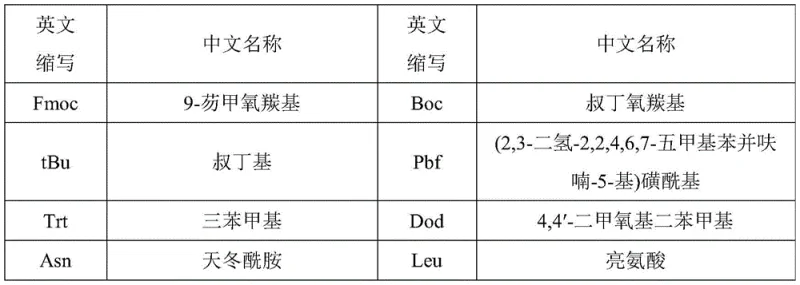
The patented method overcomes these hurdles by employing a strategic fragmentation approach where a tripeptide fragment (Boc-D-Phe-Pro-Arg(Pbf)-OH) and a hexapeptide fragment (Fmoc-Pro-Gly-Gly-Gly-Gly-Asn(Dod)-OH) are synthesized independently using 2-CTC resin before being coupled to the main chain. A critical innovation lies in the substitution of the Asn protecting group from Trt to Dod (4,4'-dimethoxybenzhydryl), which provides superior stability against alkaline degradation and prevents the formation of hydrolysis impurities. Additionally, the incorporation of surfactants like Triton during the coupling of the glycine-rich hexapeptide fragment dramatically improves solubility and reaction kinetics, effectively suppressing the formation of deletion and insertion sequences. This holistic optimization of reagents, protecting groups, and reaction conditions results in a streamlined process that is far more amenable to industrial scale-up compared to legacy liquid-phase techniques.
Mechanistic Insights into Solid-Phase Fragment Condensation
The core of this synthesis lies in the precise control of stereochemistry and impurity profiles through advanced SPPS mechanisms. The process initiates with the loading of Fmoc-Leu-OH onto 2-CTC or Wang resin, followed by the sequential addition of amino acids to build the (10-20) intermediate segment. The coupling of the hexapeptide fragment is particularly sensitive; by utilizing a quaternary solvent system comprising DMF, DCM, NMP, and DMSO alongside a surfactant, the method ensures that the hydrophobic and aggregation-prone glycine chains remain soluble and reactive. The use of specific condensing agents such as Cl-HOBt/DIC for the hexapeptide and COMU/DIEA for the tripeptide minimizes racemization risks, particularly at the chiral centers of Phenylalanine and Arginine. This meticulous selection of reagents ensures that the optical purity of the final product is maintained, which is a critical quality attribute for thrombin inhibitors where stereoisomers can exhibit different biological activities or toxicities.
Impurity control is further enhanced through a sophisticated purification strategy that goes beyond standard HPLC. The process incorporates an isoelectric point precipitation step, exploiting the amphoteric nature of the polypeptide to separate the target molecule from polymeric and truncated impurities. By adjusting the pH to approximately 3.7, the method precipitates the Bivalirudin while keeping soluble impurities in the supernatant, effectively reducing polyglycine variants from detectable levels to below 0.05%. This physical separation technique complements the chemical purity achieved during synthesis, providing a dual-layer defense against contaminants. For R&D teams, this mechanistic understanding highlights the importance of orthogonal purification methods in achieving the >99.8% purity required for parenteral administration, demonstrating a clear path to cost reduction in pharmaceutical manufacturing by minimizing reliance on expensive preparative chromatography cycles.
How to Synthesize Bivalirudin Efficiently
The synthesis of Bivalirudin via this patented route requires strict adherence to specific reaction parameters to maximize yield and minimize side products. The process involves the independent preparation of key peptide fragments followed by their convergence on a solid support, necessitating precise control over deprotection and coupling cycles. Operators must carefully manage the concentration of piperidine for Fmoc removal and utilize activated esters generated in situ to drive the coupling reactions to completion. The following guide outlines the critical operational steps derived from the patent examples, serving as a foundational reference for process chemists aiming to replicate this high-efficiency workflow in a GMP environment. Detailed standardized synthesis steps are provided in the guide below.
- Synthesize the tripeptide fragment Boc-D-Phe-Pro-Arg(Pbf)-OH and hexapeptide fragment Fmoc-Pro-Gly-Gly-Gly-Gly-Asn(Dod)-OH using 2-CTC resin.
- Couple Fmoc-protected amino acids stepwise onto Wang or 2-CTC resin to form the intermediate (10-20)-peptide resin.
- Sequentially couple the hexapeptide and tripeptide fragments, cleave with TFA, and purify via isoelectric precipitation.
Commercial Advantages for Procurement and Supply Chain Teams
For procurement managers and supply chain heads, the adoption of this synthesis method translates into tangible operational benefits that extend beyond mere technical specifications. By resolving the solubility issues associated with glycine-rich sequences, the process eliminates the need for excessive reagent usage and multiple recrystallization steps that typically plague polypeptide production. This simplification of the workflow directly contributes to substantial cost savings by reducing raw material consumption and shortening the overall production cycle time. Furthermore, the robustness of the solid-phase approach ensures consistent batch-to-batch quality, which is essential for maintaining uninterrupted supply lines to downstream formulation partners. The ability to produce high-purity intermediates with fewer purification stages also reduces the environmental footprint of the manufacturing process, aligning with modern sustainability goals in the chemical industry.
- Cost Reduction in Manufacturing: The elimination of complex liquid-phase purification steps for difficult fragments significantly lowers the operational expenditure associated with solvent recovery and chromatography media. By improving the reaction activity of the glycine segments through surfactant assistance, the method reduces the need for large excesses of expensive protected amino acids, leading to a more economical use of starting materials. Additionally, the higher overall yield of the refined product means that less raw material is required to produce the same amount of active pharmaceutical ingredient, driving down the unit cost of goods sold. These efficiencies collectively enhance the profit margins for manufacturers while allowing for more competitive pricing in the global market.
- Enhanced Supply Chain Reliability: The use of commercially available resins and standard coupling reagents ensures that the supply chain is not dependent on exotic or hard-to-source catalysts that could introduce bottlenecks. The scalability of the solid-phase method allows for flexible production volumes, enabling manufacturers to respond quickly to fluctuations in market demand without compromising quality. Moreover, the improved stability of the Asn(Dod) protected intermediate reduces the risk of batch failures due to degradation during storage or processing, thereby increasing the reliability of inventory management. This resilience is critical for securing long-term contracts with major pharmaceutical companies that require guaranteed delivery schedules.
- Scalability and Environmental Compliance: The process is designed with industrial scale-up in mind, utilizing solvent systems and reaction conditions that are easily transferable from laboratory to pilot and commercial scales. The reduction in hazardous waste generation, achieved through higher atom economy and fewer purification cycles, simplifies compliance with increasingly stringent environmental regulations. The isoelectric precipitation step offers a greener alternative to extensive solvent-intensive chromatography, reducing the volume of organic waste that requires treatment. These factors make the technology highly attractive for manufacturers looking to expand their capacity while adhering to green chemistry principles and corporate social responsibility mandates.
Frequently Asked Questions (FAQ)
The following questions address common technical and commercial inquiries regarding the implementation of this Bivalirudin synthesis method. These answers are derived directly from the experimental data and beneficial effects described in the patent documentation, providing clarity on the practical implications of the technology. Understanding these details is essential for stakeholders evaluating the feasibility of adopting this route for their own production pipelines. The responses cover aspects ranging from impurity control mechanisms to the specific advantages of the protecting group strategy employed.
Q: How does this method control polyglycine impurities?
A: The method utilizes solid-phase synthesis for the hexapeptide fragment containing the Gly-Gly-Gly-Gly sequence, employing surfactants like Triton and specific solvent systems to enhance solubility and reaction activity, thereby significantly reducing deletion and insertion impurities.
Q: Why is the Dod protecting group used for Asn?
A: The Dod (4,4'-dimethoxybenzhydryl) protecting group replaces the conventional Trt group to prevent alkaline-induced rearrangement and degradation of Asn into Asp or beta-Asp, ensuring higher stability during the synthesis process.
Q: What is the final purity achievable with this process?
A: Through optimized coupling conditions and a final purification step involving isoelectric point precipitation at pH 3.7, the process achieves a refined product purity exceeding 99.80% with single impurities controlled below 0.1%.
Partnering with NINGBO INNO PHARMCHEM: Your Reliable Bivalirudin Supplier
At NINGBO INNO PHARMCHEM, we recognize the critical importance of implementing advanced synthesis technologies like the one described in CN112062835B to meet the evolving needs of the global pharmaceutical market. Our team possesses extensive experience scaling diverse pathways from 100 kgs to 100 MT/annual commercial production, ensuring that complex polypeptide sequences are manufactured with the highest degree of precision and consistency. We are committed to delivering products that meet stringent purity specifications through our rigorous QC labs, which are equipped to detect and quantify trace impurities at the parts-per-million level. By leveraging our expertise in solid-phase peptide synthesis and fragment condensation, we can offer our partners a secure and efficient source of high-quality Bivalirudin intermediates and APIs.
We invite potential partners to engage with our technical procurement team to discuss how this innovative manufacturing route can be tailored to your specific project requirements. By requesting a Customized Cost-Saving Analysis, you can gain deeper insights into the economic benefits of switching to this optimized process. We encourage you to contact us to obtain specific COA data and route feasibility assessments that demonstrate our capability to support your development and commercialization goals. Let us collaborate to bring safer and more effective anticoagulant therapies to patients worldwide through superior chemical manufacturing excellence.