
Advanced Synthesis of Bicyclic OSW-1 Analogues for High-Purity Pharmaceutical Intermediates
The pharmaceutical industry is constantly seeking novel scaffolds that offer the potency of natural products without the supply chain bottlenecks associated with extraction or overly complex total synthesis. Patent CN101089008A introduces a groundbreaking class of bicyclic analogues derived from the Ornithogalum Saundersiae OSW-1 saponin family. These compounds are engineered to lack the traditional A and B rings of the cholestane skeleton, yet they retain exceptional antitumor properties, with IC50 values in the nanomolar range against HeLa and JurKat T cells. This structural simplification represents a paradigm shift in designing high-purity pharmaceutical intermediates, offering a reliable pathway for drug development teams aiming to bypass the limitations of natural sourcing. 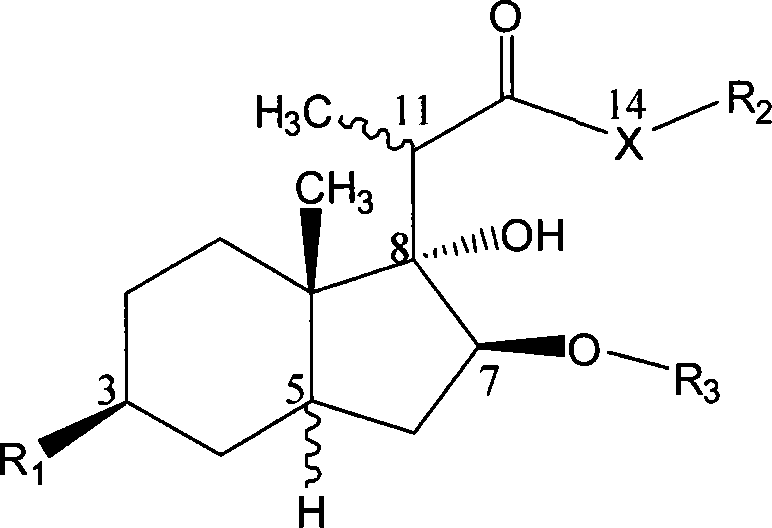
The Limitations of Conventional Methods vs. The Novel Approach
The Limitations of Conventional Methods
Historically, the development of OSW-1 based therapeutics has been severely hampered by the scarcity of the natural source and the formidable challenge of total synthesis. Natural extraction yields are infinitesimally low, making commercial viability impossible for any significant clinical trial volume. Furthermore, previous total synthesis efforts of the full cholestane skeleton involve upwards of 20 to 30 steps, requiring rigorous protection group strategies and resulting in poor overall yields. The presence of the fused four-ring steroid core introduces immense stereochemical complexity, where controlling the junction between rings often requires specialized chiral catalysts or resolution steps that drive up costs and extend lead times significantly.
The Novel Approach
The methodology disclosed in this patent elegantly circumvents these hurdles by truncating the molecule to a bicyclic indanone core. By eliminating the A and B rings, the synthetic route is drastically shortened while preserving the critical C/D ring junction and the essential glycosidic side chain responsible for biological activity. This approach allows for the use of the Hajos-Parrish ketone, a commercially available and inexpensive chiral pool starting material, to establish the core stereochemistry immediately. 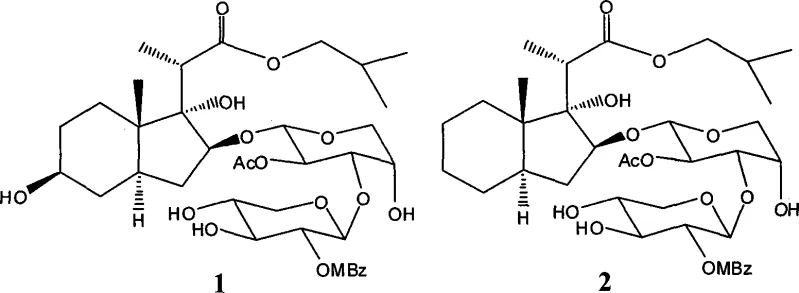
Mechanistic Insights into Stereoselective Bicyclic Construction
The synthetic strategy hinges on precise stereocontrol at multiple centers, particularly the 5, 7, and 8 positions. The process begins with the regioselective reduction of the six-membered ring ketone using sodium borohydride at cryogenic temperatures, ensuring the formation of the desired alcohol without affecting other sensitive functionalities. Subsequent introduction of the 7α-hydroxyl group is achieved through a bromination-hydrolysis sequence using copper(II) bromide, which sets the stage for later stereochemical inversion. This multi-step manipulation ensures that the final hydroxyl configuration matches the bioactive conformation required for receptor binding.
A critical feature of this chemistry is the Aldol reaction used to attach the lipophilic side chain at the 8-position. Utilizing propionate thioesters or esters under strong basic conditions allows for the simultaneous construction of the 8α-hydroxyl group. Following this, the 7-hydroxyl is oxidized to a ketone using TPAP/NMO or Swern conditions, and then stereoselectively reduced using Luche reduction conditions (NaBH4/CeCl3) to invert the stereochemistry. Finally, the glycosylation step employs trichloroacetimidate donors activated by Lewis acids like TMSOTf, ensuring high beta-selectivity for the disaccharide attachment, which is crucial for the compound's solubility and potency. 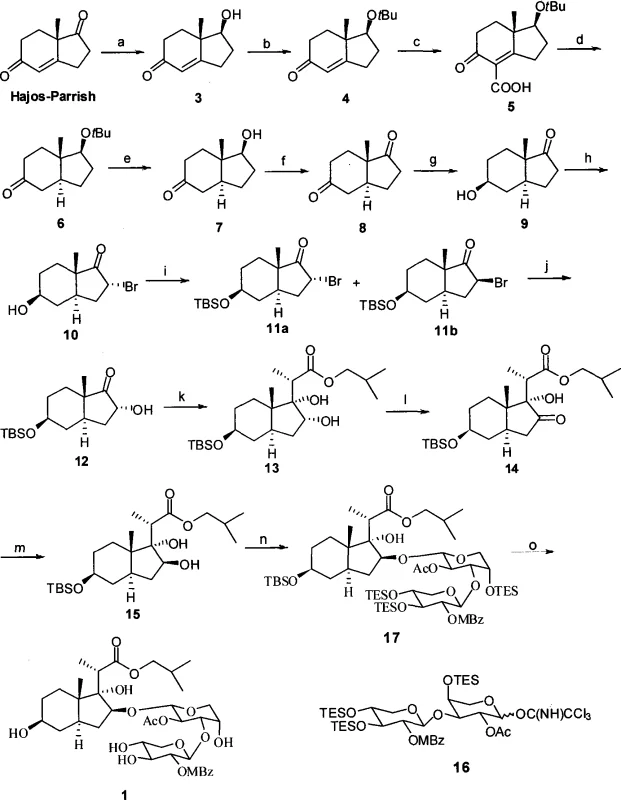
How to Synthesize Bicyclic OSW-1 Analogues Efficiently
The synthesis protocol outlined in the patent provides a robust framework for producing these high-value intermediates. It leverages standard organic transformations that are well-understood in process chemistry, such as catalytic hydrogenation, esterification, and ether cleavage. The route is designed to minimize the number of chromatographic purifications by optimizing crystallization steps where possible, such as the recrystallization of intermediate carboxylic acids. For research and development teams looking to replicate or scale this chemistry, the detailed reaction conditions provided serve as a vital blueprint for optimizing yield and purity at each stage of the multistep sequence.
- Construct the cis or trans bicyclic core using Hajos-Parrish ketone via hydrogenation or carboxylation-decarboxylation sequences.
- Perform regioselective reduction of the six-membered ring ketone and introduce the 7α-hydroxyl group through bromination and hydrolysis.
- Execute an Aldol reaction to attach the side chain, followed by oxidation, configuration inversion, and final glycosylation with protected disaccharides.
Commercial Advantages for Procurement and Supply Chain Teams
For procurement managers and supply chain directors, the transition from natural extraction or full total synthesis to this simplified bicyclic analogue route offers substantial strategic benefits. The reliance on the Hajos-Parrish ketone as a starting material ensures a stable and cost-effective supply of the chiral backbone, eliminating the volatility associated with agricultural sourcing of Ornithogalum bulbs. Furthermore, the reduction in step count directly correlates to a reduction in manufacturing lead time and solvent consumption, which are key drivers of cost in fine chemical production.
- Cost Reduction in Manufacturing: The streamlined synthetic route eliminates the need for constructing the complex tetracyclic steroid nucleus, which traditionally accounts for the majority of synthesis costs in saponin analogues. By removing approximately half of the carbon skeleton construction steps, the process significantly reduces the consumption of expensive reagents, chiral catalysts, and protecting group materials. This structural simplification translates directly into a lower cost of goods sold (COGS), making the development of OSW-1 based drugs financially viable for broader therapeutic applications without compromising on the quality of the active pharmaceutical ingredient.
- Enhanced Supply Chain Reliability: Dependence on plant extraction subjects supply chains to seasonal variations, geopolitical instability in sourcing regions, and batch-to-batch inconsistency. In contrast, this fully synthetic approach decouples production from biological variables. The use of commodity chemicals and standard reaction conditions means that production can be ramped up rapidly in response to clinical demand. This reliability is critical for maintaining continuous drug supply during late-stage clinical trials and commercial launch, mitigating the risk of stockouts that could derail regulatory approval timelines or market entry strategies.
- Scalability and Environmental Compliance: The reactions employed, such as hydrogenation and standard oxidations, are inherently scalable from gram to kilogram and tonne scales using existing reactor infrastructure. Unlike some exotic natural product syntheses that require specialized high-pressure or cryogenic equipment for extended periods, this route utilizes conditions compatible with standard multipurpose pharmaceutical plants. Additionally, the shorter route generates less chemical waste per kilogram of product, aligning with modern green chemistry principles and reducing the burden on waste treatment facilities, thereby facilitating smoother environmental regulatory compliance.
Frequently Asked Questions (FAQ)
The following questions address common technical and commercial inquiries regarding the production and application of these bicyclic saponin analogues. Understanding these details is essential for R&D and procurement teams evaluating this technology for integration into their pipeline. The answers are derived directly from the experimental data and claims within the patent documentation to ensure accuracy and relevance.
Q: What is the primary advantage of the bicyclic OSW-1 analogues over natural OSW-1?
A: The bicyclic analogues remove the complex A and B rings found in natural cholestane skeletons, significantly simplifying the synthetic route while retaining potent antitumor activity comparable to the natural product.
Q: How is the stereochemistry at the 7-position controlled during synthesis?
A: The process utilizes a strategic oxidation-inversion sequence. Initially, a 7α-hydroxyl is introduced, oxidized to a ketone, and then stereoselectively reduced using NaBH4/CeCl3 to flip the configuration to the desired 7β-orientation.
Q: Are these intermediates suitable for large-scale pharmaceutical manufacturing?
A: Yes, the synthesis relies on robust, scalable reactions such as catalytic hydrogenation, standard aldol condensations, and Lewis acid-catalyzed glycosylation, avoiding exotic reagents that hinder commercial scale-up.
Partnering with NINGBO INNO PHARMCHEM: Your Reliable OSW-1 Analogues Supplier
At NINGBO INNO PHARMCHEM, we recognize the transformative potential of simplified natural product analogues in modern oncology drug discovery. Our team possesses extensive experience scaling diverse pathways from 100 kgs to 100 MT/annual commercial production, ensuring that promising candidates like these bicyclic OSW-1 analogues can transition smoothly from the bench to the market. We maintain stringent purity specifications and operate rigorous QC labs to guarantee that every batch meets the exacting standards required for clinical-grade pharmaceutical intermediates, providing our partners with the confidence needed to advance their programs.
We invite you to collaborate with us to leverage this innovative synthetic technology for your next-generation antitumor agents. Contact our technical procurement team today to request a Customized Cost-Saving Analysis tailored to your specific volume requirements. We are ready to provide specific COA data and comprehensive route feasibility assessments to demonstrate how our manufacturing capabilities can accelerate your development timeline and optimize your budget.