
Revolutionizing Statin Intermediate Production with Engineered Carbonyl Reductase Mutants
Revolutionizing Statin Intermediate Production with Engineered Carbonyl Reductase Mutants
The pharmaceutical industry is currently witnessing a paradigm shift in the synthesis of high-value chiral intermediates, driven by the urgent need for greener and more efficient manufacturing processes. A pivotal development in this domain is documented in patent CN110387359B, which discloses a series of highly active carbonyl reductase mutants constructed via point mutation methods. These engineered enzymes address the critical bottlenecks associated with the traditional chemical synthesis of statin drug intermediates, such as Atorvastatin and Rosuvastatin side chains. By leveraging genetic engineering to transform wild-type carbonyl reductase derived from Candida magnoliae, this technology enables the efficient asymmetric reduction of keto-esters into chiral dihydroxy-esters with unprecedented catalytic efficiency. For global procurement leaders and R&D directors, this innovation represents a tangible pathway toward cost reduction in pharmaceutical manufacturing while simultaneously enhancing the environmental profile of the supply chain.
The Limitations of Conventional Methods vs. The Novel Approach
The Limitations of Conventional Methods
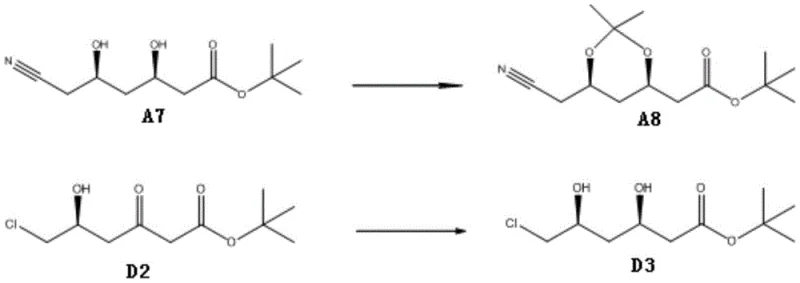
Historically, the production of key statin intermediates like tert-butyl 6-cyano-(3R,5R)-dihydroxyhexanoate has relied heavily on chemical asymmetric reduction methods. These conventional routes typically employ borohydride as a reducing agent in conjunction with expensive chiral catalysts, such as chiral oxazaborolidines or transition metal complexes. While chemically feasible, these methods suffer from inherent drawbacks that pose significant challenges for large-scale commercial scale-up of complex pharmaceutical intermediates. The use of borohydride introduces severe safety risks due to its flammable and explosive nature, necessitating specialized equipment and rigorous safety protocols that drive up operational costs. Furthermore, the generation of boron-containing waste streams creates a substantial environmental burden, complicating disposal and conflicting with modern green chemistry principles. Additionally, controlling stereospecificity in chemical reduction often requires cryogenic conditions and precise parameter control, leading to variable optical purity and increased production complexity.
The Novel Approach
In stark contrast, the novel biocatalytic approach outlined in the patent utilizes engineered carbonyl reductase mutants to achieve the same transformation under mild, aqueous conditions. This biological route eliminates the need for hazardous chemical reducing agents and expensive metal catalysts, fundamentally altering the cost structure and safety profile of the synthesis. The mutants, specifically designed through site-directed mutagenesis, exhibit remarkably improved enzyme activity compared to their wild-type counterparts, allowing for faster reaction rates and higher space-time yields. This shift not only mitigates the safety hazards associated with deep cooling and hydrogenation but also simplifies the downstream processing by avoiding heavy metal contamination. As a result, manufacturers can achieve high-purity pharmaceutical intermediates with superior stereocontrol, positioning this enzymatic method as the preferred choice for reliable statin intermediate supplier networks aiming for sustainable growth.
Mechanistic Insights into Engineered Carbonyl Reductase Catalysis
The core of this technological breakthrough lies in the specific amino acid substitutions that enhance the enzyme's catalytic pocket and stability. The patent details the construction of mutants where specific residues in the wild-type sequence (SEQ ID NO: 1) are replaced to optimize performance. For instance, the substitution of Phenylalanine at position 95 with Isoleucine (F95I), combined with further mutations such as Threonine to Alanine at position 154 (T154A), creates a variant (SEQ ID NO: 3) with significantly altered kinetic properties. The most advanced mutant, SEQ ID NO: 4 (246G12), incorporates four specific mutations (F95I, T154A, S129R, A145V), resulting in a dramatic enhancement of catalytic turnover. Mechanistically, these mutations likely improve the binding affinity for the bulky statin substrates and facilitate more efficient hydride transfer from the NADPH cofactor. The system operates in tandem with glucose dehydrogenase (GDH), which regenerates the consumed NADPH in situ using glucose as a sacrificial electron donor, ensuring a continuous and cost-effective catalytic cycle without the need for stoichiometric amounts of expensive cofactors.
From an impurity control perspective, the enzymatic route offers distinct advantages due to its innate stereospecificity. The active site of the engineered carbonyl reductase is highly selective, recognizing only the specific pro-chiral face of the ketone substrate. This biological precision ensures that the formation of unwanted diastereomers is minimized, a common issue in chemical reductions where diastereoinduction can be insufficient. Experimental data from the patent indicates that the ee values for products generated by these mutants exceed 99.9%, effectively eliminating the need for complex chiral resolution steps that typically result in yield loss. The visual evidence of this superior performance is captured in thin-layer chromatography (TLC) analyses, which clearly demonstrate the rapid depletion of substrate and the clean formation of the desired product.

How to Synthesize Statin Intermediates Efficiently
Implementing this biocatalytic process requires a systematic approach to fermentation and reaction engineering to maximize the benefits of the high-activity mutants. The synthesis begins with the preparation of the biocatalyst, where the gene encoding the mutant carbonyl reductase is expressed in a host organism such as Escherichia coli BL21(DE3). Following fermentation and cell harvesting, the enzyme is utilized in a coupled reaction system alongside glucose dehydrogenase. The detailed standardized synthesis steps for replicating this high-efficiency pathway are provided in the guide below.
- Prepare the reaction system containing the ketone substrate (e.g., Compound A6 or D2), glucose, and triethanolamine buffer.
- Add the engineered carbonyl reductase mutant (SEQ ID NO: 2-4) and glucose dehydrogenase (GDH) along with the cofactor NADP+.
- Maintain pH at 7.0 using sodium carbonate solution and react at 30°C until conversion is complete, followed by extraction and purification.
Commercial Advantages for Procurement and Supply Chain Teams
For procurement managers and supply chain heads, the adoption of this enzymatic technology translates into direct strategic advantages regarding cost, reliability, and compliance. The transition from chemical to enzymatic synthesis removes several high-cost variables from the manufacturing equation, creating a more resilient supply chain for critical statin intermediates. By eliminating the dependency on precious metal catalysts and hazardous reagents, companies can stabilize their raw material costs and reduce exposure to volatile commodity markets. Furthermore, the simplified waste profile aligns with increasingly stringent environmental regulations, reducing the risk of production shutdowns due to compliance issues.
- Cost Reduction in Manufacturing: The primary driver for cost optimization in this process is the removal of expensive chiral chemical catalysts and the avoidance of cryogenic reaction conditions. Traditional methods require significant energy input for deep cooling and the purchase of costly transition metal complexes, whereas the enzymatic route operates at ambient temperatures with biocatalysts that can be produced via fermentation. Additionally, the high conversion rates and superior selectivity minimize the loss of valuable starting materials, thereby improving the overall mass balance and reducing the cost per kilogram of the final API intermediate. The elimination of heavy metal scavenging steps further reduces downstream processing costs.
- Enhanced Supply Chain Reliability: Relying on biocatalysis diversifies the supply risk associated with specialty chemical reagents. The enzymes are produced using standard fermentation technologies, which are scalable and less susceptible to the geopolitical supply constraints often affecting rare earth metals or complex synthetic ligands. The robustness of the mutants, which show high activity even at lower loadings, ensures consistent batch-to-batch quality. This reliability is crucial for maintaining uninterrupted production schedules for high-volume drugs like Atorvastatin, ensuring that reducing lead time for high-purity pharmaceutical intermediates becomes a achievable reality rather than just a goal.
- Scalability and Environmental Compliance: The process is inherently scalable, moving seamlessly from laboratory shake flasks to industrial fermenters without the safety barriers imposed by explosive reagents. The aqueous nature of the reaction medium simplifies containment and handling, allowing for larger batch sizes and higher throughput. From an environmental standpoint, the absence of boron waste and organic solvents significantly lowers the E-factor (environmental factor) of the process. This green profile facilitates easier permitting and reduces the long-term liability associated with hazardous waste disposal, making it a sustainable choice for long-term manufacturing partnerships.
Frequently Asked Questions (FAQ)
The following questions address common technical and commercial inquiries regarding the implementation of this carbonyl reductase technology. These insights are derived directly from the experimental data and specifications outlined in the patent documentation, providing a clear understanding of the operational parameters and expected outcomes for potential adopters.
Q: How does the mutant enzyme compare to the wild-type in terms of activity?
A: The engineered mutants, particularly SEQ ID NO: 4 (246G12), exhibit significantly higher catalytic activity, showing up to 7 to 8 times improvement over the wild-type enzyme in reducing statin precursors.
Q: What represents the main safety advantage of this enzymatic route?
A: Unlike traditional chemical methods that utilize flammable and explosive borohydrides, this biocatalytic process operates under mild aqueous conditions, eliminating severe safety hazards and simplifying waste treatment.
Q: Is the stereospecificity sufficient for pharmaceutical grade intermediates?
A: Yes, the mutants demonstrate exceptional stereospecificity, achieving enantiomeric excess (ee) values exceeding 99.9%, which meets the rigorous purity standards required for API manufacturing.
Partnering with NINGBO INNO PHARMCHEM: Your Reliable Statin Intermediate Supplier
As the demand for cost-effective and environmentally sustainable pharmaceutical ingredients grows, partnering with an experienced CDMO is essential for navigating the complexities of biocatalytic process development. NINGBO INNO PHARMCHEM possesses extensive experience scaling diverse pathways from 100 kgs to 100 MT/annual commercial production, ensuring that innovative technologies like the carbonyl reductase mutants can be successfully translated from the lab to the plant. Our facility is equipped with rigorous QC labs and adheres to stringent purity specifications, guaranteeing that every batch of statin intermediate meets the exacting standards required by global regulatory bodies.
We invite forward-thinking pharmaceutical companies to collaborate with us to leverage this cutting-edge enzymatic technology for their supply chains. By engaging with our technical procurement team, you can request a Customized Cost-Saving Analysis tailored to your specific volume requirements. We encourage you to reach out today to obtain specific COA data and route feasibility assessments, ensuring that your next project benefits from the highest levels of efficiency and quality assurance available in the market.