
Optimizing Azoxystrobin Production: A Technical Analysis of the Hydrocyanic Acid Route for Global Supply Chains
The global demand for high-efficiency fungicides continues to drive innovation in agrochemical manufacturing, specifically for strobilurin-class compounds like azoxystrobin. Patent CN102190629B introduces a transformative synthetic methodology that leverages hydrocyanic acid derived from acrylonitrile waste gas to construct the critical benzofuran core. This approach represents a significant departure from traditional orthoformate-based routes, offering a compelling value proposition for manufacturers seeking to optimize both cost structures and environmental compliance. By repurposing industrial waste streams into high-value pharmaceutical and agrochemical intermediates, this technology aligns perfectly with modern sustainable chemistry mandates while maintaining rigorous purity standards required for regulatory approval.
The Limitations of Conventional Methods vs. The Novel Approach
The Limitations of Conventional Methods
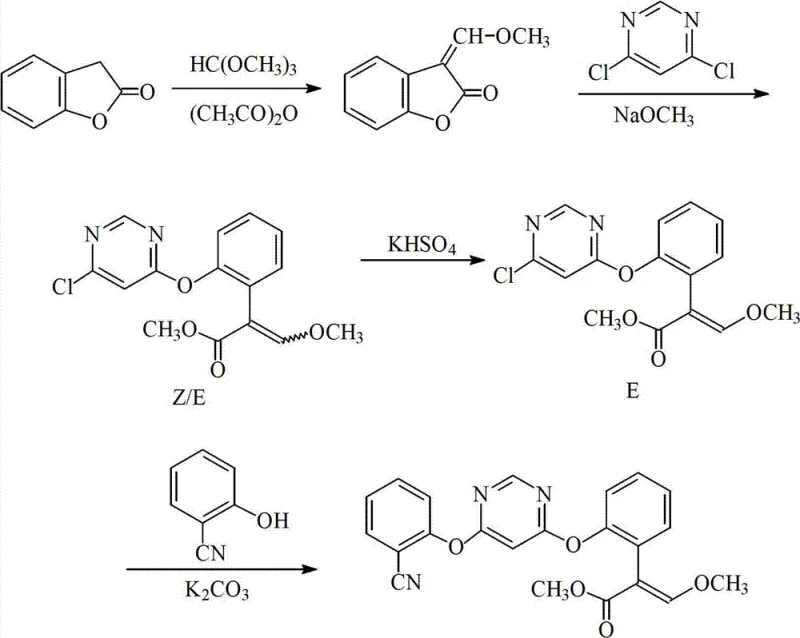
Historically, the synthesis of the key intermediate 3-(α-methoxy)-methylenebenzofuran-2(3H)-one has relied heavily on the reaction of benzofuran-2(3H)-one with trimethyl orthoformate in the presence of acetic anhydride. As illustrated in the conventional pathway below, this method suffers from inherent economic and operational inefficiencies that burden large-scale production. The reliance on trimethyl orthoformate introduces significant raw material costs, as this reagent is comparatively expensive and subject to market volatility. Furthermore, acetic anhydride acts not only as a catalyst but also as a scavenger for the methanol byproduct, generating substantial quantities of methyl acetate. This side reaction complicates the downstream purification process, necessitating energy-intensive distillation steps to separate the low-boiling methyl acetate, thereby increasing the overall carbon footprint and operational expenditure of the facility.
The Novel Approach
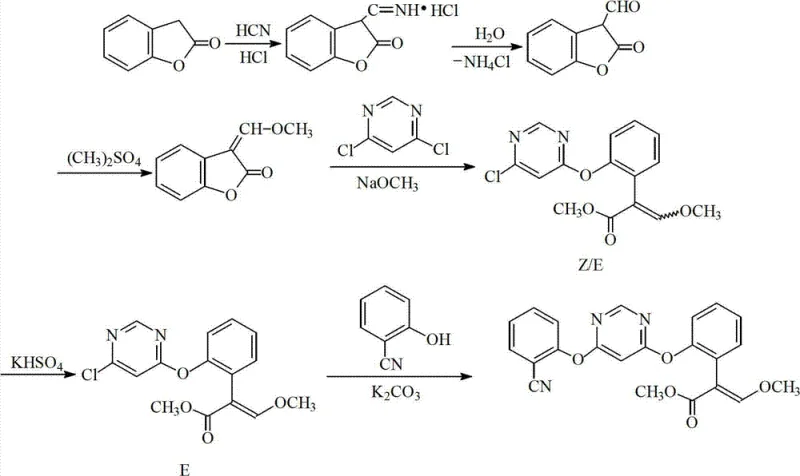
In stark contrast, the novel methodology detailed in the patent utilizes hydrocyanic acid (HCN) to directly functionalize the benzofuran ring, followed by methoxylation with dimethyl sulfate. This route, depicted in the reaction scheme below, bypasses the need for expensive orthoformates entirely. The initial formylation step proceeds under mild conditions, typically between -10°C and 25°C, utilizing hydrogen chloride or bromide as a catalyst to facilitate the addition of HCN. This is followed by a straightforward methylation using dimethyl sulfate, which is a cost-effective methylating agent widely available in the fine chemical industry. The elimination of the acetic anhydride scavenger system drastically simplifies the workup procedure, removing the generation of methyl acetate waste and allowing for a more direct isolation of the desired intermediate through crystallization or extraction.
Mechanistic Insights into HCN-Mediated Formylation and Methoxylation
The core chemical innovation lies in the electrophilic activation of the benzofuran-2(3H)-one substrate by the hydrogen halide catalyst, which enhances the nucleophilicity of the C3 position or facilitates the addition of the cyanide ion. In the presence of HCl, the reaction likely proceeds through the formation of an imino ether or nitrile intermediate, which is subsequently hydrolyzed to the aldehyde functionality (3-formylbenzofuran-2(3H)-one). This transformation is highly atom-economical compared to the orthoformate route, as it incorporates the carbon from the HCN directly into the skeleton without generating stoichiometric alcohol byproducts that require scavenging. The subsequent methoxylation step involves the deprotonation of the formyl group followed by nucleophilic attack on dimethyl sulfate, establishing the critical methoxy-methylene moiety essential for the biological activity of the final fungicide.
From an impurity control perspective, this route offers distinct advantages in managing isomeric purity. The patent data highlights that the intermediate can be isolated as a crystalline solid with a sharp melting point range of 100-101°C, indicating high stereochemical integrity. The use of dimethyl sulfate allows for precise control over the methylation degree, minimizing the risk of over-alkylation or O-methylation side products that are common in less selective protocols. Furthermore, the hydrolysis step of the nitrile/imine intermediate can be carefully monitored to prevent the formation of carboxylic acid impurities, ensuring that the final coupling with 4,6-dichloropyrimidine proceeds with maximal efficiency. This level of control is critical for meeting the stringent residual solvent and impurity profiles demanded by global agrochemical regulatory bodies.
How to Synthesize 3-(α-methoxy)-methylenebenzofuran-2(3H)-one Efficiently
The synthesis protocol outlined in the patent provides a robust framework for laboratory and pilot-scale production, emphasizing temperature control and stoichiometric precision to maximize yield. The process begins with the formylation in an anhydrous solvent like toluene, where strict temperature maintenance below 0°C during the HCN addition is crucial to prevent polymerization or side reactions. Following the aqueous workup to hydrolyze the intermediate, the crude aldehyde is subjected to methylation in a polar aprotic solvent such as DMF using potassium carbonate as the base.
- React benzofuran-2(3H)-one with hydrocyanic acid in the presence of a hydrogen halide catalyst at -10 to 25°C to form 3-formylbenzofuran-2(3H)-one.
- Perform methoxylation on the formyl intermediate using dimethyl sulfate and a base to generate 3-(α-methoxy)-methylenebenzofuran-2(3H)-one.
- Couple the methoxylated intermediate with 4,6-dichloropyrimidine and 2-cyanophenol under basic conditions to finalize the azoxystrobin structure.
Commercial Advantages for Procurement and Supply Chain Teams
For procurement managers and supply chain directors, the adoption of this HCN-based route presents a strategic opportunity to decouple production costs from volatile orthoformate markets. The primary economic driver is the substitution of high-cost trimethyl orthoformate with hydrocyanic acid, which is frequently available as a low-cost byproduct from acrylonitrile manufacturing plants. This integration of waste streams into the value chain not only lowers the direct material cost per kilogram of the intermediate but also insulates the supply chain from shortages of specialized reagents. Additionally, the simplified downstream processing reduces the consumption of utilities such as steam for distillation and solvents for extraction, contributing to a leaner and more cost-effective manufacturing operation overall.
- Cost Reduction in Manufacturing: The elimination of acetic anhydride and trimethyl orthoformate removes two significant cost centers from the bill of materials. By avoiding the generation of methyl acetate, the facility saves on the costs associated with separating and disposing of this volatile organic compound. The use of dimethyl sulfate, a commodity chemical, further stabilizes the input costs, allowing for more accurate long-term budgeting and pricing strategies for the final azoxystrobin product.
- Enhanced Supply Chain Reliability: Sourcing hydrocyanic acid from local acrylonitrile producers can significantly shorten the supply chain and reduce logistics risks associated with importing specialized reagents. The robustness of the reaction conditions, which tolerate a range of temperatures and use common solvents like toluene and DMF, ensures that production can be maintained even if specific high-grade reagents face temporary availability issues. This flexibility is vital for maintaining continuous supply to downstream formulation partners.
- Scalability and Environmental Compliance: The process is inherently scalable, as demonstrated by the successful execution of multi-gram to kilogram batches in the patent examples without loss of yield. From an environmental standpoint, utilizing HCN waste gas transforms a hazardous liability into a valuable asset, greatly enhancing the company's sustainability profile. This alignment with green chemistry principles facilitates easier permitting and reduces the regulatory burden associated with hazardous waste disposal, ensuring long-term operational continuity.
Frequently Asked Questions (FAQ)
The following questions address common technical and commercial inquiries regarding the implementation of this synthesis route, based on the data provided in the patent documentation. These insights are designed to assist technical teams in evaluating the feasibility of adopting this methodology for their specific production needs.
Q: What are the primary cost advantages of the HCN route compared to the orthoformate method?
A: The HCN route utilizes hydrocyanic acid, often available as a byproduct from acrylonitrile production, significantly lowering raw material costs compared to expensive trimethyl orthoformate. Additionally, it eliminates the need for large quantities of acetic anhydride, reducing both material expenses and waste disposal costs associated with methyl acetate byproducts.
Q: How does this process impact environmental compliance and waste management?
A: By converting hydrocyanic acid from waste gas into a valuable intermediate, this method adheres to green chemistry principles by reducing hazardous emissions. The process generates fewer organic byproducts like methyl acetate, simplifying wastewater treatment and lowering the overall environmental footprint of the manufacturing facility.
Q: Is the yield of the HCN-based synthesis comparable to traditional methods?
A: Yes, the patent data indicates high efficiency, with reported yields for the key intermediate reaching up to 79.5% and the final coupling step achieving yields around 82%. This demonstrates that the cost-saving measures do not compromise the overall productivity or output quality of the synthesis.
Partnering with NINGBO INNO PHARMCHEM: Your Reliable Azoxystrobin Intermediate Supplier
At NINGBO INNO PHARMCHEM, we recognize the critical importance of efficient and sustainable synthesis routes in the competitive agrochemical landscape. Our team possesses extensive experience scaling diverse pathways from 100 kgs to 100 MT/annual commercial production, ensuring that the transition from laboratory innovation to industrial reality is seamless. We are equipped with rigorous QC labs and adhere to stringent purity specifications, guaranteeing that every batch of 3-(α-methoxy)-methylenebenzofuran-2(3H)-one meets the exacting standards required for global registration and formulation.
We invite you to collaborate with us to leverage this advanced HCN-based technology for your supply chain. Contact our technical procurement team today to request a Customized Cost-Saving Analysis tailored to your volume requirements. We are ready to provide specific COA data and comprehensive route feasibility assessments to demonstrate how partnering with us can drive value and security in your azoxystrobin sourcing strategy.