
Industrial Scale-Up of Diphenylamine Derivatives via Advanced Hydrogen Transfer Catalysis
The chemical industry constantly seeks more efficient pathways for producing high-value intermediates, and Patent CN1054368C represents a significant breakthrough in the synthesis of diphenylamine and its nucleus-substituted derivatives. This technology addresses long-standing inefficiencies in traditional manufacturing by utilizing an innovative hydrogen transfer mechanism that eliminates the need for harsh dehydrating agents or excessive raw material loads. For R&D directors and procurement specialists alike, understanding this process is crucial for optimizing supply chains in the pharmaceutical and agrochemical sectors. The core innovation lies in using a phenol compound not just as a reactant, but strategically as a hydrogen acceptor within a catalytic cycle involving cyclohexanone and aniline derivatives. This approach fundamentally alters the thermodynamics of the reaction, enabling high conversion rates and exceptional selectivity under relatively mild industrial conditions.
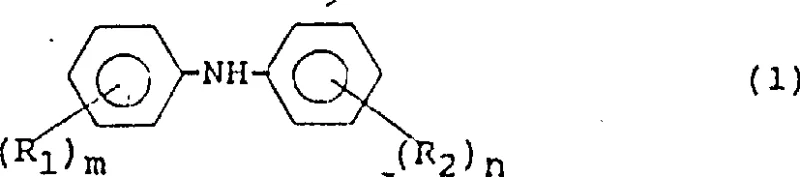
Furthermore, the versatility of this method allows for the production of a wide range of substituted diphenylamines, which are critical precursors for dyes, rubber additives, and active pharmaceutical ingredients. By shifting away from stoichiometric reagents towards a catalytic hydrogen transfer system, manufacturers can achieve substantial improvements in volumetric efficiency and waste reduction. The patent details specific conditions, such as temperature ranges of 150°C to 300°C and the use of specific noble metal catalysts, which ensure that the process is robust enough for commercial scale-up. As a reliable diphenylamine supplier, leveraging such advanced synthetic routes is essential for maintaining competitiveness in the global fine chemicals market.
The Limitations of Conventional Methods vs. The Novel Approach
The Limitations of Conventional Methods
Historically, the preparation of diphenylamine and its derivatives has been plagued by several significant technical and economic drawbacks that hinder efficient large-scale production. Traditional methods often involve the deamination of aniline derivatives or the dehydration of reaction products between aniline and phenol, processes that typically require severe reaction conditions and generate substantial amounts of hazardous by-products. Another common route involves the reaction of aniline with dibromobenzene followed by the removal of hydrogen bromide, a pathway that is not only costly due to the price of halogenated starting materials but also creates corrosive waste streams that complicate environmental compliance. Earlier patent literature, such as Japanese Patent Application Laid-Open No. 49924/1974, suggested gas-phase reactions with oxidation catalysts, which suffer from low reaction rates and complex equipment requirements. Additionally, methods relying on styrene as a hydrogen acceptor often necessitate the use of large excesses of phenol compounds—sometimes 4 to 10 moles relative to aniline—to suppress the formation of unwanted by-products like N-cyclohexylaniline. This excessive use of raw materials drastically reduces volumetric efficiency and increases the energy burden associated with recovering and recycling unreacted phenol, making cost reduction in pharmaceutical intermediates manufacturing difficult to achieve with legacy technologies.
The Novel Approach
The novel approach described in the patent data revolutionizes this landscape by introducing a streamlined hydrogen transfer catalysis system that operates with remarkable efficiency and selectivity. Instead of relying on external hydrogen sources or stoichiometric dehydrating agents, this method ingeniously utilizes the phenol compound itself as an internal hydrogen acceptor. In this closed-loop system, a catalytic amount of cyclohexanone reacts with the aniline compound to form a Schiff base intermediate, which subsequently undergoes dehydrogenation. The hydrogen released during this dehydrogenation step is immediately utilized to reduce the phenol compound back into cyclohexanone, thereby regenerating the catalyst carrier in situ. This self-sustaining cycle means that the process does not require the massive excesses of phenol seen in older methods; indeed, high selectivity is achieved with less than 2.0 moles of phenol per mole of aniline. Furthermore, the implementation of dropwise addition of the aniline compound allows for precise control over the concentration of the Schiff base intermediate, keeping it below 20% to minimize side reactions. This level of control results in conversion rates exceeding 99% and selectivity approaching 99.3%, offering a clear pathway for commercial scale-up of complex polymer additives and fine chemical intermediates.
Mechanistic Insights into Hydrogen Transfer Catalysis
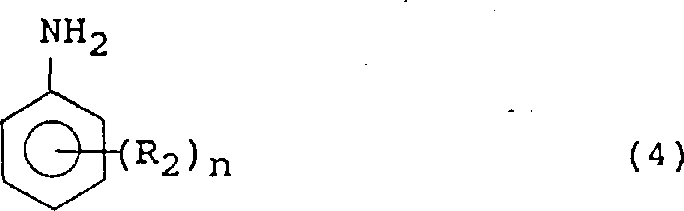
To fully appreciate the technical superiority of this synthesis route, one must delve into the intricate mechanistic details of the hydrogen transfer cycle involving the palladium catalyst and the specific reactants. The reaction initiates with the condensation of the aniline compound, represented structurally in the patent data, with a catalytic quantity of cyclohexanone to form an N-cyclohexylideneaniline Schiff base. This intermediate is pivotal because its subsequent dehydrogenation on the surface of the noble metal catalyst releases the atomic hydrogen required for the reduction half of the cycle. Simultaneously, the phenol compound, which serves as the hydrogen acceptor, adsorbs onto the catalyst surface and accepts these hydrogen atoms to become reduced into cyclohexanone. This newly formed cyclohexanone then re-enters the cycle to react with more aniline, creating a continuous catalytic loop that drives the equilibrium towards the desired diphenylamine product. The presence of a hydrogen transfer catalyst, specifically Group VIII noble metals like palladium supported on carbon or alumina, is critical for facilitating both the dehydrogenation of the Schiff base and the hydrogenation of the phenol ring without requiring high-pressure external hydrogen gas in the initial stages.
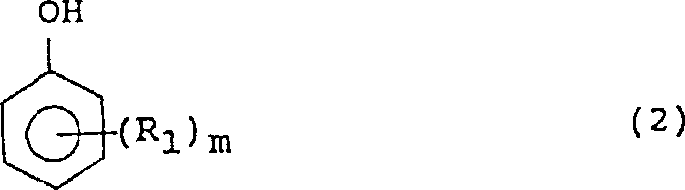
Moreover, the inclusion of alkali metal or alkaline earth metal promoters, such as sodium hydroxide or potassium carbonate, plays a vital role in enhancing the electronic properties of the catalyst surface. These basic additives help to neutralize acidic by-products and stabilize the transition states involved in the hydrogen transfer, thereby maintaining high reaction rates even during catalyst recycling phases. The structural integrity of the reactants is preserved throughout this process; for instance, the phenol compound shown in the diagrams retains its aromatic character until the specific moment of hydrogenation, ensuring that ring-substituted derivatives remain intact. This mechanistic elegance allows for the synthesis of sensitive molecules, such as 2-methyl-4-alkoxydiphenylamine, which might degrade under the harsh acidic or oxidative conditions of conventional methods. By understanding these mechanistic nuances, R&D teams can better optimize reaction parameters like temperature (170°C-280°C) and catalyst loading to maximize yield while minimizing the formation of N-cyclohexylaniline impurities.
How to Synthesize Diphenylamine Derivatives Efficiently
Implementing this advanced synthesis route requires careful attention to operational parameters to ensure safety and reproducibility on an industrial scale. The process begins by charging a stainless steel autoclave with the phenol compound, a catalytic amount of the corresponding cyclohexanone, and the supported palladium catalyst. It is crucial to establish the correct molar ratios initially, typically keeping the cyclohexanone between 0.05 and 0.40 moles per mole of aniline to balance reaction speed and yield. Once the reactor is purged and heated to the target temperature range of 150°C to 300°C, the aniline compound is introduced not as a bulk charge but via a controlled dropwise addition. This operational tactic is essential for maintaining the concentration of the reactive Schiff base intermediate at low levels, preventing the accumulation of by-products. Following the completion of the addition, the mixture is stirred for an additional period to ensure full conversion before cooling and filtration. The detailed standardized synthesis steps see the guide below for specific laboratory-to-plant scaling protocols.
- Charge the reactor with phenol compound, catalytic amount of cyclohexanone, and hydrogen transfer catalyst (e.g., Pd/C).
- Heat the mixture to 150-300°C and add aniline compound dropwise to control Schiff base concentration below 20%.
- Maintain reaction temperature, filter catalyst for recycling, and purify the diphenylamine product via distillation or crystallization.
Commercial Advantages for Procurement and Supply Chain Teams
For procurement managers and supply chain heads, the adoption of this hydrogen transfer technology offers transformative benefits that extend far beyond simple yield improvements. The most immediate impact is seen in raw material efficiency; by drastically reducing the requirement for excess phenol from 4-10 moles down to less than 2 moles per mole of aniline, the process significantly lowers the bill of materials and reduces the volume of waste solvent that needs to be distilled and recycled. This reduction in volumetric load translates directly into lower energy consumption for separation units and increased throughput capacity for existing reactor trains. Additionally, the catalyst system demonstrates exceptional longevity and recyclability. Data from the patent examples indicates that when using the promoted palladium catalyst system, the amount of fresh catalyst required to maintain activity after recovery is minimal, often averaging only about 1% to 3% of the initial charge. This contrasts sharply with conventional methods where catalyst deactivation often necessitates frequent and costly replacements, thereby stabilizing long-term operational expenditures.
- Cost Reduction in Manufacturing: The elimination of expensive stoichiometric reagents and the minimization of raw material excess lead to substantial cost savings in the overall production budget. By avoiding the need for large quantities of phenol and reducing the frequency of fresh catalyst purchases, manufacturers can achieve a leaner cost structure. Furthermore, the high selectivity of the reaction minimizes the formation of difficult-to-separate by-products like N-cyclohexylaniline, which simplifies downstream purification and reduces the loss of valuable product during distillation or crystallization steps. These factors combined create a highly economical process suitable for competitive markets.
- Enhanced Supply Chain Reliability: The reliance on commodity chemicals such as phenol, aniline, and cyclohexanone ensures a stable and secure supply chain, as these feedstocks are widely available from multiple global sources. Unlike specialized reagents that might face supply bottlenecks, the inputs for this process are standard industrial chemicals with robust logistics networks. The ability to recycle the catalyst effectively also reduces dependency on the continuous supply of precious metals, mitigating risks associated with volatile metal prices. This stability allows for consistent production scheduling and reliable delivery timelines for high-purity pharmaceutical intermediates.
- Scalability and Environmental Compliance: The process is inherently scalable, utilizing standard liquid-phase batch or semi-batch reactor configurations that are common in fine chemical plants. The absence of corrosive by-products like hydrogen bromide and the reduction in waste volume simplify effluent treatment and align with increasingly stringent environmental regulations. The moderate temperature and pressure conditions further enhance operational safety, reducing the risk profile associated with high-energy chemical transformations. This makes the technology an ideal candidate for expanding production capacity to meet growing global demand without requiring exotic or prohibitively expensive infrastructure investments.
Frequently Asked Questions (FAQ)
The following questions address common technical and commercial inquiries regarding the implementation of this diphenylamine synthesis technology. These answers are derived directly from the experimental data and claims presented in the patent documentation, providing a factual basis for decision-making. Understanding these details helps stakeholders evaluate the feasibility of integrating this route into their existing manufacturing portfolios. The responses cover aspects ranging from catalyst management to product purity specifications, ensuring a comprehensive overview of the process capabilities.
Q: How does this process reduce raw material costs compared to conventional methods?
A: Conventional methods often require a large excess of phenol (4-10 moles per mole of aniline) to suppress by-products. This patented hydrogen transfer method allows for high selectivity with less than 2.0 moles of phenol, significantly reducing raw material consumption and downstream separation costs.
Q: What is the role of the alkali metal promoter in the catalyst system?
A: When using Group VIII noble metal catalysts like Palladium, adding alkali metal hydroxides (e.g., NaOH, KOH) acts as a cocatalyst. This enhances the reaction rate and selectivity, allowing for effective catalyst recycling where only minimal fresh catalyst (approx. 1-3%) is needed to maintain performance over multiple cycles.
Q: Can this method be used for ring-substituted diphenylamines?
A: Yes, the process is highly versatile. It effectively synthesizes various ring-substituted derivatives, such as 2-methyl-4-alkoxydiphenylamine, which are valuable intermediates for fluoran dyes and agrochemicals, overcoming difficulties associated with single-stage synthesis of substituted variants.
Partnering with NINGBO INNO PHARMCHEM: Your Reliable Diphenylamine Supplier
At NINGBO INNO PHARMCHEM, we recognize that the transition to advanced catalytic processes is key to maintaining leadership in the fine chemicals sector. Our team possesses extensive experience scaling diverse pathways from 100 kgs to 100 MT/annual commercial production, ensuring that the theoretical benefits of this hydrogen transfer technology are fully realized in practical manufacturing environments. We are committed to delivering high-purity diphenylamine derivatives that meet stringent purity specifications required by the pharmaceutical and agrochemical industries. Our rigorous QC labs employ state-of-the-art analytical techniques to verify product identity and impurity profiles, guaranteeing that every batch conforms to the highest international standards. By partnering with us, clients gain access to a supply chain that is not only robust but also optimized for cost and quality through the adoption of cutting-edge synthetic methodologies.
We invite potential partners to engage with our technical procurement team to discuss how this innovative synthesis route can be tailored to your specific project needs. Whether you require a Customized Cost-Saving Analysis for your current supply chain or need to evaluate the feasibility of new substituted derivatives, our experts are ready to assist. We encourage you to request specific COA data and route feasibility assessments to see firsthand how our commitment to technological excellence translates into tangible business value. Let us collaborate to drive efficiency and innovation in your chemical manufacturing operations.