
Advanced Chiral Copper MOF Catalyst Technology for Scalable Indoxacarb Intermediate Production
Advanced Chiral Copper MOF Catalyst Technology for Scalable Indoxacarb Intermediate Production
The global agrochemical industry is constantly seeking more efficient and sustainable pathways for producing high-value insecticides like Indoxacarb. A significant breakthrough in this domain is detailed in Chinese Patent CN115806504A, which discloses a novel asymmetric chiral ligand and its corresponding chiral polynuclear copper metal-organic framework (MOF) catalyst. This technology addresses critical bottlenecks in the synthesis of the key Indoxacarb intermediate, (2S)-5-chloro-2,3-dihydro-2-hydroxy-1-oxo-1H-indene-2-carboxylic acid methyl ester. By leveraging a unique trinuclear copper cluster structure embedded within a stable organic framework, this innovation offers a heterogeneous catalytic system that achieves exceptional enantioselectivity of 99.7% and high yields under mild conditions. For R&D directors and procurement managers alike, this patent represents a pivotal shift from costly, single-use homogeneous catalysts to robust, recyclable solid-phase systems that promise substantial operational efficiencies.
The Limitations of Conventional Methods vs. The Novel Approach
The Limitations of Conventional Methods
Historically, the asymmetric catalytic conversion of beta-indanone esters to S-configuration Indoxacarb intermediates has relied heavily on homogeneous catalysts such as cinchona base derivatives, chiral phosphine Schiff base-Cu(I) complexes, or chiral Salen-Zr polymers. While effective in laboratory settings, these traditional methods present severe limitations for large-scale commercial manufacturing. Homogeneous catalysts are notoriously difficult to separate from the final product mixture, often requiring complex and expensive purification steps to remove trace metal contaminants that could compromise product quality or regulatory compliance. Furthermore, many of these conventional catalysts suffer from structural instability under reaction conditions, leading to rapid deactivation and inconsistent batch-to-batch performance. The high cost of chiral ligands combined with their inability to be recovered and reused significantly inflates the overall cost of goods sold (COGS), creating a persistent pain point for supply chain managers aiming to optimize margins in competitive agrochemical markets.
The Novel Approach
The technology described in patent CN115806504A introduces a paradigm shift by utilizing a chiral polynuclear copper metal-organic framework as a heterogeneous catalyst. Unlike their homogeneous counterparts, this MOF catalyst possesses a rigid, periodic network structure that prevents the leaching of active metal sites while maintaining high accessibility for substrates. The synthesis involves a straightforward secondary cooling crystallization method, which is not only time-saving but also highly scalable for industrial production. This novel approach effectively decouples the catalytic activity from the solubility issues of traditional complexes, allowing for simple filtration and recovery of the catalyst post-reaction. The result is a streamlined process that eliminates the need for extensive metal scavenging procedures, thereby reducing waste generation and processing time. This transition to a stable, reusable solid catalyst directly translates to enhanced process reliability and reduced environmental footprint, aligning perfectly with modern green chemistry initiatives in fine chemical manufacturing.

Mechanistic Insights into Chiral Polynuclear Copper MOF Catalysis
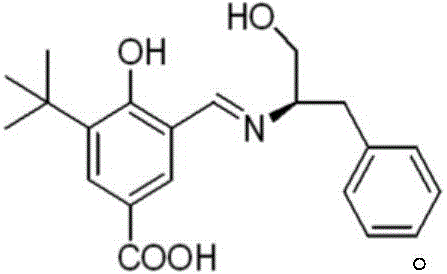
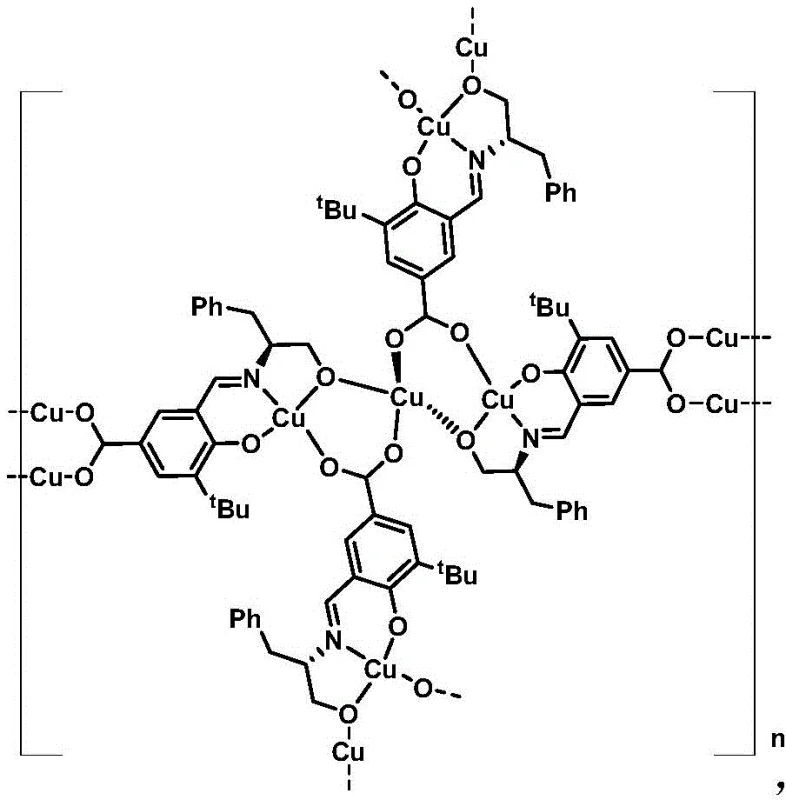
The core of this technological advancement lies in the precise molecular architecture of the catalyst, designated as Cu3L2. The asymmetric chiral ligand H3L, synthesized from 3-tert-butyl-5-formyl-4-hydroxybenzoic acid and L-phenylalaninol, acts as a multifunctional bridging unit that coordinates with copper ions to form a trinuclear Cu3O8N2 cluster. This cluster serves as a 4-connected node, linking with surrounding ligands to construct a robust three-dimensional framework. Crucially, the crystallographic analysis reveals that this framework crystallizes in the chiral P32 space group and features distinct hydrophobic chiral channels with a diameter of approximately 1.03nm. These nanopores are not merely void spaces; they are densely populated with coordinatively unsaturated copper sites that act as the active centers for catalysis. The hydrophobic nature of the channel walls, lined with tert-butyl and phenyl groups, creates a specific microenvironment that favors the adsorption of organic substrates while excluding water, thus enhancing reaction selectivity and preventing catalyst degradation.
From a mechanistic perspective, the high density of active copper sites within the confined chiral pores facilitates a highly efficient asymmetric oxidation process. When the substrate, 5-chloro-1-oxo-2,3-dihydroindene-2-carboxylic acid methyl ester, enters these chiral channels, it interacts with the copper centers in a stereo-specific manner dictated by the chiral ligand environment. This spatial constraint ensures that the oxidant, typically cumene hydroperoxide (CHP), attacks the substrate from a specific trajectory, leading to the exclusive formation of the S-enantiomer with an optical purity reaching 99.7%. The structural integrity of the MOF ensures that these active sites remain fixed in space, preventing the random orientation often seen in flexible homogeneous complexes. This rigidity is key to maintaining consistent stereoselectivity over prolonged operation. Furthermore, the open framework allows for rapid diffusion of reactants and products, minimizing mass transfer limitations that often plague porous catalysts, thereby supporting high turnover frequencies essential for commercial viability.
How to Synthesize Chiral Polynuclear Copper MOF Efficiently
The preparation of this high-performance catalyst is designed for scalability and reproducibility, utilizing a solvothermal method followed by a unique secondary cooling crystallization step. The process begins with the in-situ formation of the chiral ligand, followed by coordination with copper salts in a mixed solvent system of DMF and methanol. The careful control of temperature and solvent ratios is critical to ensuring the formation of the desired crystalline phase rather than amorphous precipitates. The patent outlines a specific protocol where the reaction mixture is first heated to dissolve components and remove turbidity, then subjected to solvothermal conditions to nucleate the MOF crystals, and finally cooled in an ice-water bath to maximize crystal yield and quality. This multi-stage thermal profile is essential for growing large, defect-free crystals that exhibit the necessary porosity and stability for catalytic applications. For detailed operational parameters and stoichiometric ratios required to replicate this synthesis in a pilot or production plant, please refer to the standardized guide below.
- Prepare the asymmetric chiral ligand H3L by refluxing 3-tert-butyl-5-formyl-4-hydroxybenzoic acid and L-phenylalaninol in methanol.
- Mix copper salt (e.g., Cu(OAc)2·H2O) with DMF and methanol, then add dropwise to the ligand solution and heat to remove turbidity.
- Seal the clear solution in an autoclave for solvothermal reaction at 90-110°C, followed by secondary cooling crystallization in an ice-water bath.
Commercial Advantages for Procurement and Supply Chain Teams
For procurement managers and supply chain heads, the adoption of this chiral copper MOF technology offers compelling strategic advantages that go beyond mere technical performance. The shift from homogeneous to heterogeneous catalysis fundamentally alters the cost structure of Indoxacarb intermediate manufacturing. By eliminating the need for complex downstream purification to remove dissolved metal catalysts, manufacturers can significantly reduce the consumption of expensive scavenging resins and solvents. This simplification of the work-up procedure not only lowers direct material costs but also shortens the overall production cycle time, allowing for faster throughput and improved asset utilization. Additionally, the ability to recycle the catalyst multiple times without significant loss of activity means that the effective cost per kilogram of catalyst consumed is drastically reduced compared to single-use alternatives. This durability provides a buffer against volatility in raw material prices, particularly for precious metals or complex chiral ligands, ensuring more predictable long-term budgeting.
- Cost Reduction in Manufacturing: The implementation of this heterogeneous catalyst system drives cost efficiency primarily through the elimination of expensive metal removal steps and the reduction of catalyst loading requirements. Since the catalyst is a solid that can be filtered off, the downstream processing train becomes simpler, requiring fewer unit operations and less energy for solvent recovery. The high turnover number and reusability of the MOF mean that the amortized cost of the catalyst over tons of product is negligible compared to traditional homogeneous systems. Furthermore, the reaction proceeds at room temperature, which removes the need for energy-intensive heating or cryogenic cooling systems, resulting in substantial utility savings. These cumulative factors contribute to a leaner manufacturing process with a lower break-even point, enhancing overall profitability in a competitive market.
- Enhanced Supply Chain Reliability: Supply chain continuity is often threatened by the complexity of sourcing specialized homogeneous catalysts that may have long lead times or limited suppliers. The synthesis of this MOF catalyst relies on relatively common and commercially available starting materials such as copper salts, DMF, and simple chiral amino alcohols. This reduces dependency on niche suppliers and mitigates the risk of supply disruptions. Moreover, the robustness of the catalyst allows it to be stockpiled without significant degradation, providing manufacturers with the flexibility to build inventory buffers. The consistency of the catalyst performance across batches ensures that production schedules can be met reliably without unexpected delays caused by catalyst failure or variability. This stability is crucial for maintaining just-in-time delivery commitments to downstream formulators and agrochemical companies.
- Scalability and Environmental Compliance: Scaling up asymmetric catalysis is notoriously difficult due to heat transfer and mixing issues, but the solid nature of this MOF catalyst simplifies reactor design and operation. The process generates less hazardous waste because there is no heavy metal contamination in the effluent streams, easing the burden on wastewater treatment facilities and ensuring compliance with increasingly stringent environmental regulations. The use of toluene as a solvent and CHP as an oxidant is well-established in industrial settings, facilitating a smoother technology transfer from lab to plant. The high atom economy and reduced solvent usage associated with the simplified work-up further enhance the sustainability profile of the process. This alignment with green chemistry principles not only reduces disposal costs but also strengthens the corporate social responsibility credentials of the manufacturer, which is increasingly valued by global customers.
Frequently Asked Questions (FAQ)
Understanding the technical nuances of this new catalytic technology is essential for stakeholders evaluating its integration into existing production lines. The following questions address common concerns regarding catalyst stability, reaction optimization, and product quality. The answers are derived directly from the experimental data and characterization results presented in the patent documentation, providing a factual basis for decision-making. Whether you are concerned about the longevity of the catalyst or the purity of the final intermediate, these insights clarify the operational realities of implementing this advanced MOF system in a commercial setting.
Q: What is the primary advantage of this chiral copper MOF catalyst over traditional homogeneous catalysts?
A: Unlike traditional homogeneous catalysts which are difficult to separate and often suffer from structural instability, this chiral polynuclear copper MOF features a robust 3D framework with 1.03nm hydrophobic channels. This allows for easy filtration and recycling without significant loss of activity or optical purity, drastically simplifying downstream processing.
Q: Can this catalyst maintain high enantioselectivity over multiple reaction cycles?
A: Yes, the patent data demonstrates exceptional stability. The catalyst maintains an optical purity of 99.7% and a yield of roughly 90% even after five consecutive recycling runs, proving its suitability for continuous industrial production of high-purity agrochemical intermediates.
Q: What are the optimal reaction conditions for the asymmetric oxidation using this catalyst?
A: The process operates efficiently at room temperature using toluene as the solvent and cumene hydroperoxide (CHP) as the oxidant. The optimal molar ratio of oxidant to substrate is approximately 1.5:1, balancing high conversion rates with economic efficiency.
Partnering with NINGBO INNO PHARMCHEM: Your Reliable Indoxacarb Intermediate Supplier
At NINGBO INNO PHARMCHEM, we recognize that the successful commercialization of advanced catalytic technologies requires more than just a patent; it demands deep process engineering expertise and rigorous quality control. As a leading CDMO partner, we possess extensive experience scaling diverse pathways from 100 kgs to 100 MT/annual commercial production, ensuring that innovations like the chiral copper MOF catalyst can be seamlessly translated into reliable supply chains. Our facilities are equipped with state-of-the-art rigorous QC labs capable of verifying stringent purity specifications, including the critical 99.7% optical purity required for high-performance agrochemicals. We understand the complexities of handling sensitive chiral intermediates and have established robust protocols to maintain product integrity throughout the manufacturing and logistics phases. By partnering with us, you gain access to a team that is not only technically proficient but also deeply committed to delivering consistent quality and volume.
We invite you to explore how this cutting-edge catalytic technology can optimize your Indoxacarb production costs and enhance your supply chain resilience. Our technical procurement team is ready to provide a Customized Cost-Saving Analysis tailored to your specific volume requirements and current process constraints. We encourage you to contact us to request specific COA data for our intermediates and to discuss route feasibility assessments for integrating this MOF catalyst into your operations. Let us collaborate to drive efficiency and innovation in your agrochemical manufacturing portfolio, ensuring you stay ahead in a dynamic global market.