
Scalable Synthesis of Chiral Trifluoromethyl Nitriles for High-Value Pharmaceutical Intermediates
The pharmaceutical and fine chemical industries are constantly seeking robust methodologies for constructing chiral centers, particularly those incorporating fluorine atoms which significantly enhance metabolic stability and bioavailability. Patent CN111620793A introduces a groundbreaking preparation method for chiral nitrile compounds, specifically focusing on the asymmetric trifluoromethyl cyanation of olefinic substrates. This technology represents a significant leap forward in synthetic organic chemistry, enabling the efficient construction of optically active trifluoromethyl-containing beta-carbonyl nitrile compounds. The core innovation lies in the utilization of a copper catalyst system combined with a chiral ligand, TMSCN, and Togni-I reagent under inert gas protection. This approach circumvents the severe limitations of prior art, such as the need for hazardous hydrogen cyanide gas or extreme reaction conditions. By leveraging this patented methodology, manufacturers can access high-value intermediates that serve as critical precursors for gamma-lactams and gamma-amino acids, which are ubiquitous scaffolds in modern drug discovery. The ability to introduce both a cyano group and a trifluoromethyl group simultaneously with high stereocontrol opens new avenues for the development of next-generation therapeutic agents.
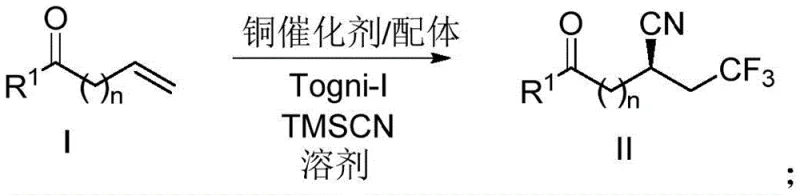
The Limitations of Conventional Methods vs. The Novel Approach
The Limitations of Conventional Methods
Historically, the synthesis of chiral beta-carbonyl nitrile compounds has been plagued by significant technical and safety hurdles that hinder industrial adoption. Traditional routes often rely on Lewis acid-catalyzed asymmetric hydrocyanation of alpha,beta-unsaturated carbonyl compounds, which necessitates the handling of highly toxic hydrogen cyanide gas under high-pressure conditions. This not only poses severe safety risks to personnel and facilities but also requires specialized equipment that drives up capital expenditure. Furthermore, alternative methods involving the asymmetric reduction of beta-cyanoacrylates or transition metal-catalyzed cross-coupling of alkyl halides frequently suffer from poor atom economy and limited substrate scope. Many of these legacy processes demand cryogenic temperatures well below -78°C or utilize expensive noble metal catalysts that are difficult to remove from the final product, leading to contamination issues. The combination of harsh reaction conditions, low selectivity, and complex purification protocols results in inflated production costs and extended lead times, making these conventional methods economically unviable for large-scale commercial manufacturing of high-purity intermediates.
The Novel Approach
In stark contrast, the novel approach detailed in patent CN111620793A offers a transformative solution by employing a copper-catalyzed asymmetric trifluoromethyl cyanation strategy that operates under remarkably mild conditions. This method utilizes stable and commercially available reagents such as Togni-I and TMSCN, effectively eliminating the need for gaseous HCN and high-pressure reactors. The reaction proceeds efficiently in common organic solvents like methyl tert-butyl ether at temperatures ranging from -40°C to 40°C, with optimal results often achieved around -20°C to -30°C. This moderate temperature range significantly reduces energy consumption associated with cooling and simplifies the thermal management requirements for reactor design. Moreover, the use of a chiral bisoxazoline ligand ensures excellent enantioselectivity, consistently delivering products with high optical purity without the need for costly chiral resolution steps. The broad substrate tolerance allows for the functionalization of various olefinic compounds bearing different electronic and steric properties, thereby providing a versatile platform for synthesizing diverse libraries of chiral building blocks essential for medicinal chemistry programs.
Mechanistic Insights into Cu-Catalyzed Asymmetric Trifluoromethyl Cyanation
The success of this transformation hinges on the precise interplay between the copper catalyst and the chiral ligand, which creates a well-defined stereogenic environment around the metal center. The catalytic cycle likely initiates with the coordination of the chiral bisoxazoline ligand to the copper species, forming an active complex capable of activating the Togni-I reagent for trifluoromethyl radical generation or nucleophilic transfer. Simultaneously, the olefin substrate coordinates to the metal center, positioning the double bond for regioselective and enantioselective attack. The chiral ligand, specifically the bisoxazoline structure depicted in the patent, exerts steric control that directs the incoming trifluoromethyl and cyano groups to specific faces of the olefin, thereby establishing the desired absolute configuration at the newly formed stereocenter. This level of mechanistic control is crucial for minimizing the formation of unwanted diastereomers and enantiomers, which are considered impurities in pharmaceutical synthesis. The robustness of the copper-ligand complex ensures that the catalytic activity is maintained throughout the reaction duration, leading to consistent yields and selectivity across different batches.
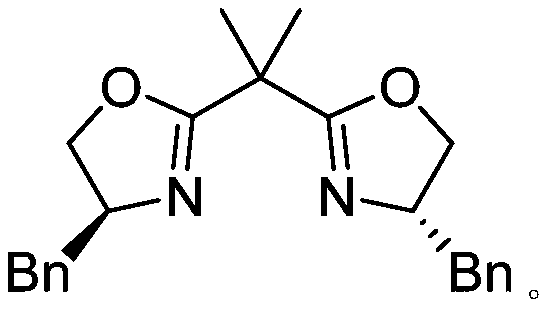
Impurity control is another critical aspect where this mechanistic understanding translates into tangible quality benefits. The high enantioselectivity observed, with ee values reaching up to 91% in specific examples, indicates that the competing background reactions or non-selective pathways are effectively suppressed. This intrinsic selectivity reduces the burden on downstream purification processes, such as preparative HPLC or recrystallization, which are often bottlenecks in manufacturing. By minimizing the generation of close structural analogs and stereoisomers, the process ensures a cleaner crude profile, facilitating easier isolation of the target chiral nitrile compound. Furthermore, the mild reaction conditions prevent the decomposition of sensitive functional groups that might be present on the substrate, preserving the integrity of complex molecular architectures. This capability is particularly valuable when synthesizing advanced intermediates for drug candidates where molecular complexity is high and functional group tolerance is paramount for maintaining biological activity.
How to Synthesize Chiral Trifluoromethyl Nitriles Efficiently
Implementing this synthesis route requires careful attention to reaction parameters to maximize yield and optical purity. The process begins with the preparation of the catalytic system under strict inert atmosphere conditions to prevent oxidation of the copper species. Operators must ensure the correct molar ratios of the copper catalyst, chiral ligand, TMSCN, and Togni-I reagent are maintained, as deviations can impact the reaction kinetics and selectivity. The choice of solvent also plays a pivotal role, with ether-based solvents showing superior performance in solubilizing the reagents while stabilizing the transition states. Following the reaction period, standard workup procedures involving silica gel chromatography allow for the efficient isolation of the pure product. Detailed standardized synthesis steps are provided in the guide below to ensure reproducibility and compliance with Good Manufacturing Practices (GMP).
- Prepare the catalytic system by mixing a copper catalyst such as cuprous acetate with a chiral bisoxazoline ligand in an organic solvent like methyl tert-butyl ether under inert gas protection.
- Add the olefin substrate, trimethylsilyl cyanide (TMSCN), and Togni-I reagent to the reaction mixture while maintaining the temperature between -40°C and 0°C.
- Stir the reaction for approximately 24 hours, monitor progress via TLC or HPLC, and purify the resulting chiral nitrile compound using column chromatography.
Commercial Advantages for Procurement and Supply Chain Teams
From a procurement and supply chain perspective, this patented technology offers compelling advantages that directly address cost and reliability concerns inherent in sourcing complex chiral intermediates. The shift away from hazardous reagents and extreme conditions translates into a safer manufacturing environment, which lowers insurance premiums and regulatory compliance costs associated with handling toxic substances. Additionally, the use of earth-abundant copper catalysts instead of precious metals like palladium or rhodium significantly reduces raw material costs, contributing to overall cost reduction in pharmaceutical intermediate manufacturing. The mild reaction conditions also mean that existing standard reactor infrastructure can be utilized without the need for specialized high-pressure or cryogenic equipment, thereby accelerating the timeline for technology transfer and commercial scale-up of complex fluorinated intermediates. This flexibility enhances supply chain resilience by allowing production to be distributed across multiple facilities with standard capabilities.
- Cost Reduction in Manufacturing: The elimination of expensive noble metal catalysts and the avoidance of high-pressure equipment requirements lead to substantial cost savings in capital and operational expenditures. By utilizing a copper-based system with high turnover efficiency, the process minimizes catalyst loading costs while maintaining high productivity. Furthermore, the high selectivity reduces waste generation and solvent consumption during purification, aligning with green chemistry principles and lowering disposal costs. These factors collectively drive down the cost of goods sold, making the final chiral nitrile products more competitive in the global market without compromising on quality standards.
- Enhanced Supply Chain Reliability: The reliance on commercially available and stable reagents such as Togni-I and TMSCN ensures a robust supply chain that is less susceptible to disruptions compared to processes requiring custom-synthesized or hazardous materials. The mild operating conditions reduce the risk of batch failures due to thermal runaway or equipment malfunction, ensuring consistent delivery schedules. This reliability is crucial for reducing lead time for high-purity chiral nitriles, allowing downstream customers to maintain lean inventory levels and respond quickly to market demands. The scalability of the process further guarantees that supply can be ramped up rapidly to meet increasing volume requirements as drug candidates progress through clinical trials.
- Scalability and Environmental Compliance: The process is designed with scalability in mind, featuring simple workup procedures and benign solvent systems that facilitate easy adaptation from laboratory to pilot and full commercial scale. The reduced toxicity profile of the reagents simplifies waste treatment and environmental compliance, mitigating regulatory risks associated with hazardous waste disposal. This environmental friendliness enhances the sustainability profile of the supply chain, appealing to partners who prioritize eco-friendly manufacturing practices. The ability to scale efficiently ensures that the technology can support long-term commercial production needs, providing a stable source of high-quality intermediates for the pharmaceutical industry.
Frequently Asked Questions (FAQ)
The following questions address common technical and commercial inquiries regarding the implementation and benefits of this chiral nitrile synthesis technology. These answers are derived directly from the experimental data and specifications outlined in patent CN111620793A, providing accurate insights for decision-makers. Understanding these details helps stakeholders evaluate the feasibility of integrating this route into their existing supply chains and R&D pipelines. The information covers aspects ranging from reaction specificity to scalability potential, ensuring a comprehensive understanding of the technology's value proposition.
Q: What are the key advantages of this copper-catalyzed method over traditional hydrocyanation?
A: Unlike traditional methods requiring high pressure or toxic hydrogen cyanide, this patent describes a mild, atmospheric pressure process using stable Togni-I reagent, offering superior safety and operational simplicity.
Q: What level of enantioselectivity can be achieved with this synthesis route?
A: The patent data demonstrates excellent enantioselectivity, with specific examples achieving up to 91% ee, ensuring high optical purity essential for downstream pharmaceutical applications.
Q: Is this process suitable for large-scale commercial production?
A: Yes, the reaction utilizes readily available reagents and operates under mild temperatures (-20°C to -30°C), eliminating the need for cryogenic conditions and facilitating easier commercial scale-up.
Partnering with NINGBO INNO PHARMCHEM: Your Reliable Chiral Nitrile Supplier
At NINGBO INNO PHARMCHEM, we recognize the critical importance of accessing high-quality chiral building blocks to accelerate drug development timelines. Our team of experts possesses extensive experience scaling diverse pathways from 100 kgs to 100 MT/annual commercial production, ensuring that promising laboratory discoveries can be seamlessly transitioned into reliable commercial supplies. We are committed to delivering products that meet stringent purity specifications through our rigorous QC labs, which employ state-of-the-art analytical techniques to verify identity, potency, and enantiomeric excess. Our dedication to technical excellence means that we can adapt the patented copper-catalyzed trifluoromethyl cyanation process to meet your specific volume and quality requirements, providing a secure source for your critical pharmaceutical intermediates.
We invite you to collaborate with us to leverage this advanced technology for your next project. Contact our technical procurement team today to request a Customized Cost-Saving Analysis tailored to your specific molecule. We are ready to provide specific COA data and route feasibility assessments to demonstrate how our manufacturing capabilities can optimize your supply chain and reduce overall project costs. Let us be your partner in turning complex chemical challenges into commercial successes.