
Advanced Catalytic Deprotection Strategy for High-Purity Ezetimibe Manufacturing
The pharmaceutical industry continuously seeks robust manufacturing processes that balance high purity with economic efficiency, particularly for blockbuster drugs like Ezetimibe. Patent CN102066318A introduces a groundbreaking methodology for the preparation of Ezetimibe (EZT) that addresses one of the most persistent challenges in its synthesis: the formation of the critical impurity known as EZT-FAM during the final deprotection step. This patent discloses a refined catalytic hydrogenation process where the metal catalyst loading is drastically reduced to 0.7wt.-% or less, fundamentally altering the reaction kinetics to favor the desired product over side reactions. For R&D directors and process chemists, this represents a pivotal shift from traditional high-loading protocols that often necessitate complex downstream purification. By controlling the catalyst quantity with such precision, the process not only enhances the chemical purity of the final API but also streamlines the entire production workflow, making it a highly attractive route for commercial scale-up.
The Limitations of Conventional Methods vs. The Novel Approach
The Limitations of Conventional Methods
Traditional synthetic routes for Ezetimibe typically rely on standard catalytic hydrogenation conditions to remove the hydroxyl protecting group, often employing excessive amounts of palladium or platinum catalysts to ensure complete conversion. However, this aggressive approach frequently leads to over-hydrogenation, resulting in the formation of the undesired EZT-FAM impurity (Formula III), which is structurally similar and notoriously difficult to separate from the final product. The presence of this impurity compromises the safety profile of the drug and forces manufacturers to implement costly and time-consuming purification steps, such as repeated recrystallizations or preparative chromatography, to meet regulatory specifications. Furthermore, high catalyst loadings increase the risk of metal contamination in the final API, requiring additional scavenging steps that add to the overall production cost and extend the manufacturing lead time significantly.
The Novel Approach
In stark contrast, the novel approach detailed in the patent utilizes a counter-intuitive strategy of minimizing the catalyst loading to ultra-low levels, specifically between 0.01wt.-% and 0.1wt.-% relative to the substrate. This precise control effectively suppresses the secondary hydrogenation pathway responsible for generating the EZT-FAM impurity while still facilitating efficient deprotection of the benzyl or similar protecting groups. By preventing the impurity at the source rather than trying to remove it later, the process achieves a remarkably clean reaction profile that simplifies downstream processing. This method is complemented by a specific workup procedure involving extraction into ethyl acetate followed by washing with an aqueous salt solution, which further polishes the crude material. The combination of low-catalyst hydrogenation and targeted purification results in yields exceeding 75%, demonstrating that quality and quantity can be simultaneously optimized in modern pharmaceutical manufacturing.
Mechanistic Insights into Low-Loading Catalytic Hydrogenation
The core innovation of this process lies in the kinetic control of the catalytic hydrogenation reaction. In conventional high-loading scenarios, the abundance of active catalytic sites promotes not only the cleavage of the C-O bond in the protecting group but also the reduction of other susceptible functionalities within the molecule, leading to the saturated impurity EZT-FAM. By restricting the catalyst amount to 0.7wt.-% or lower, the reaction environment becomes kinetically selective; the deprotection reaction, which has a lower activation energy, proceeds efficiently, while the slower secondary hydrogenation is effectively starved of catalytic activity. This selectivity is crucial for maintaining the integrity of the azetidinone ring and the side chain stereochemistry, ensuring that the final product retains its potent biological activity. The use of formic acid or ammonium formate as a hydrogen source in conjunction with Pd/C further modulates the reaction environment, providing a mild yet effective reduction potential that aligns with the low-catalyst strategy.
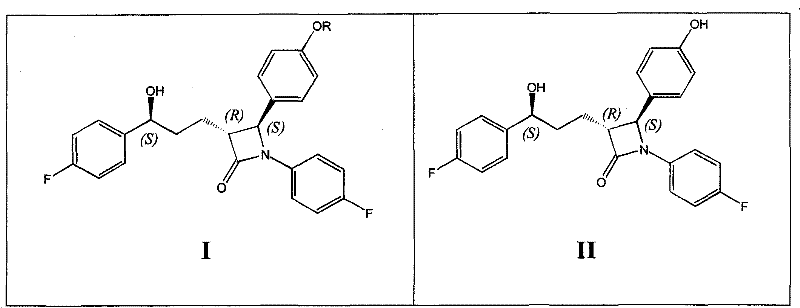
Furthermore, the purification mechanism leverages the differential solubility and partitioning coefficients of the product versus the impurities. The extraction into ethyl acetate selectively solubilizes the target Ezetimibe, while the subsequent wash with a concentrated aqueous salt solution, such as saturated brine, creates a high ionic strength environment that drives polar impurities and residual catalyst residues into the aqueous phase. This salting-out effect is a simple yet powerful tool for preliminary purification that avoids the need for expensive silica gel columns. Finally, the crystallization step is performed at a very low concentration, specifically below 0.1g/ml, which is critical for excluding trace impurities and diastereoisomers from the crystal lattice. This slow, controlled crystallization ensures that the final solid form is thermodynamically stable and possesses the high purity required for pharmaceutical formulation, effectively eliminating the EZT-FAM impurity to undetectable levels by NMR.
How to Synthesize Ezetimibe Efficiently
The synthesis of high-purity Ezetimibe via this patented route involves a carefully orchestrated sequence of reaction and purification steps designed to maximize yield while minimizing impurity formation. The process begins with the suspension of the protected precursor in a suitable solvent like methanol, followed by the addition of a hydrogen donor and the precise dosing of the palladium catalyst. Maintaining strict control over reaction temperature and time is essential to prevent thermal degradation or over-reaction. Once the deprotection is complete, the mixture is filtered to remove the solid catalyst, and the filtrate is subjected to the specific extraction and washing protocol described earlier. The detailed standardized synthesis steps, including exact molar ratios, temperature profiles, and agitation speeds required for reproducible commercial production, are outlined in the guide below.
- Perform catalytic hydrogenation using Pd/C catalyst at a loading of 0.7wt.-% or less relative to the protected substrate to prevent over-hydrogenation.
- Extract the reaction product into ethyl acetate and wash thoroughly with an aqueous salt solution (brine) to remove polar impurities.
- Crystallize the purified product from a solvent like toluene at a concentration below 0.1g/ml to ensure removal of diastereoisomers and residual impurities.
Commercial Advantages for Procurement and Supply Chain Teams
For procurement managers and supply chain heads, the adoption of this low-catalyst hydrogenation process offers substantial strategic advantages that directly impact the bottom line and operational resilience. The most immediate benefit is the drastic reduction in raw material costs associated with the precious metal catalyst. Palladium is a high-value commodity, and reducing its usage from typical industrial loadings to mere trace amounts (0.01-0.1wt.-%) translates into significant direct cost savings per kilogram of API produced. Additionally, the simplified purification workflow eliminates the need for complex chromatographic separations or multiple recrystallization cycles, which reduces solvent consumption and waste disposal costs. This streamlined process not only lowers the variable cost of goods sold but also shortens the batch cycle time, allowing for faster throughput and improved responsiveness to market demand fluctuations.
- Cost Reduction in Manufacturing: The elimination of excessive catalyst usage and complex purification steps leads to a leaner manufacturing process with lower operational expenditures. By avoiding the need for expensive metal scavengers and reducing solvent volumes through efficient extraction, the overall production cost is significantly optimized. This cost efficiency allows for more competitive pricing strategies in the global generic pharmaceutical market while maintaining healthy profit margins for the manufacturer.
- Enhanced Supply Chain Reliability: The robustness of this synthetic route enhances supply chain stability by reducing the dependency on scarce or volatile raw materials. Since the process tolerates a wider range of operating conditions without compromising purity, the risk of batch failures due to minor process deviations is minimized. This reliability ensures a consistent supply of high-quality Ezetimibe intermediates, mitigating the risk of production stoppages that could disrupt the downstream formulation and distribution of the final medication to patients.
- Scalability and Environmental Compliance: From an environmental and safety perspective, the low-catalyst process generates less hazardous waste and reduces the burden on wastewater treatment facilities. The use of common solvents like ethyl acetate and toluene, combined with simple aqueous washes, aligns well with green chemistry principles and facilitates easier regulatory approval for large-scale production. This scalability ensures that the process can be seamlessly transferred from pilot plant to multi-ton commercial production without encountering unforeseen engineering bottlenecks.
Frequently Asked Questions (FAQ)
The following questions address common technical and commercial inquiries regarding the implementation of this advanced Ezetimibe synthesis route. These answers are derived directly from the technical specifications and experimental data provided in the patent literature, offering clarity on the feasibility and benefits of adopting this methodology for large-scale manufacturing. Understanding these nuances is essential for stakeholders evaluating the potential integration of this process into their existing production portfolios.
Q: How does reducing catalyst loading improve Ezetimibe purity?
A: Reducing the palladium catalyst loading to below 0.7wt.-% kinetically favors the deprotection reaction over the secondary hydrogenation that forms the critical EZT-FAM impurity, resulting in a significantly cleaner crude profile.
Q: What is the role of the brine wash in this purification process?
A: Washing the ethyl acetate extract with a saturated aqueous salt solution helps to selectively partition and remove polar by-products and residual catalyst traces, enhancing the overall purity before crystallization.
Q: Why is low-concentration crystallization critical for this API intermediate?
A: Crystallizing at concentrations below 0.1g/ml prevents the co-precipitation of structurally similar impurities and diastereoisomers, ensuring the final active pharmaceutical ingredient meets stringent regulatory standards.
Partnering with NINGBO INNO PHARMCHEM: Your Reliable Ezetimibe Supplier
At NINGBO INNO PHARMCHEM, we recognize the critical importance of implementing cutting-edge synthetic methodologies to deliver superior pharmaceutical intermediates. Our technical team has extensively analyzed the process described in patent CN102066318A and possesses the expertise to execute this low-catalyst hydrogenation strategy with precision. We have extensive experience scaling diverse pathways from 100 kgs to 100 MT/annual commercial production, ensuring that the transition from lab-scale optimization to industrial manufacturing is seamless and efficient. Our facility is equipped with rigorous QC labs and advanced analytical instrumentation to verify that every batch meets stringent purity specifications, particularly regarding the control of critical impurities like EZT-FAM.
We invite global partners to collaborate with us to optimize their Ezetimibe supply chain through this innovative technology. By leveraging our manufacturing capabilities, you can achieve significant cost reductions and enhance the reliability of your API sourcing. Please contact our technical procurement team to request a Customized Cost-Saving Analysis tailored to your specific volume requirements. We are ready to provide specific COA data and comprehensive route feasibility assessments to demonstrate how our production of high-purity Ezetimibe can add value to your pharmaceutical portfolio.
Engineering Bottleneck?
Can't scale up this synthesis? Upload your target structure or CAS, and our CDMO team will evaluate the industrial feasibility within 24 hours. Request Evaluation →