
Advanced Purification Technology for Semaglutide: Ensuring High Purity and Commercial Scalability
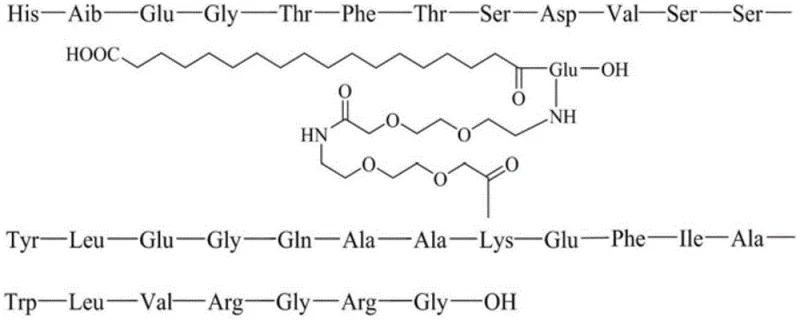
The global demand for glucagon-like peptide-1 (GLP-1) receptor agonists has surged dramatically, driven by their efficacy in treating type II diabetes and obesity. At the forefront of this therapeutic class is semaglutide, a long-acting analogue that requires meticulous purification to meet stringent pharmaceutical standards. Patent CN112175068B discloses a robust method for purifying semaglutide that addresses critical bottlenecks in downstream processing, specifically focusing on solubility stability and impurity removal. This technical breakthrough offers a viable pathway for manufacturers seeking to optimize their production lines for high-purity peptide intermediates. By leveraging a specialized phosphate buffer system combined with a dual-column chromatographic approach, the process ensures consistent quality while mitigating the risks associated with equipment blockage and low yield. For industry stakeholders, understanding this methodology is essential for securing a reliable GLP-1 analogue supplier capable of delivering material that adheres to rigorous regulatory specifications.
The Limitations of Conventional Methods vs. The Novel Approach
The Limitations of Conventional Methods
Traditional purification protocols for complex polypeptides often rely on simplistic solvent systems that fail to account for the unique physicochemical properties of the crude material. In many existing methods, crude peptides are dissolved using dilute ammonia water or pure acetonitrile, which frequently results in unstable pH levels and unpredictable precipitation during the chromatographic process. This instability leads to the formation of particulates that can clog chromatographic columns and damage sensitive pumping equipment, causing significant downtime and increased maintenance costs for production facilities. Furthermore, conventional approaches often struggle to achieve high loading concentrations, forcing manufacturers to process larger volumes of solvent to recover the same amount of product, which drastically reduces overall throughput efficiency. The inability to effectively control the dissolution environment also compromises the separation resolution, making it difficult to remove closely related impurities that share similar hydrophobic characteristics with the target molecule.
The Novel Approach
The innovative method described in the patent data introduces a paradigm shift by utilizing a phosphate buffer solution containing an organic solvent for the initial dissolution of the crude peptide. This specific formulation stabilizes the pH of the solution, preventing the precipitation that typically plagues traditional ammonia-based systems and ensuring a homogeneous feed for the chromatographic columns. By maintaining a stable dissolution environment, the process allows for significantly higher crude peptide concentrations, reaching up to 50g/L, which directly translates to improved column loading capacity and reduced solvent consumption per unit of product. The approach employs a strategic two-step purification sequence that utilizes different stationary phases and mobile phase chemistries to target specific classes of impurities sequentially. This targeted strategy not only enhances the final purity of the semaglutide but also streamlines the workflow, making it a superior choice for cost reduction in pharmaceutical intermediates manufacturing where efficiency and consistency are paramount.
Mechanistic Insights into Two-Step Reversed-Phase Chromatography
The core of this purification strategy lies in the precise manipulation of stationary phase chemistry and mobile phase gradients to achieve orthogonal separation mechanisms. The first purification step utilizes a reversed-phase filler, specifically octaalkylsilane bonded silica (C8), paired with a phosphate buffer containing an organic solvent as the aqueous phase and acetonitrile as the organic modifier. This configuration is optimized to separate the target semaglutide from fragment impurities and defective peptides that result from incomplete synthesis or side reactions during the solid-phase peptide synthesis stage. The gradient elution profile is carefully calibrated to ensure that the target molecule elutes within a narrow window while retaining or flushing out lighter or heavier fragments, achieving an intermediate purity of greater than 95 percent with single impurities controlled below 0.8 percent. This initial cleanup is crucial as it protects the subsequent high-resolution column from overload and extends its operational lifespan.
The second purification step represents the critical polishing phase where racemic impurities, which are notoriously difficult to separate due to their identical mass and similar hydrophobicity, are effectively removed. This stage employs an octadecylsilane bonded silica filler (C18) which offers higher resolution for closely related species, coupled with a mobile phase system consisting of dilute acetic acid and acetonitrile. The switch to an acidic mobile phase in this step alters the ionization state of the peptide and the stationary phase interactions, providing the necessary selectivity to resolve racemates such as His1 and Ala18 epimers. Through this refined gradient elution, the process achieves a final purity exceeding 99.5 percent with single impurities reduced to less than 0.1 percent, meeting the stringent requirements for high-purity peptide intermediates intended for clinical use. This mechanistic precision ensures that the final product is free from immunogenic impurities that could compromise patient safety.
How to Synthesize Semaglutide Efficiently
Implementing this purification protocol requires strict adherence to the defined parameters regarding buffer preparation, column packing, and gradient profiling to ensure reproducible results. The process begins with the preparation of a dissolving buffer where phosphoric acid is neutralized with triethylamine to a specific pH, followed by the addition of acetonitrile to create a stable solvent system for the crude peptide. Operators must ensure that the crude material is fully dissolved and filtered through a 0.22-micron organic filter membrane to remove any particulate matter before loading onto the first chromatographic column. The detailed standardized synthesis steps involve precise control over flow rates, detection wavelengths, and fraction collection criteria to maximize yield while maintaining purity specifications. For a comprehensive guide on the exact operational parameters and troubleshooting tips, please refer to the technical documentation provided below.
- Dissolve crude semaglutide in a phosphate buffer solution containing an organic solvent to ensure stability and high concentration.
- Perform first-step gradient elution using a reversed-phase C8 column to remove fragment impurities and achieve over 95% purity.
- Execute second-step gradient elution using a reversed-phase C18 column with dilute acetic acid to eliminate racemic impurities.
Commercial Advantages for Procurement and Supply Chain Teams
From a commercial perspective, the adoption of this advanced purification technology offers substantial benefits that extend beyond mere technical performance, directly impacting the bottom line and supply chain resilience. The ability to dissolve crude peptides at higher concentrations without the risk of precipitation means that production batches can be processed more rapidly, significantly reducing the cycle time per batch and increasing the overall capacity of existing manufacturing infrastructure. This efficiency gain is critical for meeting the escalating global demand for GLP-1 analogues without requiring massive capital expenditure on new equipment. Furthermore, the stability of the mobile phase systems reduces the frequency of column regeneration and replacement, leading to lower consumable costs and less waste generation, which aligns with modern environmental compliance standards. For procurement managers, this translates into a more predictable supply of high-quality intermediates with reduced risk of production delays caused by equipment failure or process instability.
- Cost Reduction in Manufacturing: The elimination of column blockage issues and the ability to operate at higher loading concentrations drastically simplify the production workflow, leading to substantial cost savings in solvent usage and labor hours. By avoiding the need for frequent filter changes and column cleaning cycles associated with unstable dissolution methods, manufacturers can achieve a more streamlined operation that minimizes downtime. The qualitative improvement in process robustness means that resources can be allocated more efficiently, focusing on value-added activities rather than troubleshooting preventable technical issues. This operational efficiency is a key driver for reducing the overall cost of goods sold, making the final API more competitive in the marketplace.
- Enhanced Supply Chain Reliability: The robustness of this purification method ensures a consistent output of high-quality material, which is essential for maintaining uninterrupted supply chains for downstream drug manufacturers. The reduced risk of batch failure due to impurity profile deviations or equipment malfunction enhances the predictability of delivery schedules, allowing partners to plan their inventory and production runs with greater confidence. By securing a source of material produced via a stable and scalable process, supply chain heads can mitigate the risks associated with vendor reliability and ensure continuity of supply for critical medications. This reliability is particularly valuable in the pharmaceutical sector where delays can have significant regulatory and commercial consequences.
- Scalability and Environmental Compliance: The process is designed with scalability in mind, utilizing standard chromatographic resins and solvent systems that are readily available and easy to handle on a large scale. The reduction in solvent consumption per unit of product, driven by higher concentration loading, contributes to a smaller environmental footprint, facilitating compliance with increasingly strict environmental regulations. The use of triethylamine and acetic acid in controlled amounts allows for easier waste treatment compared to more hazardous or complex solvent systems. This alignment with green chemistry principles not only reduces disposal costs but also enhances the corporate sustainability profile of the manufacturing entity, appealing to environmentally conscious stakeholders.
Frequently Asked Questions (FAQ)
The following questions address common technical and commercial inquiries regarding the purification of semaglutide, derived from the specific advantages and mechanisms detailed in the patent literature. These insights are intended to clarify the operational benefits and quality assurances associated with this advanced purification strategy. Understanding these details helps stakeholders make informed decisions regarding supplier selection and process validation. The answers provided reflect the technical consensus on best practices for handling complex polypeptide intermediates in a GMP environment.
Q: How does this method improve crude peptide solubility compared to traditional ammonia water systems?
A: By utilizing a phosphate buffer solution with an organic solvent at a controlled pH, the method prevents precipitation and column blockage, allowing for significantly higher loading concentrations up to 50g/L.
Q: What specific impurities are targeted in the two-step purification process?
A: The first step primarily removes fragment impurities and defective peptides, while the second step is specifically designed to eliminate difficult-to-remove racemic impurities such as His1 and Ala18 racemization.
Q: Is this purification process suitable for large-scale commercial production?
A: Yes, the process avoids column blockage and uses stable mobile phases, which enhances operational continuity and makes it highly viable for scaling up from pilot to commercial manufacturing volumes.
Partnering with NINGBO INNO PHARMCHEM: Your Reliable Semaglutide Supplier
NINGBO INNO PHARMCHEM stands ready to support your development and commercialization goals with our extensive experience scaling diverse pathways from 100 kgs to 100 MT/annual commercial production. Our technical team is well-versed in the complexities of peptide purification and is equipped to implement robust processes that ensure stringent purity specifications and rigorous QC labs validation. We understand the critical nature of supply chain continuity in the pharmaceutical industry and are committed to delivering high-purity peptide intermediates that meet the highest international standards. Our facility is designed to handle complex chemistries with precision, ensuring that every batch delivered supports your regulatory filings and market launch timelines effectively.
We invite you to engage with our technical procurement team to discuss how we can tailor our capabilities to your specific project needs. By requesting a Customized Cost-Saving Analysis, you can gain deeper insights into how our optimized processes can reduce your overall manufacturing expenses. We encourage potential partners to contact us for specific COA data and route feasibility assessments to verify our capacity to meet your quality and volume requirements. Let us collaborate to accelerate your path to market with a supply partner dedicated to excellence and innovation.
Engineering Bottleneck?
Can't scale up this synthesis? Upload your target structure or CAS, and our CDMO team will evaluate the industrial feasibility within 24 hours. Request Evaluation →