
Advanced Iridium Metal Complexes for Next-Generation Organic Electroluminescent Devices
Advanced Iridium Metal Complexes for Next-Generation Organic Electroluminescent Devices
The rapid evolution of flat-panel display technology has placed immense pressure on material scientists to develop organic electroluminescent compounds that offer superior efficiency and longevity. Patent CN110642892B introduces a groundbreaking class of novel iridium metal complexes designed specifically to address the limitations of existing phosphorescent materials. These organometallic compounds, characterized by a unique coordination environment involving specific heterocyclic ligands, represent a significant leap forward in the field of organic optoelectronics. By precisely tuning the electronic properties of the ligand framework, these materials achieve optimized emission wavelengths that directly translate to higher device performance. For R&D directors and procurement specialists in the display industry, understanding the structural nuances and synthetic accessibility of these complexes is crucial for securing a competitive edge in the next generation of OLED manufacturing.
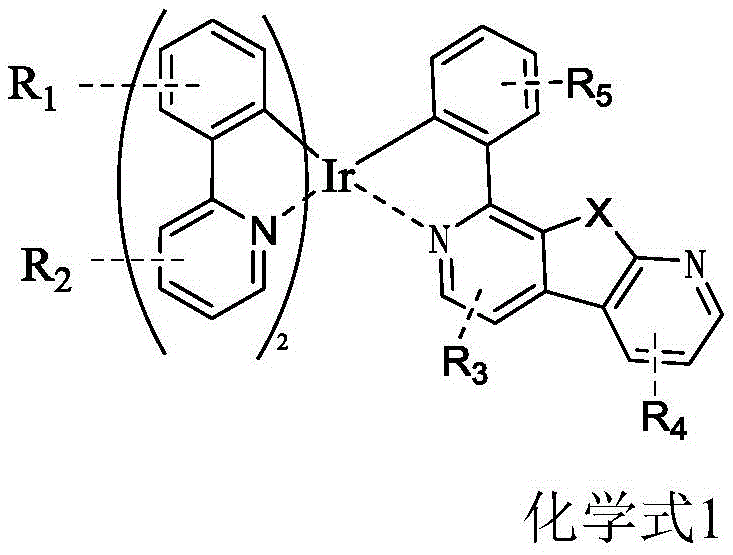
The core innovation lies in the versatile molecular architecture defined by Chemical Formula 1, where substituents R1 through R5 can be independently selected from a broad range of groups including hydrogen, deuterium, halogens, and various alkyl or aryl moieties. This modularity allows for fine-tuning of the HOMO-LUMO energy gaps, which is essential for achieving pure color emission and high quantum efficiency. Furthermore, the presence of oxygen or sulfur atoms within the heterocyclic ring system (denoted as X) provides additional handles for modifying the steric and electronic environment around the iridium center. Such structural flexibility is paramount for developing a robust portfolio of high-purity OLED material candidates that can meet the rigorous demands of commercial display applications.
The Limitations of Conventional Methods vs. The Novel Approach
The Limitations of Conventional Methods
Historically, the development of phosphorescent emitters has been hindered by several critical bottlenecks that impact both performance and manufacturability. Traditional iridium complexes often suffer from relatively short operational lifetimes and lower luminous efficiencies when integrated into organic light-emitting diodes. The synthesis of these legacy materials frequently involves harsh reaction conditions and complex purification protocols that are difficult to scale without compromising product integrity. Moreover, the environmental footprint associated with the production of older generation phosphors is significant, often requiring extensive solvent usage and generating hazardous waste streams. For supply chain managers, these factors translate into higher costs, longer lead times, and increased regulatory compliance burdens. The inability to consistently achieve high purity levels without expensive chromatographic separations further exacerbates the economic challenges, making mass production of high-performance devices economically unviable.
The Novel Approach
In stark contrast, the methodology outlined in CN110642892B offers a streamlined and highly efficient pathway to superior emissive materials. The novel approach leverages a rational design strategy where specific heterocyclic ligands are combined with cyclometalated precursors to create complexes with inherently stable excited states. This design not only enhances the theoretical luminous efficiency towards the 100% limit but also significantly extends the service life of the resulting devices. From a process engineering perspective, the synthesis is remarkably straightforward, utilizing common industrial solvents and moderate reaction temperatures. This simplicity facilitates easier scale-up and reduces the overall cost of goods sold. By focusing on ligands that promote strong spin-orbit coupling while maintaining thermal stability, this new class of materials effectively overcomes the efficiency-roll-off issues commonly seen in conventional dopants, positioning them as ideal candidates for cost reduction in electronic chemical manufacturing.
Mechanistic Insights into Iridium-Catalyzed Cyclometalation and Ligand Exchange
The formation of these high-performance iridium complexes relies on a well-established yet meticulously optimized sequence of organometallic transformations. The process begins with the cyclometalation of substituted phenylpyridine derivatives with iridium trichloride trihydrate. In this step, the C-H activation of the aryl ring occurs under reflux conditions in a mixture of ethylene glycol ether and water, leading to the formation of a chloro-bridged dimer intermediate. This dimerization is a critical juncture where the stoichiometry and solvent choice dictate the purity of the resulting bridge. Subsequent cleavage of the chloro bridges is achieved through a metathesis reaction with silver trifluoromethanesulfonate in a dichloromethane and methanol solvent system. This silver-mediated step replaces the chloride ligands with methoxy groups, generating a highly reactive cationic iridium species that is primed for the final coordination event.
Impurity control is maintained throughout this sequence by leveraging the differential solubility of intermediates and byproducts. The use of silver salts ensures the complete removal of chloride ions, which can otherwise act as quenchers of phosphorescence or sources of instability in the final device. The final step involves the coordination of the ancillary heterocyclic ligand in anhydrous ethanol. This ligand exchange is driven by the thermodynamic stability of the final tris-chelate or bis-cyclometalated complex. The rigorous purification protocols described, including multiple washing steps with water, ethanol, and petroleum ether, followed by silica gel column chromatography, ensure that the final product meets the stringent purity requirements necessary for OLED applications. This mechanistic understanding allows process chemists to identify critical control points and optimize yields, ensuring a reliable supply of commercial scale-up of complex polymer additives and related electronic materials.
How to Synthesize Novel Iridium Complexes Efficiently
The synthesis of these advanced emitters follows a robust three-step protocol that balances high yield with operational simplicity. The initial cyclometalation establishes the core iridium-carbon bonds, followed by the activation of the metal center via silver salt treatment, and concludes with the introduction of the functional ancillary ligand. This modular approach allows for the rapid generation of diverse analogues by simply varying the starting phenylpyridine or the ancillary ligand. Detailed standardized synthetic steps for specific embodiments, such as Compound W001, are provided in the patent examples, demonstrating reproducibility and scalability. For a comprehensive guide on executing this synthesis with precise stoichiometric ratios and workup procedures, please refer to the structured protocol below.
- Cyclometalation of phenylpyridine derivatives with iridium trichloride in ethylene glycol ether/water to form bridged chloro-dimers.
- Conversion of the chloro-bridged intermediate to a methoxy-bridged species using silver trifluoromethanesulfonate in dichloromethane/methanol.
- Final coupling with specific heterocyclic ancillary ligands in anhydrous ethanol under reflux to yield the target iridium complex.
Commercial Advantages for Procurement and Supply Chain Teams
For procurement managers and supply chain heads, the adoption of this novel synthetic route offers tangible strategic benefits beyond mere technical performance. The streamlined nature of the process eliminates the need for exotic reagents or extreme reaction conditions, which directly correlates to reduced capital expenditure on specialized equipment. Furthermore, the high yields reported in the patent examples suggest a material-efficient process that minimizes waste generation, aligning with modern sustainability goals and reducing disposal costs. The ability to produce these materials with high purity using standard chromatographic techniques ensures a consistent quality supply, mitigating the risk of device failure due to material impurities. This reliability is essential for maintaining continuous production lines in the fast-paced consumer electronics sector.
- Cost Reduction in Manufacturing: The synthetic pathway utilizes readily available starting materials such as substituted phenylpyridines and iridium trichloride, which are commercially accessible at scale. By avoiding multi-step ligand syntheses that require protecting group strategies, the overall number of unit operations is significantly reduced. This simplification leads to substantial cost savings in terms of labor, energy consumption, and solvent recovery. Additionally, the high conversion rates observed in the silver-mediated step minimize the loss of precious iridium, a critical factor given the high market value of noble metals. Consequently, manufacturers can achieve a more favorable cost structure without compromising on the performance metrics of the final OLED panels.
- Enhanced Supply Chain Reliability: The robustness of the reaction conditions, which tolerate standard industrial solvents like ethanol and dichloromethane, ensures that the supply chain is less vulnerable to disruptions caused by the scarcity of specialized reagents. The modular nature of the synthesis allows for flexible production scheduling, where different analogues can be produced on the same equipment train with minimal changeover time. This flexibility is crucial for responding to fluctuating market demands for specific emission colors or efficiency profiles. Moreover, the established purification methods are compatible with existing infrastructure, facilitating a smoother transition from pilot scale to full commercial production without the need for extensive facility modifications.
- Scalability and Environmental Compliance: The process is designed with scalability in mind, utilizing reflux conditions that are easily managed in large-scale reactors. The waste streams generated are primarily aqueous and organic solvents that can be treated using standard effluent management systems, ensuring compliance with environmental regulations. The elimination of heavy metal catalysts in the final coupling step further reduces the environmental burden and simplifies the regulatory approval process for the final product. This eco-friendly profile not only reduces liability but also enhances the brand image of companies adopting these green chemistry principles, making them more attractive to environmentally conscious investors and consumers.
Frequently Asked Questions (FAQ)
The following questions address common technical and commercial inquiries regarding the implementation of these novel iridium complexes in OLED manufacturing. These insights are derived directly from the experimental data and claims presented in the patent documentation, providing a factual basis for decision-making. Understanding these aspects helps stakeholders evaluate the feasibility of integrating this technology into their existing product pipelines and assess the potential return on investment.
Q: What are the key structural features of the novel iridium complexes in CN110642892B?
A: The complexes feature a central iridium atom coordinated with two cyclometalated ligands and one specific heterocyclic ancillary ligand, allowing for tunable emission wavelengths and enhanced stability.
Q: How does this new material compare to traditional phosphorescent dopants like Ir(ppy)3?
A: Devices utilizing these novel complexes demonstrate significantly reduced driving voltages and current densities, alongside markedly improved luminous efficiency and operational lifetime compared to standard Ir(ppy)3 references.
Q: Is the synthesis process scalable for industrial production?
A: Yes, the patented method utilizes standard solvent systems like ethylene glycol ether, dichloromethane, and ethanol, with straightforward workup procedures involving filtration and column chromatography, indicating strong potential for commercial scale-up.
Partnering with NINGBO INNO PHARMCHEM: Your Reliable Iridium Complex Supplier
As the demand for high-efficiency display materials continues to surge, partnering with an experienced CDMO is essential for navigating the complexities of organometallic synthesis. NINGBO INNO PHARMCHEM possesses extensive experience scaling diverse pathways from 100 kgs to 100 MT/annual commercial production, ensuring that your supply needs are met with precision and consistency. Our state-of-the-art facilities are equipped with rigorous QC labs capable of verifying stringent purity specifications, guaranteeing that every batch of iridium complex meets the exacting standards required for premium OLED applications. We understand the critical nature of material consistency in display manufacturing and are committed to delivering products that enhance device performance and longevity.
We invite you to collaborate with our technical team to explore how these novel iridium complexes can optimize your product lineup. Contact our technical procurement team today to request a Customized Cost-Saving Analysis tailored to your specific volume requirements. We are ready to provide specific COA data and comprehensive route feasibility assessments to support your R&D and procurement strategies. Let us help you accelerate your path to market with reliable, high-quality electronic materials that drive innovation.