
Advanced Purification Technology for High-Purity Olaparib and Commercial Scalability
Advanced Purification Technology for High-Purity Olaparib and Commercial Scalability
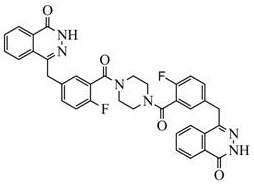
The global demand for potent poly ADP-ribose polymerase (PARP) inhibitors continues to surge as oncology treatments evolve towards targeted therapies. Within this critical landscape, the quality of the active pharmaceutical ingredient (API) determines both therapeutic efficacy and patient safety. Patent CN111732547B introduces a transformative refining method specifically designed to address persistent purity challenges in Olaparib synthesis. This technical breakthrough focuses on the effective removal of the Olaparib PiP dimer, a structurally similar impurity that has historically plagued production lines. By leveraging a precise solvent engineering approach involving N-methylpyrrolidone and ethyl acetate, this methodology offers a robust pathway for manufacturers seeking to enhance their reliable pharmaceutical intermediates supplier capabilities. The following analysis details how this innovation resolves complex separation issues while maintaining economic viability for large-scale operations.
The Limitations of Conventional Methods vs. The Novel Approach
The Limitations of Conventional Methods
Traditional purification protocols for Olaparib have predominantly relied on single-solvent or simple binary systems utilizing alcohols such as n-propyl alcohol, isopropyl alcohol, or tert-butanol, often combined with acetone or ethyl acetate. While these conventional solvents demonstrate adequate performance in removing general organic impurities, they exhibit a critical failure point regarding the Olaparib PiP dimer. This specific dimeric impurity arises from piperazine contaminants in the cyclopropanecarbonyl piperazine raw material during the condensation step. Due to the striking structural homology between the dimer and the target Olaparib molecule, their solubility profiles in standard alcoholic media are nearly identical. Consequently, standard recrystallization techniques fail to discriminate between the product and the impurity, leading to co-crystallization. This results in final API batches that struggle to meet stringent regulatory specifications for related substances, necessitating repeated, yield-destructive purification cycles that inflate production costs and extend lead times significantly.
The Novel Approach
The innovative strategy outlined in the patent data fundamentally shifts the purification paradigm by employing a tailored mixed-solvent system comprising N-methylpyrrolidone (NMP) and ethyl acetate. This approach capitalizes on the unique solvation properties of NMP, a polar aprotic solvent, which effectively dissolves both the Olaparib crude product and the stubborn PiP dimer impurity at elevated temperatures. The critical innovation lies in the subsequent antisolvent crystallization step where ethyl acetate is introduced in a controlled manner. By strictly managing the volume ratio of NMP to the total ethyl acetate usage within the range of 0.4 to 1.5:1, the process creates a thermodynamic environment where Olaparib selectively precipitates while the dimer impurity remains solvated in the mother liquor. This method not only simplifies the operational workflow but also ensures that the final crystalline product achieves exceptional purity levels without the need for complex chromatographic separations, thereby streamlining the path to commercial scale-up of complex pharmaceutical intermediates.
Mechanistic Insights into Solvent-Mediated Crystallization
The efficacy of this refining method is rooted in the precise manipulation of solubility parameters and crystal growth kinetics. N-methylpyrrolidone acts as a powerful solubilizing agent due to its high dipole moment and ability to form hydrogen bonds, ensuring that the crude Olaparib and the PiP dimer are fully molecularly dispersed at temperatures between 50°C and 70°C. This complete dissolution is crucial because any undissolved particulate matter can act as a nucleation site for impurity inclusion. Upon the addition of ethyl acetate, which acts as an antisolvent, the overall polarity of the medium decreases. However, the specific ratio of solvents is tuned such that the saturation point of Olaparib is reached before that of the dimer. As the solution is cooled gradually from 30°C down to 0°C, the supersaturation drives the formation of pure Olaparib crystals. The slow cooling rate and controlled stirring speed of 150 rpm facilitate the growth of larger, well-defined crystal lattices that inherently reject impurity molecules, a phenomenon known as lattice exclusion. This mechanistic control ensures that the PiP dimer, which has slightly different steric and electronic properties, is energetically favored to stay in the liquid phase rather than incorporating into the growing solid matrix.
Furthermore, the integration of an activated carbon treatment step prior to crystallization plays a vital role in the overall impurity profile management. Activated carbon possesses a high surface area and porous structure capable of adsorbing colored impurities and high molecular weight organic byproducts that could otherwise interfere with crystal nucleation. By removing these potential nucleation inhibitors and chromophores early in the process, the subsequent crystallization proceeds with greater uniformity. The filtration step removes the carbon along with the adsorbed impurities, yielding a clear filtrate that is ideal for controlled precipitation. This dual mechanism of adsorption followed by selective crystallization provides a synergistic effect, drastically reducing the total impurity load. The result is a refined product where the PiP dimer content is suppressed to trace levels, typically below 0.05%, demonstrating a level of high-purity Olaparib consistency that is essential for downstream formulation and regulatory approval.
How to Synthesize Olaparib Efficiently
Implementing this refining protocol requires strict adherence to solvent ratios and thermal gradients to maximize yield and purity. The process is designed to be operationally simple, avoiding the need for exotic reagents or high-pressure equipment, which makes it highly attractive for cost reduction in API manufacturing. The following guide outlines the critical operational parameters derived from the patent examples, focusing on the dissolution, decolorization, and staged crystallization phases. Operators must ensure precise temperature control during the dissolution phase to prevent thermal degradation while guaranteeing complete solubility. Similarly, the cooling ramp during crystallization must be managed carefully to avoid oiling out or rapid precipitation, which can trap impurities. For a comprehensive breakdown of the standardized operating procedures and safety protocols, please refer to the detailed synthesis steps provided below.
- Dissolve crude Olaparib in a mixed solvent of N-methylpyrrolidone and ethyl acetate at 50°C to 70°C to ensure complete solubilization.
- Perform decolorization using activated carbon followed by hot filtration to remove insoluble particulates and colored impurities.
- Induce crystallization by adding additional ethyl acetate and controlling the temperature gradient from 30°C down to 0°C.
Commercial Advantages for Procurement and Supply Chain Teams
From a strategic procurement perspective, the adoption of this refining technology offers substantial benefits beyond mere technical compliance. The primary advantage lies in the simplification of the purification train. By eliminating the need for multiple recrystallization cycles or expensive preparative chromatography to remove the PiP dimer, manufacturers can significantly reduce solvent consumption and processing time. This streamlined workflow translates directly into lower operational expenditures and a reduced environmental footprint, aligning with modern green chemistry initiatives. Furthermore, the solvents employed—N-methylpyrrolidone and ethyl acetate—are commodity chemicals with stable global supply chains. Unlike specialized chiral resolving agents or exotic catalysts, these materials are readily available in bulk quantities, mitigating the risk of supply disruptions. This reliability ensures consistent production scheduling and enhances the overall resilience of the supply chain, allowing partners to maintain steady inventory levels without the volatility associated with scarce reagents.
- Cost Reduction in Manufacturing: The elimination of complex separation technologies and the reduction in processing cycles lead to significant operational savings. By achieving high purity in a single crystallization step, energy consumption for heating and cooling is minimized, and labor hours are reduced. The high recovery yield observed in pilot scales indicates that material loss is kept to a minimum, maximizing the value extracted from every kilogram of crude input. This efficiency allows for a more competitive pricing structure without compromising on the stringent quality standards required for oncology drugs.
- Enhanced Supply Chain Reliability: Utilizing widely available industrial solvents ensures that production is not bottlenecked by the availability of niche chemicals. The robustness of the process against minor variations in raw material quality further stabilizes the supply output. This consistency is critical for long-term supply agreements with major pharmaceutical companies, where batch-to-batch reproducibility is a contractual obligation. The method's adaptability to standard stainless steel reactors means that existing manufacturing infrastructure can be utilized without costly retrofits, accelerating time-to-market for generic or biosimilar versions of the drug.
- Scalability and Environmental Compliance: The process has been demonstrated to scale effectively from laboratory glassware to multi-liter reaction vessels without loss of efficiency. The use of ethyl acetate, which is relatively benign compared to chlorinated solvents, simplifies waste stream management and reduces the cost of solvent recovery and disposal. The ability to recycle mother liquors or recover solvents efficiently contributes to a sustainable manufacturing model. This scalability ensures that the technology can meet surging market demands for PARP inhibitors, supporting the global expansion of cancer treatment accessibility.
Frequently Asked Questions (FAQ)
The following questions address common technical and commercial inquiries regarding the implementation of this Olaparib refining technology. These insights are derived directly from the experimental data and process descriptions found in the patent literature. Understanding these nuances is essential for technical teams evaluating the feasibility of integrating this method into their existing production lines. The answers provided reflect the consensus on best practices for handling the specific solvent systems and impurity profiles associated with this synthesis route.
Q: Why is the Olaparib PiP dimer impurity difficult to remove?
A: The Olaparib PiP dimer shares similar physicochemical properties with the target molecule, making separation via standard alcohol-based recrystallization ineffective. Specialized solvent systems are required to exploit subtle solubility differences.
Q: What represents the key advantage of the NMP/Ethyl Acetate system?
A: This specific solvent combination optimizes the solubility ratio between the product and the dimer impurity, allowing for high-yield crystallization while trapping the impurity in the mother liquor.
Q: Is this purification method suitable for industrial scale-up?
A: Yes, the process utilizes common industrial solvents and standard temperature control protocols, demonstrating successful scalability from gram-scale to multi-kilogram batches without complex equipment requirements.
Partnering with NINGBO INNO PHARMCHEM: Your Reliable Olaparib Supplier
At NINGBO INNO PHARMCHEM, we recognize that the transition from laboratory innovation to commercial reality requires a partner with deep technical expertise and robust manufacturing capabilities. Our team possesses extensive experience scaling diverse pathways from 100 kgs to 100 MT/annual commercial production, ensuring that complex purification challenges like the removal of PiP dimers are managed with precision. We are committed to delivering stringent purity specifications through our rigorous QC labs, which are equipped to detect and quantify trace impurities at ppm levels. Our facility is designed to handle sensitive oncology intermediates with the highest standards of containment and quality assurance, providing our clients with the confidence needed to navigate the regulatory landscape.
We invite you to collaborate with us to optimize your supply chain for Olaparib and related PARP inhibitors. Our technical team is ready to provide a Customized Cost-Saving Analysis tailored to your specific volume requirements and quality targets. We encourage you to contact our technical procurement team to request specific COA data and route feasibility assessments. By partnering with us, you gain access to a reliable source of high-quality pharmaceutical intermediates that can accelerate your development timelines and secure your market position in the competitive oncology sector.