
Revolutionizing Oxime Ether Production: A Metal-Free Green Catalytic Route for Commercial Scale-Up
The landscape of fine chemical synthesis is undergoing a paradigm shift towards sustainability and efficiency, driven by stringent regulatory requirements and the economic necessity of greener processes. A pivotal development in this domain is documented in patent CN114394913A, which discloses a novel synthetic method for oxime ether derivatives. This technology represents a significant departure from conventional methodologies by employing heteropoly acids as green solid acid catalysts in conjunction with environmentally benign solvents such as dimethyl carbonate. For R&D directors and procurement strategists in the pharmaceutical sector, this innovation offers a compelling value proposition: the ability to produce high-purity pharmaceutical intermediates without the burden of transition metal contamination or the use of hazardous chlorinated solvents. The method operates under mild conditions, typically ranging from 25°C to 100°C, and achieves high atom economy with water as the sole byproduct, addressing critical pain points in modern chemical manufacturing regarding waste disposal and process safety.
The Limitations of Conventional Methods vs. The Novel Approach
The Limitations of Conventional Methods
Traditionally, the construction of the oxime ether functional group has relied heavily on cross-coupling and substitution reactions that are fraught with operational and environmental challenges. Classical approaches often necessitate the use of stoichiometric amounts of strong bases or oxidants, coupled with transition metal catalysts such as iridium or scandium complexes, which introduce significant cost and complexity. Furthermore, these reactions are frequently conducted in chlorinated solvents like dichloroethane or require toxic additives such as carbon tetrachloride and triphenylphosphine. The reliance on these hazardous materials not only escalates the cost of raw material procurement and waste treatment but also poses severe risks regarding residual metal impurities in the final active pharmaceutical ingredients (APIs). Additionally, the atom economy of these traditional pathways is often suboptimal due to the generation of substantial salt waste and organic byproducts, complicating downstream purification and reducing overall process efficiency.
The Novel Approach
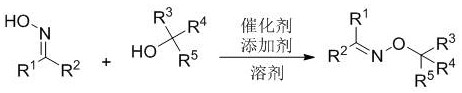
In stark contrast, the methodology outlined in the patent introduces a streamlined catalytic system that leverages the unique properties of heteropoly acids. These catalysts are stable, non-toxic, and highly efficient, functioning effectively at loadings as low as 1 mol%. By utilizing dimethyl carbonate (DMC) as the reaction medium, the process aligns with green chemistry principles, offering low toxicity and high biodegradability. The reaction proceeds smoothly in an air atmosphere, eliminating the need for expensive and energy-intensive inert gas protection systems. This novel approach facilitates the direct O-alkylation of oximes with alcohols, bypassing the need for pre-activated alcohol derivatives. The result is a robust synthetic route that delivers excellent yields, often exceeding 90% for a wide range of substrates, while drastically simplifying the work-up procedure to a simple filtration and evaporation sequence.
Mechanistic Insights into Heteropoly Acid-Catalyzed O-Alkylation
The efficacy of this synthetic route lies in the potent Brønsted acidity of the heteropoly acid catalysts, such as phosphotungstic acid, which activates the hydroxyl group of the alcohol substrate. In the presence of the catalyst, the alcohol undergoes protonation, facilitating the formation of a carbocation intermediate, particularly when tertiary alcohols like triphenylmethanol are employed. This electrophilic species is then readily attacked by the nucleophilic oxygen atom of the oxime, leading to the formation of the oxime ether bond. The mild acidic environment provided by the heteropoly acid is sufficient to drive the reaction forward without promoting the decomposition of the sensitive oxime functionality, a common issue with stronger mineral acids. Moreover, the addition of drying agents like anhydrous magnesium sulfate serves to sequester the water produced during the condensation, shifting the equilibrium towards product formation and ensuring high conversion rates.
From an impurity control perspective, the metal-free nature of this catalytic system is paramount. Traditional transition metal catalysis often leaves trace amounts of heavy metals that require rigorous and costly scavenging steps to meet pharmacopeial standards. By completely eliminating transition metals from the reaction matrix, this method inherently guarantees a cleaner impurity profile. The use of DMC as a solvent further aids in purity, as it is easily removed due to its volatility and does not participate in side reactions that could generate difficult-to-remove organic impurities. This mechanistic simplicity translates directly into a more predictable and controllable manufacturing process, reducing the variability often associated with complex metal-ligand systems and ensuring consistent batch-to-batch quality for critical pharmaceutical intermediates.
How to Synthesize Oxime Ether Derivatives Efficiently
Implementing this synthesis in a laboratory or pilot plant setting involves a straightforward protocol that minimizes operational complexity. The process begins with the dissolution of the oxime and alcohol substrates in dimethyl carbonate, followed by the addition of the heteropoly acid catalyst and a desiccant additive. The mixture is then stirred under ambient air conditions at controlled temperatures, allowing the reaction to proceed to completion as monitored by thin-layer chromatography. Upon completion, the acidic catalyst is neutralized, and the product is isolated through filtration and solvent removal, followed by standard purification techniques such as column chromatography if necessary. This operational simplicity makes the method highly attractive for rapid scale-up and process optimization.
- Dissolve the starting substrate alcohol compound and oxime compound in a green solvent such as dimethyl carbonate (DMC).
- Add a heteropoly acid catalyst (e.g., phosphotungstic acid) and an additive like anhydrous magnesium sulfate to the reaction mixture.
- Stir the reaction in an air atmosphere at temperatures between 25°C and 100°C for 0.5 to 12 hours, followed by neutralization and purification.
Commercial Advantages for Procurement and Supply Chain Teams
For procurement managers and supply chain leaders, the adoption of this heteropoly acid-catalyzed technology offers transformative economic and logistical benefits. The elimination of expensive transition metal catalysts and toxic chlorinated solvents results in a substantial reduction in raw material costs. Furthermore, the simplified work-up procedure, which avoids complex metal scavenging and extensive aqueous washes, significantly lowers utility consumption and labor costs associated with production. The use of commercially available and stable reagents ensures a reliable supply chain, mitigating the risks associated with sourcing specialized or regulated chemicals. This robustness enhances supply continuity, allowing manufacturers to maintain consistent production schedules without the disruptions often caused by the scarcity of exotic catalysts or strict regulatory controls on hazardous solvents.
- Cost Reduction in Manufacturing: The replacement of precious metal catalysts with inexpensive heteropoly acids leads to a drastic decrease in catalyst expenditure. Additionally, the high atom economy and the generation of water as the only byproduct minimize waste disposal fees. The ability to operate under mild conditions without the need for specialized anhydrous or anaerobic equipment further reduces capital expenditure and energy consumption, contributing to a leaner and more cost-effective manufacturing model.
- Enhanced Supply Chain Reliability: The reagents utilized in this process, including dimethyl carbonate and common heteropoly acids, are commodity chemicals with stable global supply chains. This availability reduces the lead time for raw material procurement and insulates the production process from the volatility often seen in the market for specialized organometallic reagents. Consequently, manufacturers can achieve greater predictability in their production planning and inventory management.
- Scalability and Environmental Compliance: The green nature of this process aligns perfectly with increasingly stringent environmental regulations. By avoiding chlorinated solvents and heavy metals, the facility reduces its environmental footprint and simplifies compliance reporting. The mild reaction conditions and simple isolation steps make the process highly scalable from gram to ton quantities without requiring significant re-engineering, ensuring that commercial scale-up can be achieved rapidly and safely.
Frequently Asked Questions (FAQ)
The following questions address common technical and commercial inquiries regarding the implementation of this green synthetic methodology. These insights are derived directly from the experimental data and beneficial effects reported in the patent documentation, providing a clear understanding of the technology's capabilities and limitations for potential adopters.
Q: What are the primary advantages of using heteropoly acid catalysts over transition metals for oxime ether synthesis?
A: Heteropoly acids offer a metal-free alternative that eliminates the risk of heavy metal residues in pharmaceutical intermediates, simplifies post-processing by avoiding complex metal removal steps, and utilizes greener solvents like dimethyl carbonate instead of toxic chlorinated hydrocarbons.
Q: Can this synthetic method accommodate diverse substrate structures?
A: Yes, the method demonstrates broad substrate applicability, successfully synthesizing oxime ethers from aromatic, aliphatic, and heteroatom-containing oximes as well as various tertiary alcohols like triphenylmethanol and adamantanol with high yields.
Q: How does this process improve environmental compliance compared to traditional methods?
A: By replacing corrosive strong acids and toxic solvents like carbon tetrachloride with solid heteropoly acids and biodegradable dimethyl carbonate, the process significantly reduces hazardous waste generation and improves overall atom economy with water as the only byproduct.
Partnering with NINGBO INNO PHARMCHEM: Your Reliable Oxime Ether Derivatives Supplier
At NINGBO INNO PHARMCHEM, we recognize the critical importance of adopting sustainable and efficient synthetic routes to meet the evolving demands of the global pharmaceutical industry. Our team of expert chemists has extensively evaluated the heteropoly acid-catalyzed synthesis of oxime ethers and is fully equipped to translate this laboratory-scale innovation into commercial reality. We possess extensive experience scaling diverse pathways from 100 kgs to 100 MT/annual commercial production, ensuring that the benefits of this green technology are realized at an industrial level. Our state-of-the-art facilities are designed to handle complex organic syntheses with stringent purity specifications, supported by rigorous QC labs that guarantee the highest quality standards for every batch produced.
We invite you to collaborate with us to leverage this advanced synthetic technology for your specific project needs. Our technical procurement team is ready to provide a Customized Cost-Saving Analysis tailored to your production volume and quality requirements. Please contact us to request specific COA data and route feasibility assessments, and let us demonstrate how our expertise in green chemistry can drive value and efficiency in your supply chain.