
Scaling Metal-Free Electrochemical Alkyl Boronate Synthesis for Commercial Pharmaceutical Production
The landscape of organic synthesis is undergoing a paradigm shift towards sustainable and efficient methodologies, particularly in the production of critical building blocks for the life sciences sector. Patent CN112552323A, published in March 2021, introduces a groundbreaking electrochemical approach for the preparation of alkyl borides, specifically alkyl pinacol boronates, which are indispensable intermediates in modern drug discovery. This technology addresses the longstanding challenges associated with traditional transition-metal-catalyzed borylation by replacing expensive and toxic catalysts with clean electrical energy. For R&D directors and process chemists, this represents a significant opportunity to streamline synthetic routes for complex API intermediates while adhering to increasingly stringent environmental and purity regulations. The method utilizes readily available alkyl halides and bis(catecholato)diboron (B2cat2) as starting materials, operating under mild conditions that preserve sensitive functional groups often found in late-stage pharmaceutical candidates.
Furthermore, the scalability of this electrochemical protocol offers a compelling value proposition for supply chain managers looking to secure reliable sources of high-purity fine chemical intermediates. Unlike conventional methods that struggle with heat transfer and mixing issues upon scale-up, electrochemical reactors can be modularly expanded, ensuring consistent quality from gram-scale optimization to multi-ton commercial production. The elimination of transition metals not only reduces the raw material cost but also drastically simplifies the downstream purification process, removing the need for costly metal scavenging resins that often bottleneck manufacturing timelines. As the industry moves towards greener chemistry, adopting such metal-free electrosynthetic routes positions manufacturers at the forefront of innovation, delivering cost-effective and environmentally compliant solutions for the global pharmaceutical market.
The Limitations of Conventional Methods vs. The Novel Approach
The Limitations of Conventional Methods
Traditionally, the construction of carbon-boron bonds, essential for Suzuki-Miyaura cross-coupling reactions, has relied heavily on transition metal catalysis, typically employing Nickel or Palladium complexes. These conventional pathways, while effective, suffer from several inherent drawbacks that impact both the economic and operational efficiency of large-scale manufacturing. Firstly, the requirement for expensive transition metal catalysts and specialized phosphine ligands significantly inflates the raw material costs, creating volatility in the supply chain dependent on the availability of precious metals. Secondly, and perhaps more critically for pharmaceutical applications, is the issue of residual metal contamination. Regulatory agencies impose strict limits on heavy metal residues in active pharmaceutical ingredients, necessitating additional purification steps such as treatment with scavenger resins or repeated recrystallization, which inevitably leads to yield loss and increased processing time. Moreover, many traditional borylation protocols require harsh reaction conditions, including elevated temperatures and strong bases, which can compromise the integrity of complex molecules containing base-sensitive or thermally labile functional groups.
The Novel Approach
In stark contrast, the electrochemical method disclosed in the patent data offers a transformative solution by leveraging electricity as the primary driving force for the reaction, effectively bypassing the need for external chemical oxidants or reductants. This novel approach utilizes an undivided cell setup where alkyl halides undergo electrochemical activation to generate reactive radical species, which are subsequently trapped by the diboron reagent. The absence of transition metal catalysts is a game-changer, as it inherently guarantees a product free from heavy metal impurities, thereby simplifying the regulatory approval process for drug substances. The reaction proceeds at room temperature (approximately 25°C) under inert atmosphere, demonstrating exceptional functional group tolerance that allows for the direct borylation of complex substrates without the need for extensive protecting group strategies. This mildness, combined with the operational simplicity of merely controlling the electric current, makes the process highly robust and adaptable for continuous flow manufacturing, offering a clear pathway to reducing the overall cost of goods sold (COGS) for high-value intermediates.
Mechanistic Insights into Electrochemical Radical Borylation
The core of this innovative synthesis lies in the electro-generation of alkyl radicals via a single electron transfer (SET) process at the electrode surface. When a constant current is applied across the electrodes immersed in the reaction mixture containing the alkyl halide and electrolyte, the alkyl halide undergoes reduction at the cathode (or oxidation depending on the specific electrode potential and setup described, though typically reductive cleavage of C-X bond is implied for radical generation in similar contexts, the patent specifies anode/cathode setup with Mg anode). This electrochemical activation cleaves the carbon-halogen bond to form a highly reactive alkyl radical intermediate. Simultaneously, the diboron reagent, B2cat2, interacts with the electrochemical environment, facilitating the capture of the alkyl radical to form a C-B bond. This radical mechanism is distinct from the oxidative addition/reductive elimination cycles seen in palladium catalysis, offering a complementary reactivity profile that is particularly effective for unactivated alkyl halides which are often sluggish in traditional cross-coupling scenarios.

Following the initial electro-borylation step, the reaction mixture contains a catechol boronate intermediate which is then subjected to a trans-esterification process. The addition of pinacol and a base like triethylamine in the second step drives the equilibrium towards the formation of the thermodynamically more stable pinacol boronate ester. This two-step one-pot procedure ensures that the final product is the widely used pinacol derivative, compatible with standard Suzuki coupling conditions. The mechanistic pathway avoids the formation of homocoupling byproducts (Wurtz-type coupling) often seen in radical chemistry due to the rapid trapping of the radical by the abundant diboron species. Furthermore, the use of magnesium as the sacrificial anode material helps maintain the ionic balance in the solution without introducing contaminating metal ions that would require removal, thus preserving the high purity profile of the final alkyl boronate product suitable for sensitive pharmaceutical applications.
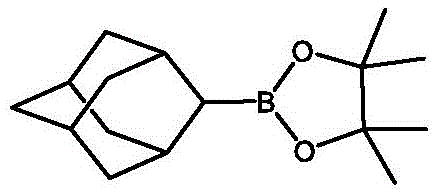
From an impurity control perspective, this mechanism offers superior selectivity. Since the reaction does not involve transition metal complexes that can coordinate with various functional groups (like amines, sulfides, or carbonyls), there is minimal risk of catalyst-induced side reactions or decomposition. The primary byproducts are typically the reduced halide salts and the oxidized anode material, both of which are easily removed during the aqueous workup. The patent data highlights excellent yields across a diverse range of substrates, including sterically hindered tertiary alkyl halides and rigid bicyclic systems like adamantane derivatives, demonstrating the robustness of the radical generation and trapping steps. This high level of control over the reaction trajectory ensures a clean impurity profile, reducing the burden on analytical teams to identify and quantify trace metal-related impurities.
How to Synthesize Alkyl Boronates Efficiently
The practical implementation of this electrochemical borylation protocol is designed for ease of operation, requiring standard laboratory equipment adapted for electrolysis. The process begins with the preparation of the electrolytic cell, where the choice of electrode materials plays a crucial role in efficiency; the patent suggests using magnesium as the anode and carbon-based materials like carbon cloth or felt as the cathode. The reaction is conducted in polar aprotic solvents such as DMF or DMAc, which effectively dissolve both the organic substrates and the supporting electrolyte, ensuring good conductivity. Operators simply need to set the constant current power supply to the specified range (typically 150-200 mA for small scale) and monitor the reaction progress, which is notably fast, often completing within minutes. This rapid turnover time significantly enhances throughput compared to thermal reactions that may require hours of heating. Detailed standardized synthesis steps see the guide below.
- Dissolve alkyl halide, B2cat2, and electrolyte in DMF or DMAc solvent within an undivided cell equipped with Mg anode and Carbon cloth cathode.
- Apply constant current (150-200 mA) under inert atmosphere at room temperature for 12-19 minutes to effect electro-borylation.
- Add pinacol and triethylamine to the reaction mixture, stir for 1 hour, then quench with brine and purify via column chromatography.
Commercial Advantages for Procurement and Supply Chain Teams
For procurement managers and supply chain heads, the adoption of this electrochemical technology translates into tangible strategic advantages that go beyond mere technical novelty. The most immediate impact is on the cost structure of the manufacturing process. By eliminating the need for precious metal catalysts like Palladium or Nickel, along with their associated expensive ligands, the direct material costs are significantly reduced. This is not merely a marginal saving; in large-scale production, the cost of catalysts and the subsequent purification media can constitute a substantial portion of the variable costs. Furthermore, the simplified workup procedure means less consumption of solvents and purification media, contributing to a leaner and more cost-efficient operation. The ability to source simple, commodity-grade alkyl halides and convert them directly into high-value boronates without complex pre-functionalization steps further optimizes the supply chain, reducing the number of unit operations and the associated logistical overhead.
- Cost Reduction in Manufacturing: The transition to a metal-free process fundamentally alters the cost equation by removing the dependency on volatile precious metal markets. Without the need for expensive catalysts, the bill of materials becomes more predictable and stable. Additionally, the elimination of metal scavenging steps—often required to meet ppm-level residue specifications in pharma—reduces the consumption of specialized resins and the loss of product yield associated with extra purification stages. This streamlined workflow results in substantial cost savings per kilogram of produced intermediate, enhancing the overall margin profile for contract manufacturing organizations and internal production units alike.
- Enhanced Supply Chain Reliability: Relying on electricity as a reagent offers a level of supply security that chemical reagents cannot match. The key raw materials, alkyl halides and diboron compounds, are widely available commodity chemicals with established global supply chains, minimizing the risk of shortages. Moreover, the mild reaction conditions reduce the wear and tear on reactor equipment and lower the energy demand for heating and cooling, contributing to a more resilient and sustainable manufacturing infrastructure. The robustness of the method against variations in substrate structure means that a single platform technology can be applied to a wide library of intermediates, simplifying inventory management and reducing the need for specialized process lines for different products.
- Scalability and Environmental Compliance: Electrochemical processes are inherently scalable through the numbering-up of cells or the use of larger electrode surfaces, avoiding the heat and mass transfer limitations typical of batch thermal reactions. This scalability ensures that the transition from pilot plant to commercial production is smooth and predictable, reducing time-to-market for new drug candidates. From an environmental standpoint, the absence of heavy metals aligns perfectly with green chemistry principles and strict environmental regulations regarding waste disposal. The reduction in hazardous waste generation lowers disposal costs and mitigates regulatory risks, making the facility more sustainable and socially responsible in the eyes of stakeholders and regulatory bodies.
Frequently Asked Questions (FAQ)
The following questions address common technical and commercial inquiries regarding the implementation of this electrochemical borylation technology. These insights are derived directly from the experimental data and technical specifications provided in the patent literature, aiming to clarify the operational feasibility and strategic benefits for potential adopters. Understanding these nuances is critical for R&D teams evaluating the technology for process development and for procurement teams assessing the long-term viability of the supply source.
Q: Does this electrochemical borylation method require transition metal catalysts?
A: No, the method described in patent CN112552323A is explicitly transition-metal-free, utilizing electrical energy to drive the radical formation instead of Nickel or Palladium catalysts, thereby eliminating heavy metal residue concerns.
Q: What types of alkyl halides are compatible with this synthesis route?
A: The process demonstrates broad substrate scope, successfully converting primary, secondary, and tertiary alkyl iodides and bromides, including complex scaffolds like adamantyl and cycloalkyl derivatives, into stable pinacol boronates.
Q: How does the post-reaction processing compare to traditional Miyaura borylation?
A: The workup is significantly simplified as it avoids the need for expensive metal scavengers or complex ligand removal; the product is isolated via standard aqueous quenching and silica gel chromatography.
Partnering with NINGBO INNO PHARMCHEM: Your Reliable Alkyl Boronate Supplier
At NINGBO INNO PHARMCHEM, we recognize the transformative potential of electrochemical synthesis in the production of high-purity pharmaceutical intermediates. As a leading CDMO partner, we have invested heavily in mastering these next-generation technologies to serve the evolving needs of the global life sciences industry. Our team possesses extensive experience scaling diverse pathways from 100 kgs to 100 MT/annual commercial production, ensuring that the benefits observed at the benchtop are fully realized in large-scale manufacturing. We maintain stringent purity specifications and operate rigorous QC labs equipped to detect trace impurities, guaranteeing that every batch of alkyl boronate meets the exacting standards required for GMP pharmaceutical synthesis. Our commitment to innovation allows us to offer clients a competitive edge through superior process efficiency and product quality.
We invite you to collaborate with us to leverage this advanced metal-free borylation technology for your specific project needs. Whether you are looking to optimize an existing route or develop a new synthetic pathway for a complex API intermediate, our technical experts are ready to provide a Customized Cost-Saving Analysis tailored to your volume requirements. We encourage you to contact our technical procurement team today to request specific COA data and route feasibility assessments. By partnering with NINGBO INNO PHARMCHEM, you gain access to a secure, scalable, and cost-effective supply chain solution that aligns with the future of sustainable chemical manufacturing.