
Scalable Electrochemical Production of High-Purity 10-Hydroxyphenanthrene Derivatives for Advanced Drug Synthesis
The pharmaceutical and fine chemical industries are constantly seeking more sustainable and efficient pathways to construct complex polycyclic aromatic scaffolds, which serve as critical backbones for bioactive natural products and advanced material ligands. Patent CN112126941B discloses a groundbreaking electrochemical methodology for the preparation of polysubstituted 10-hydroxyphenanthrene derivatives, addressing significant limitations in current synthetic strategies. This innovation leverages electrochemical C-H/C-H oxidative dehydrogenation coupling to achieve the intramolecular cyclization of substituted acetyl biphenyl derivatives under constant current conditions. By replacing traditional chemical oxidants with electricity, this technology offers a robust platform for generating high-purity intermediates essential for drug development and organic synthesis applications.
For research and development teams focused on process optimization, the ability to access these challenging molecular architectures without relying on precious metals represents a paradigm shift. The patent details a versatile protocol that utilizes simple starting materials and achieves high atom economy, directly aligning with the principles of modern green chemistry. As a reliable pharmaceutical intermediate supplier, understanding such technological advancements is crucial for maintaining a competitive edge in the synthesis of complex heterocycles and carbocycles used in next-generation therapeutics.
The Limitations of Conventional Methods vs. The Novel Approach
The Limitations of Conventional Methods
Historically, the construction of the 10-hydroxyphenanthrene skeleton has relied heavily on methods such as photocatalytic cyclization, McMurry coupling, olefin metathesis, and transition metal-catalyzed ring closures. While effective in laboratory settings, these conventional approaches suffer from substantial drawbacks when considered for industrial scale-up. A primary concern is the dependence on expensive noble metal catalysts, including iridium, ruthenium, rhodium, and palladium, which not only drive up raw material costs but also introduce significant toxicity concerns. Furthermore, these traditional chemical methods typically necessitate the use of stoichiometric amounts of chemical oxidants such as copper acetate, silver acetate, manganese acetate, or tert-butyl hydroperoxide (TBHP).
The introduction of these equivalent toxic metal oxidants inevitably leads to the generation of substantial quantities of hazardous by-products, complicating downstream separation and purification processes while creating environmental disposal challenges. Additionally, protocols utilizing molecular oxygen (O2) as an oxidant pose severe safety risks, particularly when mixed with flammable organic solvents under heating conditions, where the potential for fire or explosion cannot be ignored. These factors collectively hinder the cost-effective and safe mass production of high-purity phenanthrene derivatives required for commercial pharmaceutical manufacturing.
The Novel Approach
In stark contrast to legacy methods, the electrochemical strategy outlined in the patent utilizes electric current as a clean reagent to drive the oxidative coupling reaction, effectively replacing toxic chemical oxidants. This novel approach enables the direct functionalization of carbon-hydrogen bonds through an intramolecular oxidative coupling mechanism, significantly simplifying the synthetic route. The reaction proceeds in an undivided cell using a reticulated vitreous carbon (RVC) anode and a platinum (Pt) cathode, with hydrogen gas evolved as the sole by-product, thereby eliminating heavy metal contamination in the final product.
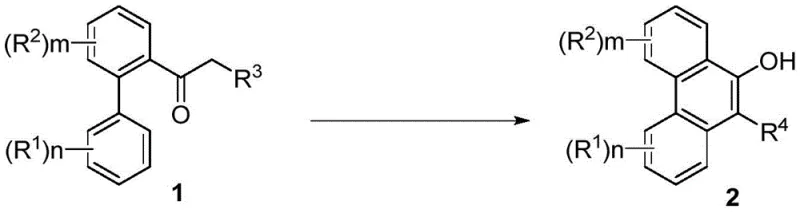
This method demonstrates exceptional substrate tolerance, accommodating a wide range of electron-withdrawing substituents including esters, ketones, sulfonyl groups, and cyano groups. The operational simplicity, combined with the avoidance of hazardous reagents, makes this electrochemical protocol highly suitable for industrial production. For procurement managers, this translates to cost reduction in fine chemical manufacturing by removing the need for expensive catalyst recovery systems and reducing waste treatment liabilities associated with heavy metal residues.
Mechanistic Insights into Electrochemical C-H/C-H Oxidative Coupling
The core of this technology lies in the anodic oxidation of the acetyl biphenyl substrate, which generates a radical cation intermediate at the electrode surface. This reactive species undergoes intramolecular electrophilic attack on the adjacent aromatic ring, facilitating the formation of the new carbon-carbon bond required to close the phenanthrene ring system. Subsequent deprotonation and further oxidation steps lead to the aromatization of the central ring, yielding the stable 10-hydroxyphenanthrene structure. The use of a quaternary ammonium salt, such as n-Bu4NPF6, serves as the supporting electrolyte to ensure sufficient conductivity within the alcohol solvent medium, typically methanol or ethanol.
From an impurity control perspective, the electrochemical nature of the reaction offers distinct advantages over chemical oxidation. Since the oxidizing power is precisely controlled by the applied current and potential, over-oxidation side reactions are minimized compared to the use of strong chemical oxidants like permanganates or chromates. The cathodic half-reaction involves the reduction of protons to form hydrogen gas, which escapes the reaction mixture, driving the equilibrium forward and preventing the accumulation of reduced by-products. This clean redox balance ensures that the crude reaction mixture contains fewer impurities, simplifying the purification workflow and enhancing the overall yield of the target high-purity OLED material or pharmaceutical intermediate.
How to Synthesize 10-Hydroxyphenanthrene Derivatives Efficiently
The synthesis protocol described in the patent provides a standardized procedure for converting acetyl biphenyl precursors into the desired phenanthrene scaffolds with high reproducibility. The process involves mixing the substrate with an electrolyte and base in a solvent, followed by electrolysis under controlled temperature and current conditions. This streamlined approach minimizes unit operations and reduces the complexity typically associated with multi-step transition metal catalysis. Detailed standardized synthesis steps see the guide below.
- Mix the acetyl biphenyl derivative substrate with a quaternary ammonium salt electrolyte and an inorganic base such as potassium carbonate in a suitable alcohol solvent.
- Install a reticulated vitreous carbon (RVC) anode and a platinum (Pt) cathode in an undivided cell under an inert argon atmosphere.
- Apply a constant current of 2.0 mA at 60°C for 15 hours, then concentrate and purify the resulting 10-hydroxyphenanthrene product via silica gel chromatography.
Commercial Advantages for Procurement and Supply Chain Teams
Adopting this electrochemical synthesis route offers transformative benefits for supply chain stability and operational expenditure. By shifting away from precious metal catalysis, manufacturers can decouple their production costs from the volatile market prices of rhodium, palladium, and iridium. Furthermore, the elimination of stoichiometric toxic oxidants significantly reduces the regulatory burden associated with hazardous waste disposal, leading to substantial cost savings in environmental compliance and waste management. The simplicity of the reaction setup also allows for easier technology transfer and scale-up from pilot plants to commercial manufacturing facilities.
- Cost Reduction in Manufacturing: The removal of expensive noble metal catalysts and toxic chemical oxidants drastically lowers the raw material bill of materials. Without the need for complex metal scavenging steps to meet stringent residual metal specifications for pharmaceutical ingredients, the downstream processing costs are significantly reduced. This leaner process flow enhances the overall economic viability of producing complex polysubstituted phenanthrene derivatives on a commercial scale.
- Enhanced Supply Chain Reliability: Relying on electricity as the primary oxidant mitigates risks associated with the supply chain disruptions of specialized chemical reagents. The starting materials, substituted acetyl biphenyls, are readily accessible, and the reaction conditions are mild enough to be performed in standard glass-lined or stainless steel reactors equipped with electrochemical modules. This robustness ensures consistent delivery timelines and reduces the lead time for high-purity pharmaceutical intermediates.
- Scalability and Environmental Compliance: The generation of hydrogen as the only by-product aligns perfectly with green chemistry initiatives and strict environmental regulations. The absence of heavy metal waste streams simplifies effluent treatment and reduces the environmental footprint of the manufacturing process. This eco-friendly profile facilitates smoother regulatory approvals and supports the long-term sustainability goals of global chemical enterprises seeking to minimize their ecological impact.
Frequently Asked Questions (FAQ)
The following questions address common technical and commercial inquiries regarding the electrochemical synthesis of 10-hydroxyphenanthrene derivatives. These insights are derived directly from the experimental data and beneficial effects reported in the patent documentation, providing clarity on the feasibility and advantages of this innovative method for potential partners and stakeholders.
Q: What are the primary advantages of this electrochemical method over traditional transition metal catalysis?
A: This method eliminates the need for expensive and toxic noble metal catalysts like palladium or rhodium, and avoids stoichiometric toxic oxidants, resulting in a cleaner process with hydrogen as the only byproduct.
Q: Is this synthesis route suitable for large-scale industrial production?
A: Yes, the process uses simple starting materials, operates under mild conditions (60°C), and avoids hazardous oxidants like oxygen gas, making it highly scalable and safe for industrial manufacturing.
Q: What is the substrate scope for this electrochemical cyclization?
A: The method demonstrates a wide substrate scope, tolerating various electron-withdrawing groups such as esters, cyano, and halogens, allowing for the rapid preparation of diverse polysubstituted derivatives.
Partnering with NINGBO INNO PHARMCHEM: Your Reliable 10-Hydroxyphenanthrene Derivative Supplier
At NINGBO INNO PHARMCHEM, we recognize the immense potential of electrochemical synthesis in revolutionizing the production of complex organic scaffolds. As a dedicated CDMO partner, we possess extensive experience scaling diverse pathways from 100 kgs to 100 MT/annual commercial production, ensuring that innovative laboratory methods like the one described in CN112126941B can be successfully translated into robust industrial processes. Our commitment to quality is underpinned by stringent purity specifications and rigorous QC labs, guaranteeing that every batch of 10-hydroxyphenanthrene derivatives meets the exacting standards required for pharmaceutical and electronic material applications.
We invite you to collaborate with us to leverage this cutting-edge technology for your specific project needs. Our technical team is ready to provide a Customized Cost-Saving Analysis tailored to your volume requirements, demonstrating how this metal-free approach can optimize your budget. Please contact our technical procurement team today to request specific COA data and route feasibility assessments, and let us help you secure a sustainable and cost-effective supply chain for your critical intermediates.