
Advanced Nickel-Catalyzed Synthesis of Gamma-Butyrolactone for Commercial Scale-Up
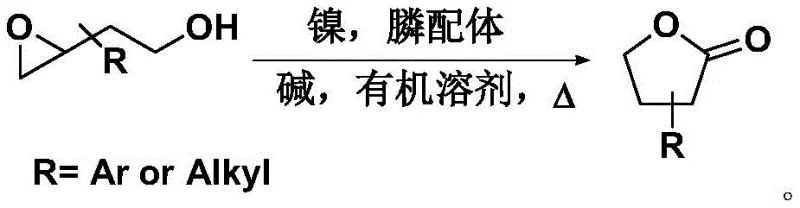
The pharmaceutical and fine chemical industries continuously seek robust methodologies for constructing the gamma-butyrolactone skeleton, a structural motif pervasive in bioactive molecules ranging from anticancer agents like etoposide to cardiovascular drugs such as eplerenone. Patent CN114213367A introduces a transformative approach to synthesizing gamma-butyrolactone derivatives by leveraging 3,4-epoxy-1-butanol as a versatile starting material. This innovation utilizes a nickel-catalyzed system combined with phosphine ligands and a base to drive an efficient epoxy isomerization and intramolecular coupling reaction. Unlike traditional methods that often rely on stoichiometric oxidants or precious metal catalysts, this nickel-mediated pathway offers a compelling balance of economic feasibility and chemical efficiency. For R&D directors and procurement managers alike, this patent represents a significant opportunity to optimize the supply chain for high-purity pharmaceutical intermediates while mitigating the risks associated with volatile raw material costs and complex purification processes.
The Limitations of Conventional Methods vs. The Novel Approach
The Limitations of Conventional Methods
Historically, the construction of the gamma-butyrolactone ring has relied heavily on methods such as the Baeyer-Villiger oxidation of cyclobutanones or the reduction of 2,5-dihydrofuranones, which present substantial logistical and safety challenges for large-scale manufacturing. These conventional routes often necessitate the use of hazardous peracids or expensive stoichiometric reagents that generate significant waste streams, complicating environmental compliance and driving up disposal costs. Furthermore, reactions involving precious metal catalysts like palladium or rhodium, while effective, introduce severe supply chain vulnerabilities due to the geopolitical instability surrounding these rare earth elements. The sensitivity of these traditional processes to moisture and oxygen often requires stringent anhydrous conditions, increasing the operational complexity and energy consumption required for solvent drying and inert atmosphere maintenance. Consequently, manufacturers face prolonged lead times and inflated production budgets, hindering their ability to respond agilely to market demands for cost reduction in pharmaceutical intermediates manufacturing.
The Novel Approach
In stark contrast, the methodology disclosed in CN114213367A utilizes a base-metal nickel catalytic system that operates under relatively mild thermal conditions, typically between 100°C and 150°C, to effect the transformation of epoxy alcohols into lactones. This novel approach eliminates the need for stoichiometric oxidants, thereby drastically simplifying the workup procedure and reducing the generation of toxic byproducts. The use of 3,4-epoxy-1-butanol as a feedstock is particularly advantageous due to its commercial availability and structural versatility, allowing for the introduction of diverse aryl or alkyl substituents without compromising reaction efficiency. By shifting from precious metals to abundant nickel complexes, this process inherently lowers the raw material cost basis and enhances supply chain security. The robustness of the nickel-phosphine catalyst system ensures consistent performance across various substrate scopes, making it an ideal candidate for the commercial scale-up of complex lactones required in high-volume drug synthesis.
Mechanistic Insights into Nickel-Catalyzed Epoxy Isomerization
The core of this technological breakthrough lies in the intricate catalytic cycle facilitated by the nickel center coordinated with bulky phosphine ligands, which activates the epoxide ring for subsequent intramolecular nucleophilic attack by the pendant hydroxyl group. Mechanistically, the nickel catalyst likely undergoes oxidative addition into the C-O bond of the epoxide, generating a nickel-alkoxide species that is primed for rearrangement. The presence of an external base further assists in deprotonating the alcohol or stabilizing intermediate species, driving the equilibrium towards the thermodynamically stable lactone product. This catalytic manifold is highly tunable; by adjusting the steric and electronic properties of the phosphine ligands, such as DPEPhos or XantPhos, chemists can fine-tune the reactivity to accommodate sterically hindered substrates or electron-deficient aromatic rings. This level of mechanistic control is critical for R&D teams aiming to minimize impurity profiles, as the selective activation of the epoxide prevents competing side reactions like polymerization or elimination that often plague acid-catalyzed alternatives.
From an impurity control perspective, this nickel-catalyzed route offers superior selectivity compared to Lewis acid-mediated methods, which often suffer from poor regioselectivity and the formation of oligomeric byproducts. The specific coordination environment created by the bidentate phosphine ligands ensures that the cyclization occurs exclusively at the desired position, yielding the gamma-butyrolactone scaffold with high fidelity. This high selectivity translates directly to simplified downstream processing, as the crude reaction mixture contains fewer structurally similar impurities that are difficult to separate via standard chromatography or crystallization. For quality assurance teams, this means a more consistent product profile with reduced risk of genotoxic impurities or residual metal contamination, provided appropriate scavenging steps are implemented. The ability to tolerate various functional groups, including halides and ethers, without protecting group manipulation further streamlines the synthetic sequence, reducing the overall step count and improving the cumulative yield of the final active pharmaceutical ingredient.
How to Synthesize Gamma-Butyrolactone Efficiently
Implementing this synthesis route in a laboratory or pilot plant setting requires careful attention to the stoichiometry of the nickel catalyst and the choice of solvent to maximize conversion rates. The patent outlines a general procedure where 3,4-epoxy-1-butanol is heated in solvents like xylene or toluene in the presence of a nickel source such as Ni(PPh3)4 and a phosphine ligand. The reaction progress is typically monitored until the starting material is consumed, after which standard workup procedures involving ethyl acetate extraction and filtration are employed to isolate the product. While the specific molar ratios and temperatures can be optimized based on the specific substrate substituents, the general protocol provides a robust framework for generating high-purity gamma-butyrolactone derivatives. For detailed operational parameters and safety guidelines, please refer to the standardized synthesis steps provided below.
- Prepare the reaction mixture by combining 3,4-epoxy-1-butanol, nickel catalyst, phosphine ligand, and base in an organic solvent under nitrogen.
- Heat the reaction system to temperatures between 100-150°C and maintain for 6 to 48 hours to facilitate isomerization.
- Upon completion, filter the mixture, remove the solvent under reduced pressure, and purify the product via column chromatography.
Commercial Advantages for Procurement and Supply Chain Teams
For procurement managers and supply chain heads, the adoption of this nickel-catalyzed technology offers tangible strategic advantages that extend beyond mere chemical yield. By transitioning away from precious metal catalysts and hazardous oxidants, manufacturers can significantly stabilize their raw material costs and reduce exposure to volatile commodity markets. The simplicity of the operation, which does not require extreme cryogenic conditions or ultra-high pressure equipment, lowers the barrier to entry for contract manufacturing organizations, thereby increasing the pool of potential suppliers and enhancing supply chain resilience. Furthermore, the reduced environmental footprint associated with this greener chemistry aligns with increasingly stringent global regulatory standards, minimizing the risk of production shutdowns due to compliance issues. These factors collectively contribute to a more reliable gamma-butyrolactone supplier network capable of meeting the rigorous demands of the global pharmaceutical industry.
- Cost Reduction in Manufacturing: The substitution of expensive precious metal catalysts with abundant nickel complexes results in a direct reduction in catalyst procurement costs, which is a significant factor in the overall cost of goods sold. Additionally, the elimination of stoichiometric oxidants and the simplification of the workup process reduce the consumption of auxiliary chemicals and solvents, leading to substantial cost savings in waste management and disposal. The high atom economy of this isomerization reaction ensures that a greater proportion of the raw material mass is incorporated into the final product, minimizing material loss and maximizing resource efficiency. These cumulative efficiencies allow for a more competitive pricing structure without compromising on the quality or purity of the final intermediate.
- Enhanced Supply Chain Reliability: Utilizing 3,4-epoxy-1-butanol as a starting material leverages a feedstock that is readily available from established chemical suppliers, reducing the risk of supply disruptions common with specialized or custom-synthesized precursors. The robustness of the nickel catalyst system means that the process is less sensitive to minor variations in raw material quality or environmental conditions, ensuring consistent batch-to-batch performance. This reliability is crucial for maintaining continuous production schedules and meeting tight delivery deadlines for downstream drug manufacturers. By diversifying the supplier base for key catalytic components and avoiding single-source dependencies on rare metals, companies can build a more resilient supply chain capable of withstanding geopolitical or logistical shocks.
- Scalability and Environmental Compliance: The reaction conditions described in the patent, involving moderate temperatures and common organic solvents, are inherently scalable from gram-scale laboratory synthesis to multi-ton industrial production without requiring specialized high-pressure reactors. The absence of toxic heavy metals like chromium or osmium simplifies the regulatory approval process for new drug applications and reduces the burden of environmental monitoring and reporting. Waste streams generated from this process are easier to treat and dispose of, aligning with green chemistry principles and corporate sustainability goals. This ease of scale-up ensures that the technology can grow with market demand, supporting the commercial scale-up of complex lactones needed for expanding therapeutic pipelines.
Frequently Asked Questions (FAQ)
The following questions address common technical and commercial inquiries regarding the implementation of this nickel-catalyzed synthesis route. These answers are derived directly from the technical disclosures and experimental data within the patent, providing a reliable foundation for decision-making. Understanding these nuances is essential for evaluating the feasibility of integrating this technology into existing manufacturing workflows.
Q: What are the primary advantages of this nickel-catalyzed method over traditional oxidation routes?
A: This method avoids harsh oxidants and expensive precious metals, utilizing abundant nickel catalysts and mild conditions to achieve high selectivity and yield.
Q: Is this synthesis route suitable for large-scale industrial production?
A: Yes, the use of readily available raw materials, simple operation procedures, and robust catalyst systems makes it highly adaptable for commercial scale-up.
Q: What types of substituents are compatible with this gamma-butyrolactone synthesis?
A: The protocol demonstrates excellent functional group tolerance, successfully accommodating various aryl and alkyl substituents on the epoxy alcohol substrate.
Partnering with NINGBO INNO PHARMCHEM: Your Reliable Gamma-Butyrolactone Supplier
At NINGBO INNO PHARMCHEM, we recognize the critical importance of efficient and scalable synthetic routes in the development of next-generation pharmaceuticals. Our team of expert chemists possesses extensive experience scaling diverse pathways from 100 kgs to 100 MT/annual commercial production, ensuring that promising laboratory discoveries like the nickel-catalyzed synthesis of gamma-butyrolactone can be successfully translated into industrial reality. We are committed to delivering high-purity gamma-butyrolactone and related intermediates that meet stringent purity specifications, supported by our rigorous QC labs and state-of-the-art analytical capabilities. By partnering with us, you gain access to a supply chain that prioritizes quality, consistency, and regulatory compliance, enabling you to accelerate your drug development timelines with confidence.
We invite you to collaborate with our technical procurement team to explore how this innovative synthesis method can optimize your specific project requirements. Whether you are looking for a Customized Cost-Saving Analysis or need to evaluate the feasibility of this route for your target molecule, we are ready to provide comprehensive support. Please contact us to request specific COA data and route feasibility assessments, and let us demonstrate how our expertise can drive value and efficiency in your supply chain.
Engineering Bottleneck?
Can't scale up this synthesis? Upload your target structure or CAS, and our CDMO team will evaluate the industrial feasibility within 24 hours. Request Evaluation →