
Advanced Palladium-Catalyzed Synthesis of 3-Arylquinolin-2(1H)one Derivatives for Commercial Scale-Up
Advanced Palladium-Catalyzed Synthesis of 3-Arylquinolin-2(1H)one Derivatives for Commercial Scale-Up
The pharmaceutical and fine chemical industries are constantly seeking robust, scalable, and cost-effective methodologies for constructing privileged heterocyclic scaffolds. Among these, the quinolin-2(1H)one core stands out due to its prevalence in bioactive molecules ranging from antibiotics to antitumor agents. A significant technological breakthrough in this domain is detailed in Chinese Patent CN113045489B, which discloses a novel preparation method for 3-arylquinolin-2(1H)one derivatives. This patent introduces a streamlined palladium-catalyzed aminocarbonylation strategy that utilizes benzisoxazole as a unique dual-purpose reagent, acting simultaneously as the nitrogen source and the formyl source. This innovation addresses long-standing challenges in heterocycle synthesis, offering a pathway that is not only chemically elegant but also commercially viable for large-scale production. The versatility of this approach allows for the generation of a wide array of derivatives, making it an invaluable tool for medicinal chemists and process engineers alike.
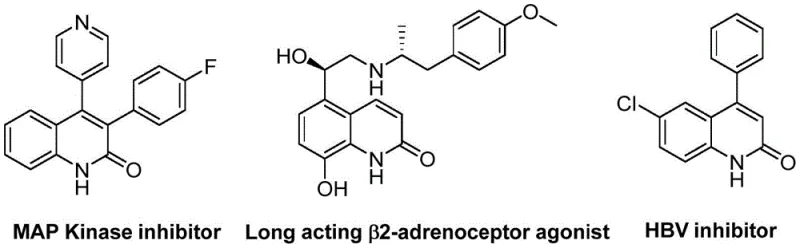
The biological significance of the quinolin-2(1H)one motif cannot be overstated, as evidenced by its presence in critical therapeutic agents such as MAP Kinase inhibitors and HBV inhibitors. The ability to access these structures efficiently is paramount for drug discovery pipelines. Traditional synthetic routes often suffer from multi-step sequences, harsh reaction conditions, or the use of hazardous reagents. In contrast, the methodology described in CN113045489B leverages transition metal catalysis to forge the requisite carbon-nitrogen and carbon-carbon bonds in a single operational step. By employing readily available starting materials like benzisoxazoles and benzyl chlorides, this process significantly lowers the barrier to entry for producing high-value intermediates. For procurement managers and supply chain directors, this translates to a more reliable sourcing strategy for complex pharmaceutical building blocks, reducing dependency on convoluted supply chains associated with older synthetic technologies.
The Limitations of Conventional Methods vs. The Novel Approach
The Limitations of Conventional Methods
Historically, the synthesis of quinolin-2(1H)one derivatives has relied on classical named reactions such as the Vilsmeier-Haack, Knorr, and Friedlander condensations. While these methods are well-established in academic literature, they frequently present substantial drawbacks when translated to industrial manufacturing. These conventional pathways often require stringent anhydrous conditions, excessive amounts of corrosive reagents, or high temperatures that can degrade sensitive functional groups. Furthermore, many traditional approaches necessitate the use of carbon monoxide gas for carbonylation steps, which poses severe safety risks and requires specialized high-pressure equipment that increases capital expenditure. The waste profiles of these older methods are also concerning, often generating stoichiometric amounts of salt byproducts that complicate downstream purification and increase environmental compliance costs. For a modern chemical enterprise aiming for green chemistry principles, these legacy processes represent a significant liability in terms of both operational safety and sustainability metrics.
The Novel Approach
The innovative protocol outlined in the patent data offers a transformative alternative by utilizing a palladium-catalyzed system that operates under relatively mild conditions. The core of this novelty lies in the use of benzisoxazole, which undergoes ring-opening to provide both the nitrogen atom and the carbonyl carbon required for the quinolinone structure. This eliminates the need for external CO gas sources, thereby enhancing process safety and simplifying reactor design. The reaction proceeds efficiently in ethylene glycol dimethyl ether (DME) at 100°C, a temperature that is easily achievable with standard heating mantles or oil baths in a pilot plant setting. As illustrated in the general reaction scheme below, the coupling of benzisoxazole (II) with various benzyl chloride derivatives (III) yields the target 3-arylquinolin-2(1H)ones (I) with impressive efficiency. This convergence of simplicity and efficacy makes the new method highly attractive for scaling up production volumes without compromising on quality or safety standards.

Mechanistic Insights into Pd-Catalyzed Aminocarbonylation
From a mechanistic perspective, this transformation represents a sophisticated orchestration of organometallic steps facilitated by the palladium catalyst system. The reaction initiates with the oxidative addition of the benzyl chloride substrate to the active palladium(0) species, generated in situ from palladium acetate and the chiral ligand (S)-BINAP. This step is crucial as it activates the benzylic carbon for subsequent nucleophilic attack. Concurrently, the benzisoxazole ring undergoes activation, likely facilitated by the basic environment provided by triethylamine and the presence of water, which assists in the ring-opening process to reveal the reactive nitrile oxide or equivalent intermediate. The molybdenum hexacarbonyl serves as a solid, safe surrogate for carbon monoxide, slowly releasing CO into the reaction matrix to participate in the migratory insertion step. This careful balance of reagents ensures that the carbonylation occurs selectively at the desired position, leading to the formation of the lactam ring characteristic of the quinolinone scaffold.
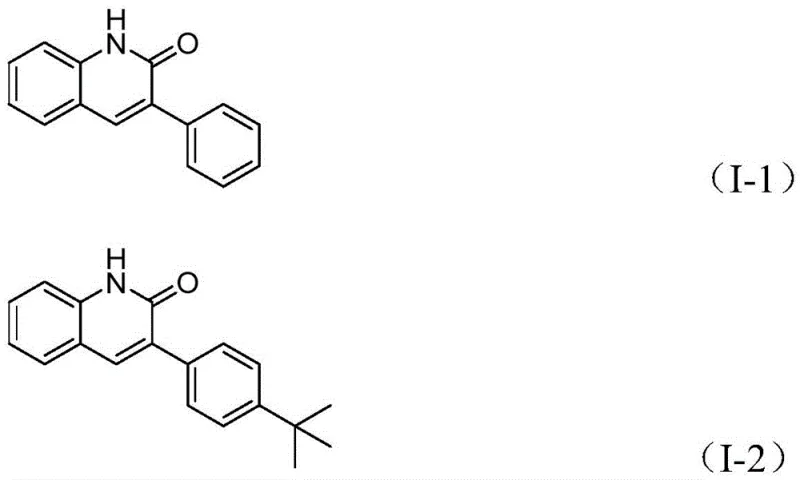
The robustness of this catalytic cycle is further evidenced by its remarkable tolerance to diverse electronic and steric environments on the aromatic rings. The patent data highlights successful syntheses of derivatives bearing electron-withdrawing groups such as cyano (-CN) and trifluoromethyl (-CF3), as well as electron-donating groups like methoxy (-OMe) and tert-butyl (-t-Bu). Even halogenated substrates, including those with chlorine and fluorine substituents, are compatible with the reaction conditions, which is vital for late-stage functionalization in drug development. The structural diversity achieved, as shown in the specific examples of compounds (I-1) through (I-5), underscores the versatility of this method. For R&D directors, this broad substrate scope means that a single optimized protocol can be applied to generate a library of analogs for structure-activity relationship (SAR) studies, drastically accelerating the lead optimization phase of drug discovery projects.
How to Synthesize 3-Arylquinolin-2(1H)one Derivatives Efficiently
Implementing this synthesis in a laboratory or pilot plant setting requires adherence to specific stoichiometric ratios and reaction parameters to maximize yield and purity. The process is designed to be operationally simple, minimizing the need for specialized handling equipment while ensuring reproducible results. The following guide outlines the standardized procedure derived from the patent examples, providing a clear roadmap for technical teams to follow. It is essential to maintain the specified molar ratios of the catalyst system to the substrates to ensure complete conversion within the designated timeframe. Detailed standardized synthesis steps are provided in the section below to facilitate immediate adoption of this technology.
- Combine palladium acetate, (S)-BINAP, molybdenum hexacarbonyl, triethylamine, water, benzisoxazole, and benzyl chloride in a sealed tube with DME solvent.
- Heat the reaction mixture to 100°C and maintain stirring for approximately 26 hours to ensure complete conversion.
- Upon completion, filter the mixture, mix with silica gel, and purify via column chromatography to isolate the target derivative.
Commercial Advantages for Procurement and Supply Chain Teams
For procurement managers and supply chain heads, the adoption of this novel synthetic route offers tangible strategic benefits that extend beyond mere chemical curiosity. The primary advantage lies in the significant simplification of the raw material portfolio. By utilizing benzisoxazole as a dual-source reagent, the process reduces the number of distinct starting materials that need to be sourced, qualified, and stocked. This consolidation of the supply base inherently reduces logistical complexity and mitigates the risk of production delays caused by the shortage of a single niche reagent. Furthermore, the starting materials identified in the patent, such as benzyl chlorides and substituted benzisoxazoles, are commodity chemicals that are widely available from multiple global suppliers, ensuring a competitive pricing landscape and robust supply continuity even during market fluctuations.
- Cost Reduction in Manufacturing: The economic impact of this technology is driven by the elimination of hazardous gas handling infrastructure and the reduction of waste treatment costs. Since the method avoids the use of high-pressure carbon monoxide gas, facilities do not need to invest in expensive gas cylinders, regulators, or leak detection systems, leading to substantial capital savings. Additionally, the use of molybdenum hexacarbonyl as a solid CO source allows for precise dosing and minimizes waste, while the simple workup procedure involving filtration and silica gel treatment reduces solvent consumption and labor hours. These factors collectively contribute to a lower cost of goods sold (COGS), making the final API intermediates more price-competitive in the global market.
- Enhanced Supply Chain Reliability: The reliance on stable, shelf-stable solid reagents rather than volatile gases or moisture-sensitive liquids enhances the overall reliability of the supply chain. Benzisoxazoles and benzyl chlorides can be stored for extended periods without significant degradation, allowing manufacturers to maintain strategic inventory buffers against supply disruptions. The robustness of the reaction conditions, which tolerate a wide range of functional groups, also means that variations in raw material quality (within specification) are less likely to cause batch failures. This resilience is critical for maintaining consistent delivery schedules to downstream pharmaceutical clients who depend on just-in-time manufacturing models.
- Scalability and Environmental Compliance: Scaling this process from gram to kilogram or ton scale is straightforward due to the absence of exothermic hazards associated with gas charging. The reaction operates at atmospheric pressure in a sealed tube or standard reactor, simplifying the engineering requirements for scale-up. From an environmental perspective, the atom economy is improved by incorporating the nitrogen and carbon atoms from a single molecule, reducing the generation of stoichiometric byproducts. This aligns with increasingly stringent environmental regulations and corporate sustainability goals, potentially qualifying the process for green chemistry incentives and reducing the burden on wastewater treatment facilities.
Frequently Asked Questions (FAQ)
To assist technical teams in evaluating the feasibility of this technology for their specific applications, we have compiled a set of frequently asked questions based on the detailed experimental data provided in the patent. These answers address common concerns regarding reaction optimization, catalyst loading, and product isolation. Understanding these nuances is essential for successful technology transfer and process validation. The following responses are grounded in the empirical results observed during the development of this synthetic methodology.
Q: What are the key advantages of using benzisoxazole in this synthesis?
A: Benzisoxazole serves a dual role as both the nitrogen source and the formyl source, eliminating the need for separate carbonylation reagents like toxic CO gas and simplifying the reaction stoichiometry.
Q: What is the optimal temperature and time for this Pd-catalyzed reaction?
A: The patent specifies an optimal reaction temperature of 100°C maintained for 26 hours, which balances reaction efficiency with energy consumption and ensures high yields across various substrates.
Q: Does this method tolerate diverse functional groups on the substrates?
A: Yes, the method demonstrates excellent functional group tolerance, successfully accommodating substituents such as halogens (Cl, F), alkoxy groups (OMe), cyano groups (CN), and bulky alkyl groups (t-Bu).
Partnering with NINGBO INNO PHARMCHEM: Your Reliable 3-Arylquinolin-2(1H)one Derivatives Supplier
At NINGBO INNO PHARMCHEM, we recognize the critical role that advanced synthetic methodologies play in accelerating drug development and optimizing manufacturing costs. Our team of expert chemists has thoroughly analyzed the potential of the Pd-catalyzed aminocarbonylation route described in CN113045489B and is fully prepared to leverage this technology for your projects. We possess extensive experience scaling diverse pathways from 100 kgs to 100 MT/annual commercial production, ensuring that your transition from benchtop discovery to full-scale manufacturing is seamless. Our state-of-the-art facilities are equipped with rigorous QC labs capable of meeting stringent purity specifications, guaranteeing that every batch of 3-arylquinolin-2(1H)one derivatives we deliver meets the highest industry standards for pharmaceutical intermediates.
We invite you to collaborate with us to explore how this innovative synthesis can enhance your supply chain efficiency and reduce your overall production costs. Our technical procurement team is ready to provide a Customized Cost-Saving Analysis tailored to your specific volume requirements and quality needs. Please contact us today to request specific COA data for our existing inventory or to discuss route feasibility assessments for your custom synthesis projects. Let us be your partner in turning complex chemical challenges into commercial successes.