
Advanced Palladium-Catalyzed Synthesis of N-Acyl Indoles for Commercial Pharmaceutical Production
Advanced Palladium-Catalyzed Synthesis of N-Acyl Indoles for Commercial Pharmaceutical Production
The pharmaceutical industry continuously seeks robust and scalable methodologies for constructing complex heterocyclic scaffolds, particularly indole derivatives which serve as privileged structures in medicinal chemistry. Patent CN112898192B introduces a groundbreaking preparation method for N-acyl indole compounds that addresses long-standing challenges in carbonylation chemistry. This technology leverages a palladium-catalyzed cascade reaction utilizing 2-alkynyl aniline and aryl iodides as key building blocks. Unlike traditional approaches that often rely on hazardous gaseous carbon monoxide, this novel process employs a solid carbon monoxide substitute, ensuring safer handling and improved reaction control. The significance of this innovation lies in its ability to generate high-value intermediates used in anti-inflammatory, anti-tumor, and anti-viral agents with exceptional efficiency.
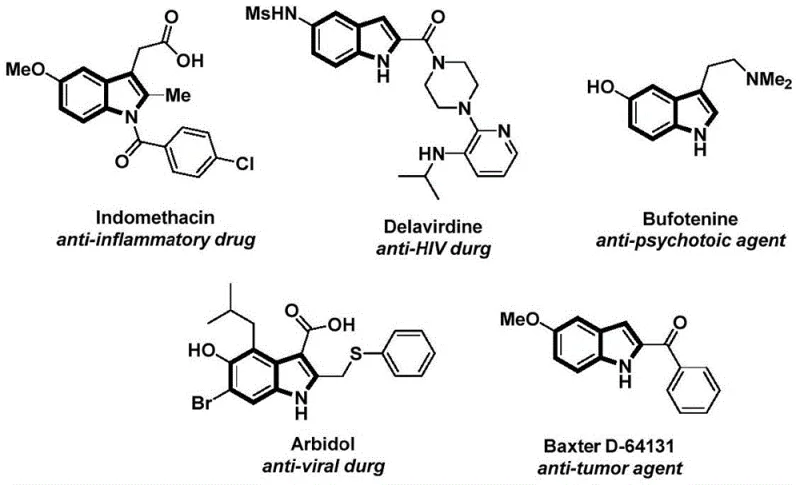
As illustrated in the structural diversity of bioactive molecules, the indole core is ubiquitous in drugs like Indomethacin and Delavirdine. The ability to rapidly functionalize the nitrogen position with an acyl group is crucial for tuning the pharmacokinetic properties of these candidates. The disclosed method offers a reliable pharmaceutical intermediate supplier pathway to access these motifs through a streamlined one-pot operation. By integrating carbonylation and cyclization into a single workflow, the process minimizes unit operations and reduces the overall environmental footprint, aligning perfectly with modern green chemistry principles demanded by global regulatory bodies.
The Limitations of Conventional Methods vs. The Novel Approach
The Limitations of Conventional Methods
Historically, the synthesis of N-acyl indoles via carbonylation has been plagued by significant operational hurdles and safety concerns. Traditional protocols frequently necessitate the use of high-pressure carbon monoxide gas, which requires specialized autoclaves and rigorous safety protocols to prevent leakage and exposure. Furthermore, these gas-phase reactions often suffer from poor mass transfer limitations, leading to inconsistent reaction rates and lower yields when scaled up. Many existing methods also rely on harsh reaction conditions, such as elevated temperatures exceeding 100°C or the use of toxic solvents, which can degrade sensitive functional groups present on the substrate. Additionally, multi-step sequences are often required to install the acyl group, involving isolation of unstable intermediates that increase production time and waste generation.
The Novel Approach
The methodology described in patent CN112898192B represents a paradigm shift by utilizing 1,3,5-tricarboxylic acid phenol ester (TFBen) as a safe and effective solid carbon monoxide surrogate. This substitution allows the reaction to proceed under atmospheric pressure conditions, drastically reducing the capital expenditure required for reactor infrastructure. The process operates at a mild temperature of 60°C, which preserves the integrity of thermally labile substituents and broadens the scope of compatible substrates. By combining the carbonylation and subsequent cyclization in a sequential one-pot manner, the method eliminates the need for intermediate purification steps. This telescoped approach not only accelerates the timeline from raw materials to final product but also significantly enhances the overall atom economy, making it an ideal candidate for cost reduction in API manufacturing.
Mechanistic Insights into Palladium-Catalyzed Carbonylative Cyclization
The catalytic cycle initiates with the oxidative addition of the palladium(0) species into the carbon-iodine bond of the aryl iodide substrate, generating a reactive aryl-palladium(II) intermediate. Subsequently, carbon monoxide, which is slowly released in situ from the thermal decomposition of TFBen, inserts into the palladium-carbon bond to form an acyl-palladium complex. This acyl species then undergoes nucleophilic attack by the amino group of the 2-alkynyl aniline, followed by reductive elimination to yield an amide intermediate while regenerating the active palladium catalyst. This first stage effectively constructs the N-aryl amide linkage with high fidelity. The elegance of this system lies in the controlled release of CO, which prevents the formation of palladium black and maintains catalytic activity over the extended reaction period.
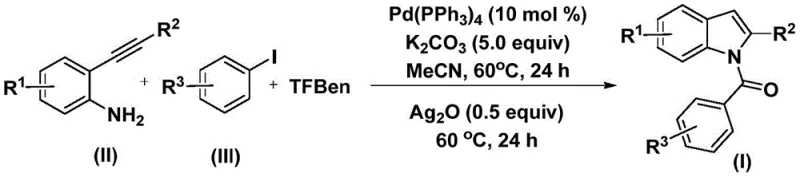
In the second stage of the transformation, the addition of silver oxide plays a pivotal role in driving the intramolecular cyclization. The silver species likely activates the alkyne moiety or facilitates the deprotonation necessary for the nucleophilic attack of the amide nitrogen onto the triple bond. This cyclization step closes the five-membered pyrrole ring, finalizing the indole architecture. The use of potassium carbonate as a base ensures the neutralization of acidic byproducts generated during the reaction, maintaining the optimal pH for catalyst turnover. The compatibility of this mechanism with various electronic environments on the aromatic rings, as evidenced by the successful synthesis of derivatives with electron-donating and electron-withdrawing groups, underscores the robustness of the catalytic system for producing high-purity OLED material precursors or pharmaceutical intermediates.
How to Synthesize N-Acyl Indole Efficiently
The execution of this synthesis requires precise control over reagent stoichiometry and thermal profiles to maximize yield and minimize byproduct formation. The protocol dictates a specific molar ratio of catalyst to base to ensure complete conversion of the starting materials. Operators must adhere to the two-stage heating regimen, where the initial carbonylation is allowed to reach completion before the introduction of the cyclization promoter. Detailed standard operating procedures regarding solvent selection, specifically the preference for acetonitrile to enhance solubility and reaction kinetics, are critical for reproducibility. For a comprehensive guide on the exact quantities and workup procedures, please refer to the standardized synthesis steps outlined below.
- Combine palladium catalyst, potassium carbonate, carbon monoxide substitute (TFBen), 2-alkynyl aniline, and aryl iodide in an organic solvent.
- Heat the reaction mixture at 60°C for 24 hours to facilitate the carbonylation and amide formation.
- Add silver oxide to the mixture and continue heating at 60°C for another 24 hours to induce cyclization, followed by purification.
Commercial Advantages for Procurement and Supply Chain Teams
From a procurement perspective, this technology offers substantial strategic benefits by decoupling production from the volatility of high-pressure gas supply chains. The reliance on solid reagents like TFBen and commercially available aryl iodides ensures a stable and predictable sourcing model, mitigating risks associated with logistics disruptions. The simplified reaction setup reduces the dependency on specialized high-pressure equipment, allowing for manufacturing in standard glass-lined or stainless steel reactors commonly found in multipurpose facilities. This flexibility translates directly into lower capital barriers for entry and faster deployment of production lines, enabling rapid response to market demands for critical drug intermediates.
- Cost Reduction in Manufacturing: The elimination of high-pressure carbon monoxide infrastructure results in significant capital expenditure savings and reduced maintenance costs. Furthermore, the use of inexpensive bases like potassium carbonate and the high turnover number of the palladium catalyst contribute to a lower cost of goods sold. The one-pot nature of the reaction reduces solvent consumption and labor hours associated with intermediate isolation, driving down the overall operational expenses significantly without compromising quality.
- Enhanced Supply Chain Reliability: By utilizing readily available starting materials such as 2-alkynyl anilines and aryl iodides, manufacturers can secure raw material supplies from multiple global vendors, reducing single-source dependency. The mild reaction conditions minimize the risk of batch failures due to thermal runaway or equipment malfunction, ensuring consistent delivery schedules. This reliability is paramount for maintaining continuous supply chains for essential medicines and avoiding costly production stoppages.
- Scalability and Environmental Compliance: The process generates minimal hazardous waste compared to traditional methods involving toxic gases or heavy metal oxidants in stoichiometric amounts. The use of acetonitrile, a solvent with well-established recovery and recycling protocols, supports sustainable manufacturing practices. The scalability of the method from gram to kilogram scales has been demonstrated with consistent yields, proving its viability for commercial scale-up of complex pharmaceutical intermediates while meeting stringent environmental regulations.
Frequently Asked Questions (FAQ)
The following questions address common technical inquiries regarding the implementation and optimization of this synthetic route. Understanding these nuances is essential for process chemists aiming to adapt this methodology for specific target molecules. The answers are derived directly from the experimental data and mechanistic studies presented in the patent documentation, providing a reliable foundation for decision-making.
Q: What is the advantage of using TFBen over carbon monoxide gas?
A: Using 1,3,5-tricarboxylic acid phenol ester (TFBen) as a solid carbon monoxide surrogate eliminates the need for high-pressure gas equipment, significantly enhancing operational safety and simplifying the reaction setup for industrial scale-up.
Q: What is the role of Silver Oxide in this synthesis?
A: Silver oxide acts as a critical promoter in the second stage of the reaction, facilitating the intramolecular cyclization of the intermediate amide to form the final N-acyl indole structure under mild thermal conditions.
Q: Does this method support diverse functional groups?
A: Yes, the protocol demonstrates excellent substrate compatibility, tolerating various substituents such as halogens, alkyl groups, and alkoxy groups on both the aniline and aryl iodide components without significant yield loss.
Partnering with NINGBO INNO PHARMCHEM: Your Reliable N-Acyl Indole Supplier
At NINGBO INNO PHARMCHEM, we recognize the critical importance of efficient synthetic routes in accelerating drug development timelines. Our team of expert process chemists possesses extensive experience scaling diverse pathways from 100 kgs to 100 MT/annual commercial production, ensuring that your transition from benchtop to plant floor is seamless. We are committed to delivering high-purity N-acyl indole derivatives that meet stringent purity specifications required by global regulatory agencies. Our state-of-the-art rigorous QC labs employ advanced analytical techniques to verify the identity and purity of every batch, guaranteeing consistency and reliability for your downstream applications.
We invite you to collaborate with us to leverage this advanced palladium-catalyzed technology for your next project. Contact our technical procurement team today to request a Customized Cost-Saving Analysis tailored to your specific volume requirements. We are prepared to provide specific COA data and detailed route feasibility assessments to demonstrate how our manufacturing capabilities can optimize your supply chain and reduce overall production costs.