
Advanced Palladium-Catalyzed Synthesis of 2-Trifluoromethyl Quinazolinones for Scalable Pharmaceutical Manufacturing
The pharmaceutical industry continuously seeks robust methodologies for constructing nitrogen-containing heterocycles, particularly quinazolinones, which serve as privileged scaffolds in medicinal chemistry. Patent CN113045503B introduces a transformative approach for the preparation of 2-trifluoromethyl substituted quinazolinone compounds, addressing critical limitations in current synthetic routes. This technology leverages a transition metal palladium-catalyzed carbonylation cascade reaction, utilizing readily available trifluoroethylimidoyl chloride and amines as starting materials. The introduction of the trifluoromethyl group is strategically significant, as it enhances the metabolic stability, lipophilicity, and bioavailability of the parent molecule, properties highly valued in modern drug design. By employing a solid carbon monoxide surrogate, this method circumvents the safety hazards associated with gaseous CO, offering a safer and more operationally simple pathway for the production of high-purity pharmaceutical intermediates.
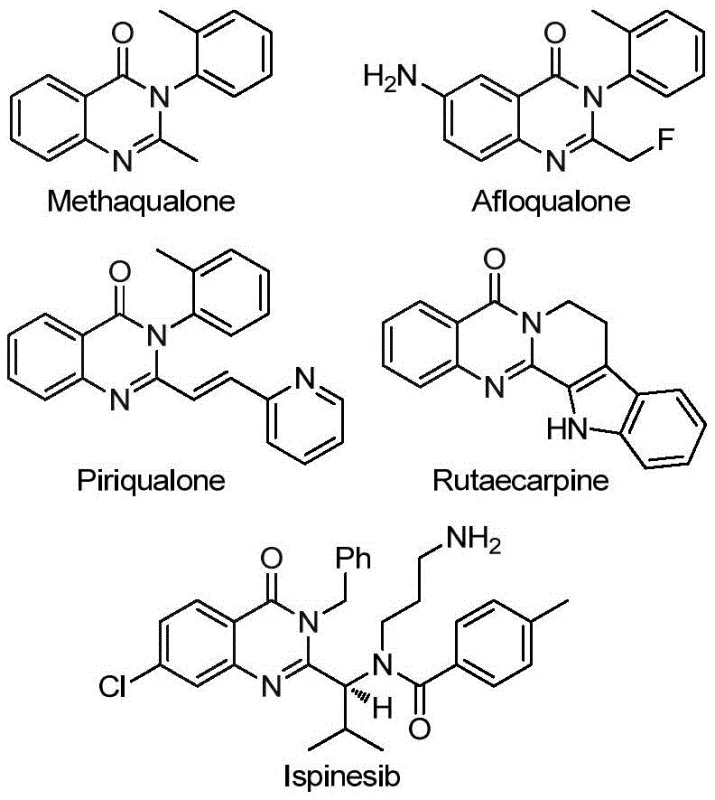
The Limitations of Conventional Methods vs. The Novel Approach
The Limitations of Conventional Methods
Historically, the synthesis of 2-trifluoromethyl-substituted quinazolinones has been fraught with significant technical and economic challenges that hinder large-scale adoption. Traditional protocols often rely on the cyclization of anthranilamides with ethyl trifluoroacetate or trifluoroacetic anhydride, reactions that typically require harsh conditions and generate substantial acidic waste. Alternative strategies involving isatoic anhydride or T3P-promoted cascade reactions frequently suffer from narrow substrate scopes, limiting the structural diversity accessible to medicinal chemists. Furthermore, many existing methods necessitate the use of unstable intermediates or expensive pre-activated substrates, which drastically inflate the cost of goods sold (COGS) and complicate supply chain logistics. The reliance on gaseous carbon monoxide in some carbonylation protocols introduces severe safety risks, requiring specialized high-pressure equipment and rigorous safety protocols that are often impractical for standard multipurpose manufacturing plants.
The Novel Approach
The methodology disclosed in the patent represents a paradigm shift by utilizing a palladium-catalyzed system that operates under relatively mild and scalable conditions. Instead of hazardous gas, the process employs TFBen (1,3,5-tricarboxylic acid phenol ester) as a solid carbon monoxide surrogate, which releases CO in situ upon heating. This innovation not only mitigates safety risks but also simplifies the reaction setup, allowing it to be performed in standard glassware or reactors without specialized gas handling infrastructure. The use of cheap and commercially available trifluoroethylimidoyl chlorides and diverse amines ensures that the raw material costs remain low while providing exceptional flexibility in molecular design. The reaction demonstrates high efficiency and broad functional group tolerance, enabling the synthesis of complex derivatives that were previously difficult to access, thereby accelerating the lead optimization phase for new drug candidates.
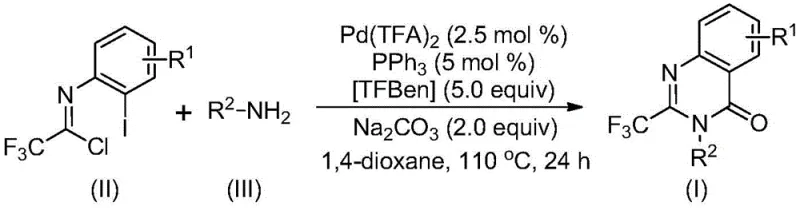
Mechanistic Insights into Pd-Catalyzed Carbonylation Cascade
The reaction mechanism involves a sophisticated sequence of organometallic transformations initiated by the interaction between the palladium catalyst and the organic substrates. Initially, a base-promoted intermolecular carbon-nitrogen bond coupling likely occurs between the trifluoroethylimidoyl chloride and the amine to generate a trifluoroacetamidine derivative intermediate. Subsequently, the palladium catalyst, generated from palladium trifluoroacetate and triphenylphosphine, undergoes oxidative addition into the carbon-iodine bond of the aromatic ring. This step forms a key divalent palladium species that is primed for carbonyl insertion. As the reaction temperature reaches 110°C, the TFBen additive decomposes to release carbon monoxide, which then inserts into the carbon-palladium bond to form an acyl-palladium intermediate. This precise control over CO generation is critical for maintaining steady-state concentrations of the reactive gas within the solution, preventing catalyst poisoning or side reactions.
Following the carbonyl insertion, the presence of a base facilitates the formation of a palladium-nitrogen bond, leading to the construction of a seven-membered ring palladium intermediate through cyclization. This intramolecular process is the defining step that establishes the quinazolinone core structure. The catalytic cycle concludes with a reductive elimination step, which releases the final 2-trifluoromethyl-substituted quinazolinone product and regenerates the active palladium(0) species for the next turnover. This mechanistic pathway is highly efficient because it combines multiple bond-forming events into a single pot, minimizing the need for isolation of unstable intermediates. The robustness of this catalytic cycle is evidenced by the high yields observed across a wide range of substrates, including those with electron-withdrawing and electron-donating groups, confirming the versatility of the electronic environment tolerated by the catalyst system.
How to Synthesize 2-Trifluoromethyl Quinazolinones Efficiently
The practical execution of this synthesis is designed for reproducibility and ease of scale-up, making it an attractive option for process chemistry teams aiming to produce kilogram quantities of intermediates. The protocol utilizes a straightforward mixture of reagents in a polar aprotic solvent, specifically 1,4-dioxane, which has been optimized to ensure complete dissolution of all reactants and maximize conversion rates. The reaction is typically conducted at 110°C for a duration of 16 to 30 hours, a timeframe that balances reaction completeness with throughput efficiency. Post-reaction processing is equally streamlined, involving simple filtration to remove inorganic salts followed by silica gel treatment and standard column chromatography purification. For detailed operational parameters and specific stoichiometric ratios validated by experimental data, please refer to the standardized synthesis guide below.
- Combine palladium trifluoroacetate, triphenylphosphine, TFBen, sodium carbonate, trifluoroethylimidoyl chloride, and amine in an organic solvent such as 1,4-dioxane.
- Heat the reaction mixture to 110°C and stir for 16 to 30 hours to allow the carbonylation cascade to proceed.
- Upon completion, filter the mixture, mix with silica gel, and purify via column chromatography to isolate the target compound.
Commercial Advantages for Procurement and Supply Chain Teams
From a procurement and supply chain perspective, this patented technology offers compelling advantages that directly address the pain points of sourcing complex heterocyclic intermediates. The shift towards using solid CO surrogates and abundant amine feedstocks fundamentally alters the cost structure and risk profile of the manufacturing process. By eliminating the dependency on specialized gas infrastructure and reducing the need for exotic reagents, manufacturers can achieve significant cost reductions in pharmaceutical intermediate manufacturing without compromising on quality or purity. The robustness of the reaction conditions also implies a lower rate of batch failures, ensuring a more consistent and reliable supply stream for downstream API production. Furthermore, the simplicity of the workup procedure reduces solvent consumption and waste generation, aligning with increasingly stringent environmental regulations and sustainability goals.
- Cost Reduction in Manufacturing: The economic viability of this process is driven by the utilization of inexpensive and widely available starting materials, such as trifluoroethylimidoyl chlorides and various alkyl or aryl amines. Unlike traditional methods that may require costly activating agents like T3P or unstable anhydrides, this route relies on a catalytic amount of palladium and a benign CO source, drastically lowering the raw material expenditure. Additionally, the high atom economy of the cascade reaction minimizes waste disposal costs, while the avoidance of cryogenic conditions or high-pressure gas reactors reduces capital expenditure and energy consumption. These factors collectively contribute to a leaner manufacturing model that allows for competitive pricing in the global market for fine chemicals.
- Enhanced Supply Chain Reliability: Supply chain resilience is significantly bolstered by the use of commodity chemicals that are not subject to the same geopolitical or logistical constraints as specialized reagents. The ability to source amines and imidoyl chlorides from multiple vendors ensures that production schedules are not disrupted by single-source bottlenecks. Moreover, the stability of the solid CO surrogate, TFBen, simplifies storage and transportation logistics compared to compressed gas cylinders, reducing the regulatory burden and safety risks associated with hazardous material handling. This operational flexibility enables manufacturers to maintain higher inventory levels of key precursors safely, ensuring continuity of supply even during periods of market volatility or unexpected demand surges.
- Scalability and Environmental Compliance: The transition from laboratory scale to commercial production is facilitated by the homogeneous nature of the reaction and the absence of hazardous gaseous reagents. Scaling up carbonylation reactions typically poses significant engineering challenges due to gas-liquid mass transfer limitations and safety concerns; however, the in situ generation of CO from TFBen mitigates these risks effectively. The process generates minimal hazardous waste, primarily consisting of benign organic byproducts and inorganic salts that are easier to treat than the acidic waste streams associated with traditional cyclization methods. This environmentally friendly profile not only simplifies regulatory compliance but also enhances the corporate social responsibility standing of the manufacturing entity, making it a preferred partner for sustainability-conscious pharmaceutical clients.
Frequently Asked Questions (FAQ)
The following questions address common technical inquiries regarding the implementation and scope of this synthesis technology. These insights are derived directly from the experimental data and mechanistic understanding provided in the patent documentation, aimed at clarifying the operational feasibility for potential licensees or contract manufacturing partners. Understanding these nuances is essential for evaluating the fit of this technology within existing production portfolios.
Q: What are the advantages of using TFBen over carbon monoxide gas?
A: TFBen (1,3,5-tricarboxylic acid phenol ester) acts as a solid carbon monoxide surrogate, eliminating the need for handling toxic and hazardous CO gas cylinders, thereby significantly enhancing operational safety and simplifying reactor requirements.
Q: What is the substrate scope for this quinazolinone synthesis?
A: The method demonstrates excellent compatibility with various functional groups, including alkyl, aryl, halogen, and trifluoromethyl substituents on both the imidoyl chloride and amine components, allowing for diverse molecular design.
Q: Can this method be applied to complex drug molecules like Rutaecarpine?
A: Yes, the patent explicitly demonstrates the successful application of this methodology in the efficient total synthesis of the bioactive natural product Rutaecarpine with a high overall yield.
Partnering with NINGBO INNO PHARMCHEM: Your Reliable 2-Trifluoromethyl Quinazolinone Supplier
At NINGBO INNO PHARMCHEM, we recognize the strategic value of advanced synthetic methodologies like the one described in CN113045503B for accelerating drug development pipelines. As a premier CDMO partner, we possess extensive experience scaling diverse pathways from 100 kgs to 100 MT/annual commercial production, ensuring that your transition from benchtop discovery to market supply is seamless. Our state-of-the-art facilities are equipped to handle palladium-catalyzed reactions with the highest standards of safety and efficiency, supported by rigorous QC labs that guarantee stringent purity specifications for every batch. We understand that consistency is key in the pharmaceutical supply chain, and our dedicated process chemistry team is ready to optimize this route further to meet your specific cost and timeline targets.
We invite you to engage with our technical procurement team to discuss how this innovative synthesis can be integrated into your supply chain. By requesting a Customized Cost-Saving Analysis, you can gain a clear understanding of the economic benefits tailored to your volume requirements. We encourage you to reach out for specific COA data and route feasibility assessments to validate the performance of our 2-trifluoromethyl quinazolinone intermediates against your project needs. Let us collaborate to bring your next-generation therapeutics to market faster and more efficiently.