
Revolutionizing Inactive Olefin Arylation: A Solvent-Free Mechanochemical Approach for Commercial Scale-Up
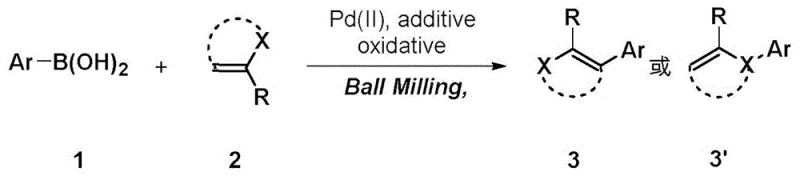
The chemical industry is witnessing a paradigm shift towards greener synthesis methodologies, exemplified by the groundbreaking technology disclosed in patent CN109761810B. This patent introduces a highly efficient preparation method for inactive olefin aryl compounds, utilizing a solvent-free mechanical grinding approach to drive the oxidative Heck reaction. Traditionally, the arylation of electron-rich or inactive olefins has been a formidable challenge due to their low reactivity, often requiring harsh conditions that compromise yield and selectivity. However, this innovative process leverages mechanical energy to activate the catalytic cycle, achieving impressive yields ranging from 49% to 85% where conventional methods often fail completely or deliver negligible outputs of 0% to 35%. By replacing thermal energy and bulk solvents with kinetic energy from ball milling, this technology not only accelerates reaction kinetics to completion within 25 to 40 minutes but also aligns perfectly with modern sustainability goals by eliminating the need for environmentally unfriendly high-boiling solvents.
The Limitations of Conventional Methods vs. The Novel Approach
The Limitations of Conventional Methods
Historically, the synthesis of arylated derivatives from olefins has relied heavily on standard Heck coupling or oxidative Heck coupling performed in solution phase, which presents significant drawbacks for industrial scalability and environmental safety. Conventional protocols typically necessitate the use of aryl halides or activated olefins, and when attempting to utilize inactive olefins, the reaction activity is notoriously low, leading to difficult olefinic bond insertion processes. To勉强 achieve conversion, traditional methods often demand the use of expensive and air-sensitive ligands, large excesses of oxidants, and substantial volumes of toxic high-boiling solvents such as DMF, 1,4-dioxane, or toluene. Furthermore, these solution-based reactions frequently require prolonged heating times extending from several hours to tens of hours, which increases energy consumption and poses safety risks associated with handling hot organic solvents. The selectivity control in these traditional systems is also problematic, often resulting in complex mixtures of regioisomers that are difficult and costly to separate, thereby reducing the overall atom economy and increasing the cost of goods sold for the final active pharmaceutical ingredient.
The Novel Approach
In stark contrast to the limitations of solution chemistry, the novel approach detailed in CN109761810B utilizes mechanochemistry to overcome the kinetic barriers associated with inactive olefin substrates. By employing a vibratory or planetary ball mill, the reactants—aryl boronic acid and inactive olefin—are subjected to intense mechanical forces in the presence of a palladium catalyst and solid oxidants, facilitating the reaction in a solvent-free or near-solvent-free environment. This mechanical activation allows for the successful construction of inactive olefin arylates with single structural selectivity, effectively broadening the substrate scope to include cyclic olefins and chain inert olefins that were previously considered unsuitable for this transformation. The reaction system is remarkably simple, avoiding the need for complex ligand systems while maintaining high efficiency and excellent selectivity. Moreover, the drastic reduction in reaction time to merely 25 to 40 minutes represents a massive improvement in throughput potential, allowing manufacturers to process significantly larger batches in the same amount of time compared to traditional stirred tank reactors.
Mechanistic Insights into Mechanochemical Oxidative Heck Coupling
The core of this technological advancement lies in the unique mechanistic pathway enabled by mechanical grinding, which fundamentally alters the energy landscape of the palladium-catalyzed oxidative Heck reaction. In this solvent-free regime, the mechanical impact and shear forces generated by the grinding media serve to continuously expose fresh reactive surfaces and enhance mass transfer between the solid reagents and the catalyst. The palladium species, typically Pd(OAc)2 or Pd(TFA)2, undergoes a catalytic cycle where the mechanical energy likely assists in the difficult transmetallation step between the aryl boronic acid and the palladium center, a step that is often rate-limiting in solution for sterically hindered or electronically deactivated substrates. The presence of solid oxidants such as DDQ, copper acetate, or silver carbonate, along with acidic additives like trichloroacetic acid, facilitates the re-oxidation of the palladium species back to its active Pd(II) state without the need for molecular oxygen pressure or liquid oxidants that could dilute the reaction mixture. This intimate mixing at the molecular level, driven by high-frequency collisions, ensures that the concentration of reactive intermediates remains locally high, driving the equilibrium towards the desired arylated product rather than side reactions or catalyst deactivation pathways.
From an impurity control perspective, the absence of bulk solvent plays a critical role in enhancing the purity profile of the final product. In solution-phase reactions, solvents can sometimes participate in side reactions or stabilize unwanted transition states that lead to byproducts; however, the solid-state environment restricts molecular mobility to only those pathways that are mechanically accessible. This constraint inherently favors the formation of the thermodynamically stable arylated olefin product while suppressing the formation of oligomers or polymerization byproducts that are common with electron-rich olefins. Additionally, the use of specific solid acid additives helps to activate the boronic acid species and stabilize the transition state, further improving regioselectivity and ensuring that the aryl group installs at the correct position on the olefin backbone. The result is a cleaner crude reaction mixture that requires less intensive downstream purification, directly translating to higher recovery rates of the target molecule and reduced loss of valuable material during chromatography or crystallization steps.
How to Synthesize Inactive Olefin Aryl Compounds Efficiently
To implement this cutting-edge synthesis route in a laboratory or pilot plant setting, operators must adhere to specific parameters regarding equipment setup and reagent stoichiometry to maximize yield and safety. The process begins with the precise weighing of aryl boronic acid and the chosen inactive olefin substrate, followed by the addition of the palladium catalyst and the solid oxidant system into a stainless steel grinding jar. It is crucial to select the appropriate grinding media, typically stainless steel balls of varying diameters (ranging from 6mm to 14mm), to ensure optimal energy transfer during the milling process. The detailed standardized synthesis steps, including specific frequency settings for vibratory mills or rotational speeds for planetary mills, are outlined in the comprehensive guide below to ensure reproducible results across different batches.
- Load aryl boronic acid, inactive olefin, Pd(II) catalyst, and solid oxidant/additive into a stainless steel grinding jar.
- Add stainless steel grinding balls and seal the jar tightly to ensure a contained mechanical environment.
- Operate the vibratory or planetary mill at specified frequencies (10-30 Hz or 200-800 rpm) for 25-40 minutes until reaction completion.
Commercial Advantages for Procurement and Supply Chain Teams
For procurement managers and supply chain directors, the adoption of this mechanochemical oxidative Heck reaction offers transformative benefits that extend far beyond simple yield improvements, fundamentally reshaping the cost structure of producing complex olefin aryl intermediates. The elimination of organic solvents is perhaps the most significant driver of cost reduction, as it removes the need for purchasing, storing, and disposing of large volumes of hazardous chemicals like DMF and toluene, which are subject to increasingly stringent environmental regulations and volatile pricing. Furthermore, the dramatic shortening of reaction time from days to less than an hour significantly enhances asset utilization, allowing existing manufacturing infrastructure to produce substantially more product per annum without the need for capital expenditure on new reactors. This efficiency gain also translates to lower energy costs, as the process does not require sustained external heating or cooling over long periods, relying instead on the mechanical energy input which is generally more efficient and easier to scale in modern milling equipment.
- Cost Reduction in Manufacturing: The economic model of this process is heavily favored by the removal of expensive ligands and the minimization of catalyst loading, which directly lowers the bill of materials for every kilogram of product produced. By avoiding the use of high-boiling solvents, the downstream processing costs are drastically simplified, as there is no need for energy-intensive distillation steps to recover solvents or extensive wastewater treatment facilities to handle solvent-contaminated effluent. The simplified workup procedure, often involving direct column chromatography or crystallization from the milled mixture, reduces labor hours and consumable usage, contributing to a leaner and more cost-effective manufacturing operation that improves overall gross margins.
- Enhanced Supply Chain Reliability: The robustness of the solvent-free methodology mitigates many supply chain risks associated with the availability and quality of specialty solvents and ligands, which can often be bottlenecks in global chemical supply networks. Since the reaction relies on readily available commodity chemicals like aryl boronic acids and simple palladium salts, the sourcing strategy becomes more resilient to market fluctuations and geopolitical disruptions. Additionally, the shorter production cycles mean that lead times for custom synthesis projects can be significantly compressed, allowing pharmaceutical companies to accelerate their drug development timelines and bring critical therapies to market faster without waiting for lengthy batch processing times.
- Scalability and Environmental Compliance: Scaling mechanochemical processes is becoming increasingly viable with the advent of continuous flow ball mills and larger batch reactors, offering a clear path from gram-scale discovery to multi-ton commercial production without the linear increase in solvent waste typical of batch solution chemistry. The green chemistry credentials of this process, characterized by high atom economy and minimal waste generation, align perfectly with the sustainability mandates of major multinational corporations, facilitating easier regulatory approval and enhancing the corporate social responsibility profile of the supply chain. This environmental compliance advantage reduces the risk of future regulatory shutdowns or fines, ensuring long-term business continuity and stability for partners relying on this technology for their key intermediates.
Frequently Asked Questions (FAQ)
The following questions address common technical and operational inquiries regarding the implementation of this ball milling technology for the synthesis of inactive olefin aryl compounds, based on the specific data and embodiments provided in the patent literature. These answers are designed to provide clarity on the feasibility, safety, and optimization of the process for potential adopters in the fine chemical and pharmaceutical sectors. Understanding these nuances is essential for R&D teams planning to integrate this methodology into their existing synthetic workflows.
Q: What are the primary advantages of using ball milling for oxidative Heck reactions compared to traditional solution methods?
A: The primary advantages include the elimination of hazardous high-boiling organic solvents like DMF and toluene, a drastic reduction in reaction time from several hours to under 40 minutes, and the ability to achieve high yields (49-85%) with inactive olefins that typically fail or give poor results in solution.
Q: Does this mechanochemical method require expensive ligands for the palladium catalyst?
A: No, one of the significant economic benefits of this patented process is that it operates effectively without the need for specialized phosphine ligands, utilizing simple Pd(OAc)2 or Pd(TFA)2 salts which reduces raw material costs and simplifies the purification process.
Q: How does the solvent-free nature of this process impact environmental compliance and waste management?
A: By conducting the reaction in a solid-state grinding mode, the process avoids the generation of large volumes of solvent waste, thereby significantly lowering the environmental footprint, reducing disposal costs, and simplifying regulatory compliance regarding volatile organic compound (VOC) emissions.
Partnering with NINGBO INNO PHARMCHEM: Your Reliable Inactive Olefin Aryl Compound Supplier
At NINGBO INNO PHARMCHEM, we recognize the immense potential of mechanochemical synthesis in revolutionizing the production of high-value pharmaceutical intermediates, and we are uniquely positioned to leverage this technology for our global clients. Our team of expert chemists possesses extensive experience scaling diverse pathways from 100 kgs to 100 MT/annual commercial production, ensuring that the transition from laboratory innovation to industrial reality is seamless and efficient. We maintain stringent purity specifications and operate rigorous QC labs equipped with advanced analytical instrumentation to guarantee that every batch of inactive olefin aryl compounds meets the exacting standards required for drug substance manufacturing, providing our partners with absolute confidence in the quality and consistency of our supply.
We invite forward-thinking pharmaceutical and agrochemical companies to collaborate with us to explore how this solvent-free oxidative Heck reaction can optimize your specific synthetic routes and reduce your overall cost of goods. Please contact our technical procurement team today to request a Customized Cost-Saving Analysis tailored to your project needs, where we can provide specific COA data and route feasibility assessments to demonstrate the tangible benefits of partnering with a leader in green chemical manufacturing. Together, we can accelerate your development timelines and achieve superior economic outcomes through the adoption of next-generation synthesis technologies.