
Advanced Stereoselective Synthesis of (Z)-3-Alkenylphthalide Derivatives for Commercial Scale-Up
The pharmaceutical and fine chemical industries are constantly seeking more efficient pathways to access complex heterocyclic scaffolds that serve as critical building blocks for bioactive molecules. A significant breakthrough in this domain is detailed in patent CN113004235B, which discloses a novel stereoselective synthesis method for (Z)-3-alkenylphthalide derivatives. This technology addresses long-standing challenges in the field by utilizing a cost-effective aluminum-based catalytic system to achieve high yields and exceptional stereocontrol. The (Z)-3-alkenylphthalide skeleton is renowned for its presence in numerous natural products and synthetic compounds exhibiting potent pharmacological activities, including anti-inflammatory, antioxidant, and cardiovascular protective effects. Consequently, the ability to produce these intermediates with high purity and defined stereochemistry is of paramount importance for downstream drug development. This report analyzes the technical merits of this innovation, highlighting its potential to redefine supply chain economics and manufacturing reliability for global procurement teams.
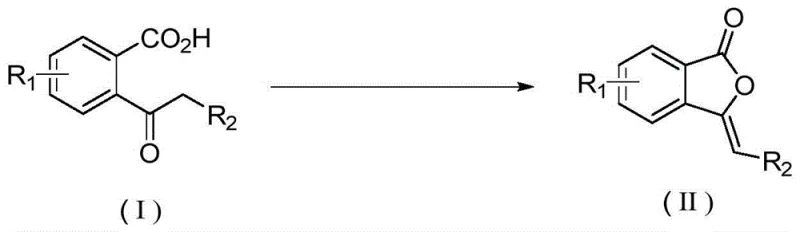
The Limitations of Conventional Methods vs. The Novel Approach
The Limitations of Conventional Methods
Historically, the construction of the 3-alkenylphthalide core has relied on methodologies that impose significant operational and economic burdens on manufacturers. Traditional routes such as the Perkin reaction often necessitate high-temperature conditions that can degrade sensitive functional groups and lead to complex byproduct profiles, complicating purification efforts. Similarly, the Julia reaction, while effective, requires the handling of reactive lithium reagents and phthalic anhydride, posing safety risks and scalability issues. More modern approaches involving the cyclization of 2-alkynyl benzoic acids typically depend on transition metal catalysts like Palladium or Copper, which are not only expensive but also introduce the risk of heavy metal contamination that must be rigorously removed to meet pharmaceutical standards. Furthermore, earlier methods using thionyl chloride (SOCl2) suffered from poor stereoselectivity, generating mixtures of (E) and (Z) isomers that are difficult and costly to separate, thereby reducing overall process efficiency and yield.
The Novel Approach
In stark contrast to these legacy techniques, the method described in CN113004235B leverages the Lewis acidity of aluminum salts, specifically anhydrous aluminum trichloride, to drive the dehydration condensation of 2-acylbenzoic acids. This approach operates under remarkably mild conditions, typically around 60°C, which preserves the integrity of diverse functional groups on the aromatic ring and the side chain. The reaction demonstrates exceptional stereoselectivity, consistently favoring the formation of the biologically relevant (Z)-isomer with ratios often exceeding 99:1. By eliminating the need for precious metals and harsh reagents, this novel pathway simplifies the workflow significantly. The use of common organic solvents like acetonitrile further enhances the practicality of the process, allowing for straightforward workup procedures involving solvent evaporation and standard column chromatography, making it an ideal candidate for both laboratory optimization and industrial manufacturing.
Mechanistic Insights into AlCl3-Catalyzed Cyclization
The core of this technological advancement lies in the activation of the carboxylic acid moiety by the aluminum cation (Al3+), which acts as a potent Lewis acid catalyst. In the reaction medium, the aluminum species coordinates with the carbonyl oxygen of the carboxylic acid group in the 2-acylbenzoic acid substrate, increasing its electrophilicity. This activation facilitates an intramolecular nucleophilic attack by the adjacent ketone carbonyl or enol form, leading to the formation of the lactone ring characteristic of the phthalide structure. The specific coordination geometry imposed by the aluminum catalyst is believed to play a crucial role in directing the stereochemical outcome of the double bond formation, effectively locking the conformation to favor the (Z)-configuration during the dehydration step. This mechanistic pathway avoids the radical or high-energy intermediates often seen in transition metal catalysis, resulting in a cleaner reaction profile with fewer side reactions.
From an impurity control perspective, the high stereoselectivity of this aluminum-catalyzed process is a major advantage for quality assurance teams. In conventional syntheses, the presence of the (E)-isomer is a persistent impurity that requires extensive chromatographic separation or recrystallization steps, which inevitably leads to material loss. By inherently suppressing the formation of the (E)-isomer, this method ensures that the crude product is already enriched with the desired stereoisomer. This reduces the burden on downstream purification units and minimizes the generation of chemical waste associated with separating close-eluting isomers. Furthermore, the absence of transition metals means that the final product is free from palladium or copper residues, a critical specification for active pharmaceutical ingredients (APIs) intended for human consumption, thus streamlining the regulatory compliance process.
How to Synthesize (Z)-3-Alkenylphthalide Derivatives Efficiently
The implementation of this synthesis route is designed to be operationally simple, requiring standard laboratory equipment and readily available reagents. The process begins by dissolving the specific 2-acylbenzoic acid starting material in a polar aprotic solvent, with acetonitrile being the preferred choice due to its solubility profile and boiling point. The catalyst, anhydrous aluminum trichloride, is then added in a stoichiometric or slightly excess amount relative to the substrate. The reaction mixture is heated to a moderate temperature, typically maintained at 60°C, and stirred for a duration sufficient to reach full conversion, which is easily monitored via thin-layer chromatography (TLC). Once the reaction is complete, the solvent is removed under reduced pressure, and the resulting residue is purified using silica gel column chromatography with a gradient of petroleum ether and ethyl acetate to isolate the pure (Z)-3-alkenylphthalide derivative.
- Dissolve the 2-acylbenzoic acid starting material (Formula I) in an organic solvent such as acetonitrile within a reaction vessel.
- Add anhydrous aluminum trichloride (AlCl3) as the catalyst, maintaining a molar ratio of substrate to catalyst between 1: 1 and 1:3.
- Stir the reaction mixture at a temperature ranging from room temperature to 120°C (preferably 60°C) for 1 to 12 hours until completion.
- Upon completion, remove the solvent via rotary evaporation and purify the crude product using column chromatography with petroleum ether and ethyl acetate.
Commercial Advantages for Procurement and Supply Chain Teams
For procurement managers and supply chain directors, the adoption of this aluminum-catalyzed synthesis represents a strategic opportunity to optimize cost structures and mitigate supply risks. The shift away from precious metal catalysts like Palladium, which are subject to volatile market pricing and geopolitical supply constraints, to abundant aluminum salts provides a stable and predictable cost base. Additionally, the mild reaction conditions reduce energy consumption compared to high-temperature processes, contributing to lower utility costs and a smaller carbon footprint. The robustness of the reaction, which can proceed in air without the strict need for inert gas protection in many cases, further simplifies the operational requirements, reducing the complexity of the manufacturing infrastructure needed to produce these valuable intermediates.
- Cost Reduction in Manufacturing: The replacement of expensive coupling reagents like TSTU or transition metal catalysts with inexpensive aluminum trichloride results in a drastic reduction in raw material costs. Since the catalyst is used in near-stoichiometric amounts and is significantly cheaper per mole than palladium complexes, the direct material cost per kilogram of product is substantially lowered. Furthermore, the high stereoselectivity minimizes the loss of material during purification, improving the overall mass balance and effective yield of the process, which translates directly to better margins for large-scale production runs.
- Enhanced Supply Chain Reliability: The starting materials, 2-acylbenzoic acids, are generally accessible and can be synthesized through established industrial pathways, ensuring a steady supply of feedstock. The simplicity of the reaction setup means that multiple contract manufacturing organizations (CMOs) can easily adopt this technology without requiring specialized high-pressure or cryogenic equipment. This flexibility allows buyers to diversify their supplier base, reducing the risk of single-source dependency and ensuring continuity of supply even during market disruptions or facility maintenance periods.
- Scalability and Environmental Compliance: The process generates minimal hazardous waste compared to methods using thionyl chloride or heavy metals, simplifying waste treatment and disposal protocols. The ability to run the reaction at atmospheric pressure and moderate temperatures makes it inherently safer and easier to scale from kilogram to multi-ton quantities. This scalability ensures that as demand for the final API grows, the production of this key intermediate can be ramped up quickly without the need for extensive process re-engineering or new capital investment in specialized reactors.
Frequently Asked Questions (FAQ)
The following questions address common technical and commercial inquiries regarding the implementation of this stereoselective synthesis technology. These answers are derived directly from the experimental data and beneficial effects reported in the patent literature, providing a clear understanding of the process capabilities and limitations for potential partners and stakeholders evaluating this route for their supply chains.
Q: What represents the primary advantage of this AlCl3-catalyzed method over traditional Pd-catalyzed routes?
A: The primary advantage is the elimination of expensive transition metal catalysts like Palladium or Copper, which significantly reduces raw material costs and simplifies the removal of heavy metal residues, ensuring higher purity for pharmaceutical applications.
Q: How does this process ensure high stereoselectivity for the (Z)-isomer?
A: The reaction conditions utilizing aluminum trichloride in solvents like acetonitrile at moderate temperatures (e.g., 60°C) favor the formation of the (Z)-configuration with ratios often exceeding 99:1, minimizing the need for difficult isomer separation.
Q: Is this synthesis method suitable for large-scale industrial production?
A: Yes, the method uses cheap and readily available catalysts, operates under mild conditions that do not require extreme pressure or cryogenic temperatures, and tolerates air exposure, making it highly robust for commercial scale-up.
Partnering with NINGBO INNO PHARMCHEM: Your Reliable (Z)-3-Alkenylphthalide Derivative Supplier
At NINGBO INNO PHARMCHEM, we recognize the critical role that high-quality intermediates play in the success of drug development programs. Our technical team has extensively evaluated the AlCl3-catalyzed synthesis route described in CN113004235B and confirmed its viability for commercial manufacturing. We possess extensive experience scaling diverse pathways from 100 kgs to 100 MT/annual commercial production, ensuring that we can meet your volume requirements with consistency. Our facilities are equipped with rigorous QC labs capable of verifying stringent purity specifications, including the precise determination of Z/E isomeric ratios and residual metal analysis, guaranteeing that every batch meets the highest industry standards.
We invite you to collaborate with us to leverage this advanced technology for your next project. By partnering with our technical procurement team, you can request a Customized Cost-Saving Analysis tailored to your specific volume needs. We encourage you to contact us today to obtain specific COA data for our reference standards and to discuss route feasibility assessments for your target molecules, ensuring a seamless transition from bench-scale discovery to commercial supply.