
Advanced Organocatalytic Synthesis of Chiral Intermediates Using Lappaconitine for Pharmaceutical Manufacturing
Advanced Organocatalytic Synthesis of Chiral Intermediates Using Lappaconitine for Pharmaceutical Manufacturing
The pharmaceutical industry constantly seeks robust, scalable, and environmentally benign methods for constructing chiral scaffolds, which are the fundamental building blocks of modern therapeutics. Patent CN101503358A introduces a groundbreaking methodology for the preparation of chiral alpha-hydroxy-beta-dicarbonyl compounds utilizing Lappaconitine as a highly effective organocatalyst. This innovation represents a significant departure from traditional metal-dependent catalytic systems, leveraging the complex stereochemical architecture of this diterpenoid alkaloid to induce asymmetry during oxidation reactions. By employing Lappaconitine, extracted from Aconitum species known for their analgesic properties, manufacturers can access high-value intermediates with improved safety profiles and reduced regulatory burdens associated with heavy metal residues. This technical insight report analyzes the mechanistic advantages, operational parameters, and commercial implications of this novel synthetic route for global supply chain stakeholders.
The Limitations of Conventional Methods vs. The Novel Approach
The Limitations of Conventional Methods
Historically, the synthesis of optically active alpha-hydroxy-beta-dicarbonyl structures has relied heavily on stoichiometric chiral oxidants or transition metal complexes, both of which present substantial drawbacks for large-scale manufacturing. The use of Davis reagents, for instance, often necessitates harsh reaction conditions involving cryogenic temperatures ranging from -78°C to 0°C and strong bases like NaHMDS, which complicate process control and increase energy consumption significantly. Furthermore, these traditional pathways frequently require stoichiometric amounts of expensive chiral auxiliaries that are not recovered, leading to poor atom economy and excessive chemical waste generation. Alternatively, Lewis acid catalysts based on chiral ligands and metal ions, while capable of high enantioselectivity, introduce the persistent challenge of removing trace metal contaminants to meet stringent pharmaceutical purity standards, often requiring additional downstream purification steps that erode overall process efficiency.
The Novel Approach
In contrast, the methodology disclosed in the patent utilizes Lappaconitine as a recyclable organocatalyst to drive the asymmetric oxidation of beta-dicarbonyl compounds under remarkably mild conditions. This approach eliminates the need for toxic heavy metals and avoids the extreme thermal requirements of previous methods, operating effectively within a temperature window of -78°C to 25°C, with a preferred range of 0°C to 20°C. The reaction employs readily available organic peroxides, such as tert-butyl hydroperoxide, as the terminal oxidant, which simplifies the reagent supply chain and reduces raw material costs. By shifting to this metal-free organocatalytic system, manufacturers can achieve high chemical yields, exemplified by results reaching up to 95% in specific indanone derivatives, while maintaining a cleaner reaction profile that facilitates easier product isolation and purification.
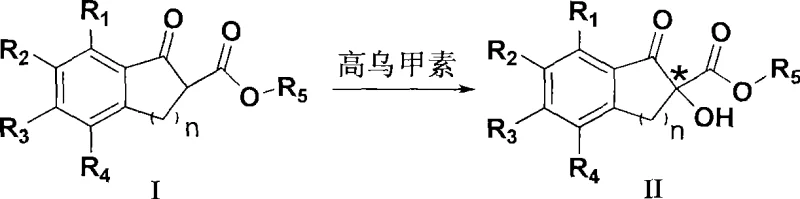
Mechanistic Insights into Lappaconitine-Catalyzed Asymmetric Oxidation
The efficacy of Lappaconitine in this transformation stems from its intricate polycyclic structure, which provides a rigid chiral environment essential for discriminating between enantiotopic faces of the substrate. As a diterpenoid alkaloid, Lappaconitine possesses multiple stereocenters and functional groups capable of engaging in specific non-covalent interactions, such as hydrogen bonding, with both the beta-dicarbonyl substrate and the peroxide oxidant. These interactions likely organize the transition state in a highly ordered manner, directing the oxygen transfer to occur preferentially from one spatial direction, thereby inducing chirality at the alpha-position. The bulky nature of the alkaloid scaffold creates significant steric hindrance that prevents the formation of the undesired enantiomer, ensuring that the reaction proceeds with meaningful levels of stereocontrol despite the absence of metal coordination.
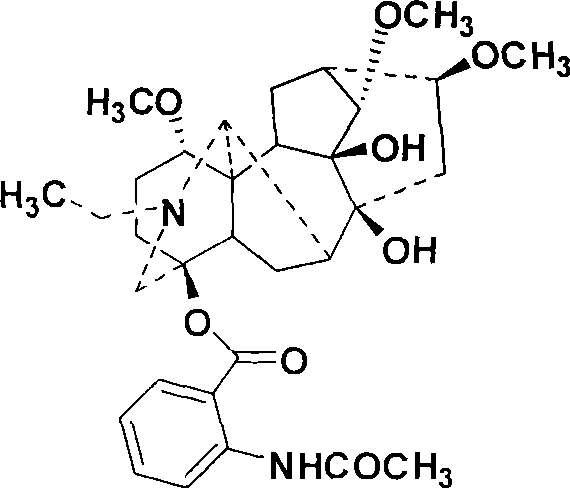
Furthermore, the mechanism benefits from the inherent stability of the catalyst under the oxidative conditions employed, allowing it to sustain catalytic turnover without rapid degradation. The patent data indicates that catalyst loading can be optimized between 0.5 mol% and 50 mol%, with a preferred range of 5 mol% to 15 mol% balancing cost and reaction rate. This flexibility allows process chemists to tune the system based on the specific electronic and steric demands of different beta-dicarbonyl substrates, whether they are indanones or tetralones. The use of inert solvents like chloroform or dichloromethane further supports the mechanism by solubilizing the organic components effectively without interfering with the critical hydrogen-bonding networks that govern the stereochemical outcome of the oxidation.
How to Synthesize Chiral Alpha-Hydroxy-Beta-Dicarbonyl Compounds Efficiently
To implement this synthesis effectively, operators must adhere to precise mixing protocols and temperature controls to maximize enantioselectivity and yield. The process begins by dissolving the beta-dicarbonyl starting material and the Lappaconitine catalyst in a dry, inert halogenated solvent, ensuring a homogeneous mixture before the introduction of the oxidant. Temperature management is critical; while the reaction can proceed at sub-zero temperatures, maintaining the system between 0°C and 20°C is often sufficient to achieve excellent results while reducing cooling costs. Following the addition of the organic peroxide, the reaction progress should be meticulously monitored using thin-layer chromatography (TLC) to determine the optimal endpoint, preventing over-oxidation or decomposition of the sensitive hydroxy-ketone product.
- Dissolve the beta-dicarbonyl substrate and Lappaconitine catalyst (0.5-50 mol%) in an inert halogenated solvent like chloroform.
- Add the organic peroxide oxidant (e.g., tert-butyl hydroperoxide) while maintaining the reaction temperature between -78°C and 25°C.
- Monitor reaction progress via TLC, then quench with sodium bisulfite solution and purify the product using silica gel chromatography.
Commercial Advantages for Procurement and Supply Chain Teams
For procurement managers and supply chain directors, the adoption of this Lappaconitine-catalyzed route offers distinct strategic advantages regarding cost structure and operational reliability. The primary benefit lies in the elimination of expensive transition metal catalysts and chiral ligands, which are often subject to volatile market pricing and supply constraints. By replacing these with a bio-derived alkaloid that is extracted from widely available plant sources, the manufacturing process becomes less susceptible to geopolitical supply chain disruptions and raw material price spikes. Additionally, the removal of heavy metals from the process flow significantly reduces the complexity and cost of downstream purification, as there is no longer a need for specialized metal scavenging resins or extensive washing protocols to meet residual metal specifications.
- Cost Reduction in Manufacturing: The economic impact of switching to this organocatalytic method is driven by the simplification of the bill of materials and the reduction in waste disposal costs. Since the catalyst is metal-free, the regulatory burden associated with validating metal clearance is removed, leading to faster batch release times and lower quality control expenditures. The ability to operate at near-ambient temperatures (0°C to 20°C) also translates to substantial energy savings compared to processes requiring deep cryogenic cooling, further enhancing the overall cost-efficiency of the production campaign without compromising product quality.
- Enhanced Supply Chain Reliability: Sourcing Lappaconitine from natural extracts provides a sustainable and renewable supply chain alternative to synthetic ligands that rely on petrochemical feedstocks. This biological origin ensures a more stable long-term supply, as the cultivation and extraction of Aconitum species can be scaled agriculturally to meet demand. Moreover, the use of common industrial solvents like chloroform and standard oxidants like tert-butyl hydroperoxide means that the process relies on commodities that are readily available from multiple global suppliers, minimizing the risk of single-source bottlenecks.
- Scalability and Environmental Compliance: From an environmental and safety perspective, this method aligns well with green chemistry principles by avoiding toxic heavy metals and reducing the generation of hazardous waste streams. The workup procedure described in the patent involves simple aqueous washes with sodium bisulfite to quench excess peroxide, followed by standard extraction and drying, which are unit operations easily scalable from kilogram to multi-ton production. This operational simplicity facilitates rapid technology transfer from R&D to commercial manufacturing, ensuring that supply commitments can be met with high consistency and minimal environmental impact.
Frequently Asked Questions (FAQ)
The following questions address common technical inquiries regarding the implementation and optimization of this catalytic system for industrial applications. Understanding these nuances is critical for process development teams aiming to integrate this technology into existing manufacturing lines. The answers provided are derived directly from the experimental data and technical disclosures within the patent documentation to ensure accuracy and relevance.
Q: What are the advantages of using Lappaconitine over metal catalysts?
A: Lappaconitine is a metal-free organocatalyst derived from natural sources, eliminating the risk of heavy metal contamination in the final API and removing the need for expensive metal scavenging steps.
Q: What is the typical enantioselectivity achieved with this method?
A: According to the patent examples, the method achieves enantiomeric excess (ee) values ranging from 40% to 78%, with chemical yields consistently high between 85% and 95%.
Q: Is this process scalable for industrial production?
A: Yes, the process utilizes common inert solvents like chloroform and operates at mild temperatures (0°C to 20°C preferred), making it highly suitable for scale-up without requiring extreme cryogenic infrastructure.
Partnering with NINGBO INNO PHARMCHEM: Your Reliable Chiral Alpha-Hydroxy-Beta-Dicarbonyl Compound Supplier
At NINGBO INNO PHARMCHEM, we recognize the transformative potential of advanced organocatalytic technologies like the Lappaconitine-mediated oxidation described in CN101503358A for producing high-value pharmaceutical intermediates. Our team possesses extensive experience scaling diverse pathways from 100 kgs to 100 MT/annual commercial production, ensuring that innovative laboratory methods are successfully translated into robust industrial processes. We maintain stringent purity specifications and operate rigorous QC labs equipped to handle complex chiral separations, guaranteeing that every batch of chiral alpha-hydroxy-beta-dicarbonyl compound meets the exacting standards required by global regulatory agencies.
We invite you to collaborate with us to leverage this cost-effective and environmentally friendly synthetic route for your next project. Contact our technical procurement team today to request a Customized Cost-Saving Analysis tailored to your specific volume requirements. We are prepared to provide specific COA data and comprehensive route feasibility assessments to demonstrate how our expertise can optimize your supply chain and accelerate your time to market.