
Scalable Palladium-Catalyzed Carbonylation for High-Purity Quinazolinone Pharmaceutical Intermediates
Scalable Palladium-Catalyzed Carbonylation for High-Purity Quinazolinone Pharmaceutical Intermediates
The development of efficient synthetic routes for nitrogen-containing heterocycles remains a cornerstone of modern medicinal chemistry, particularly for scaffolds exhibiting potent biological activity. As detailed in the recent patent CN112480015B, a groundbreaking multi-component one-pot method has been established for the synthesis of 2-trifluoromethyl substituted quinazolinones. This class of compounds is critically important in the pharmaceutical industry, serving as the core structure for numerous bioactive agents ranging from antifungal and antiviral drugs to anticancer therapeutics. The significance of this scaffold is underscored by its presence in well-known medications such as Methaqualone and Afloqualone, as illustrated in the structural diversity of bioactive quinazolinones below.
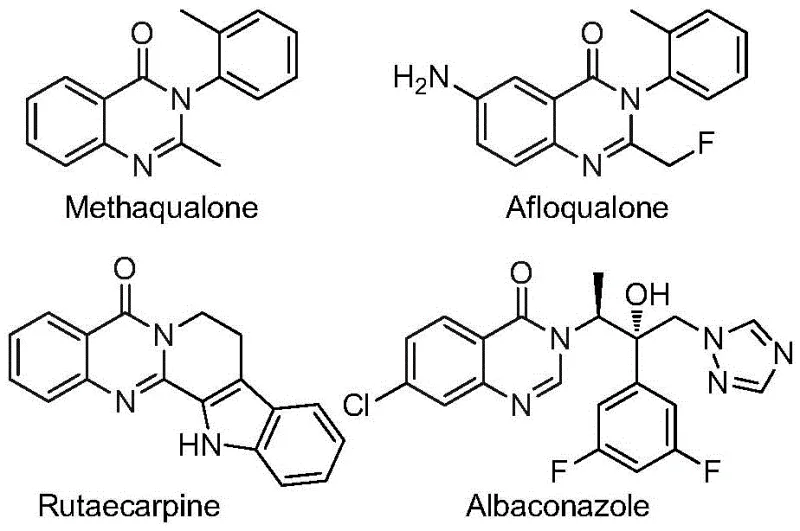
This novel methodology addresses long-standing challenges in heterocyclic synthesis by leveraging a palladium-catalyzed carbonylation cascade. For R&D directors and process chemists, the ability to construct these complex fused rings from simple, commercially available nitro compounds represents a significant leap forward in synthetic efficiency. The process not only streamlines the construction of the quinazolinone core but also introduces the metabolically stable trifluoromethyl group in a single operational sequence, thereby enhancing the drug-likeness of the resulting intermediates.
The Limitations of Conventional Methods vs. The Novel Approach
The Limitations of Conventional Methods
Historically, the synthesis of quinazolinone derivatives has been plagued by significant operational hurdles that hinder both research throughput and commercial viability. Traditional pathways often rely on the use of high-pressure carbon monoxide gas, which necessitates specialized autoclave equipment and stringent safety protocols, thereby increasing capital expenditure and operational risk. Furthermore, many existing methods require pre-activated substrates, such as 2-bromoformylaniline or acid anhydrides, which are not only more expensive than their nitro counterparts but also generate stoichiometric amounts of waste during their preparation. Other approaches utilizing ruthenium or platinum catalysts often suffer from narrow substrate scope and harsh reaction conditions, limiting their utility in the rapid generation of diverse analog libraries required for modern drug discovery programs.
The Novel Approach
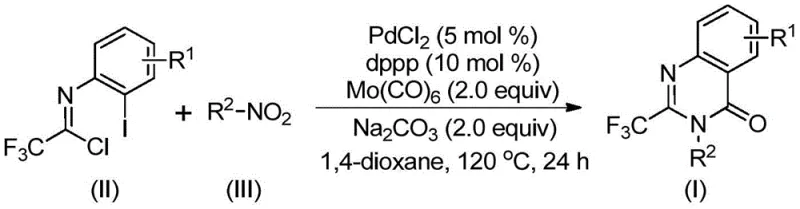
In stark contrast, the method disclosed in patent CN112480015B utilizes a transition metal palladium-catalyzed carbonylation cascade that operates under relatively mild conditions using a solid carbon monoxide source. By employing Molybdenum Hexacarbonyl (Mo(CO)6) as a safe and convenient CO surrogate, the process eliminates the need for high-pressure gas infrastructure. The reaction initiates with readily available trifluoroethylimidoyl chloride and nitro compounds, which are inexpensive and widely accessible commodity chemicals. This one-pot strategy effectively merges the reduction of the nitro group, the formation of the carbon-nitrogen bond, and the subsequent carbonylative cyclization into a single vessel. As shown in the general reaction scheme below, this convergence drastically reduces the number of isolation steps, solvent consumption, and overall processing time.
Mechanistic Insights into Pd-Catalyzed Carbonylation Cascade
Understanding the mechanistic underpinnings of this transformation is vital for process optimization and impurity control. The reaction is believed to proceed through a sophisticated cascade sequence initiated by the reduction of the nitro compound to the corresponding amine by Mo(CO)6. This in situ generated amine then undergoes a base-promoted intermolecular coupling with the trifluoroethylimidoyl chloride to form a trifluoroacetamidine intermediate. Subsequently, the palladium catalyst, coordinated by the dppp ligand, inserts into the carbon-iodine bond of the imidoyl chloride moiety, generating a reactive divalent palladium species. The thermal decomposition of Mo(CO)6 releases carbon monoxide, which inserts into the carbon-palladium bond to form an acyl-palladium intermediate. Finally, intramolecular nucleophilic attack by the nitrogen atom followed by reductive elimination yields the desired 2-trifluoromethyl substituted quinazolinone. This intricate dance of organometallic steps ensures high atom economy and minimizes the formation of side products associated with stepwise syntheses.
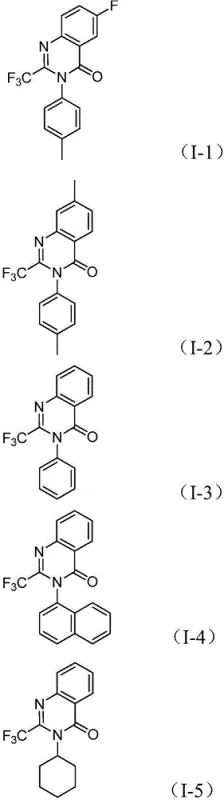
From an impurity profile perspective, the chemoselectivity of this system is remarkable. The use of sodium carbonate as a mild base prevents the hydrolysis of sensitive functional groups while effectively promoting the cyclization. The compatibility of the catalyst system with various substituents allows for the synthesis of a wide array of derivatives without significant degradation. As demonstrated by the specific examples in the patent, substrates bearing electron-donating groups like methyl and methoxy, as well as electron-withdrawing groups like halogens and trifluoromethyl, are all tolerated with high efficiency. This robustness is essential for maintaining a clean impurity profile, which simplifies downstream purification and ensures the high purity required for pharmaceutical applications.
How to Synthesize 2-Trifluoromethyl Quinazolinone Efficiently
Implementing this synthesis in a laboratory or pilot plant setting requires careful attention to reagent ratios and thermal parameters to maximize yield and reproducibility. The protocol is designed to be operationally simple, requiring standard Schlenk techniques or sealed tube reactions under an inert atmosphere. The key to success lies in the precise stoichiometry of the palladium catalyst and the CO source, as well as the selection of the appropriate aprotic solvent to ensure full solubility of all components. While the general procedure is robust, slight adjustments may be needed for sterically hindered substrates. For a detailed, step-by-step standardized operating procedure tailored for scale-up, please refer to the technical guide below.
- Combine palladium chloride, dppp ligand, sodium carbonate, Mo(CO)6, trifluoroethylimidoyl chloride, and nitro compound in an organic solvent like dioxane.
- Heat the reaction mixture to 120°C and stir for 16 to 30 hours to allow the carbonylation cascade and cyclization to proceed.
- Upon completion, filter the mixture, mix with silica gel, and purify via column chromatography to isolate the target quinazolinone.
Commercial Advantages for Procurement and Supply Chain Teams
For procurement managers and supply chain heads, the shift towards this novel synthetic route offers tangible strategic benefits that extend beyond mere chemical elegance. The primary advantage lies in the drastic simplification of the raw material supply chain. By utilizing nitro compounds and trifluoroethylimidoyl chloride as starting materials, manufacturers can bypass the volatile supply chains associated with specialized pre-activated intermediates. These commodity chemicals are produced on a massive global scale, ensuring consistent availability and shielding production schedules from the bottlenecks often seen with niche reagents. Furthermore, the elimination of high-pressure carbon monoxide gas removes a significant logistical and safety burden, reducing insurance costs and facility compliance requirements.
- Cost Reduction in Manufacturing: The economic impact of this one-pot methodology is profound. By consolidating multiple synthetic steps into a single reaction vessel, the process significantly reduces solvent usage, energy consumption for heating and cooling cycles, and labor hours associated with intermediate isolations. The use of earth-abundant nitro compounds instead of expensive brominated or anhydride precursors further drives down the Bill of Materials (BOM) cost. Additionally, the high reaction efficiency and yields reported in the patent minimize the loss of valuable starting materials, leading to substantial cost savings in the overall manufacturing process without compromising on quality.
- Enhanced Supply Chain Reliability: Reliability is the backbone of any pharmaceutical supply chain. The reliance on broadly available starting materials means that sourcing risks are minimized. Unlike proprietary catalysts or custom-synthesized building blocks that may have single-source suppliers, the reagents for this process are available from multiple global vendors. This multi-sourcing capability provides a buffer against market fluctuations and geopolitical disruptions. Moreover, the robustness of the reaction conditions ensures consistent batch-to-batch quality, reducing the risk of production delays caused by failed runs or out-of-specification results.
- Scalability and Environmental Compliance: Scaling chemical processes often introduces new challenges, but this methodology is inherently designed for growth. The use of standard organic solvents like dioxane and the absence of hazardous high-pressure gases make the transition from gram-scale laboratory synthesis to kilogram or ton-scale commercial production much smoother. From an environmental standpoint, the atom-economical nature of the cascade reaction generates less waste compared to stepwise approaches. The reduced solvent footprint and lower energy intensity align perfectly with modern green chemistry principles, helping companies meet increasingly stringent environmental regulations and sustainability goals.
Frequently Asked Questions (FAQ)
The following questions address common technical and commercial inquiries regarding the implementation of this synthesis technology. These insights are derived directly from the experimental data and beneficial effects described in the patent documentation, providing clarity for technical teams evaluating this route for potential adoption.
Q: What are the safety advantages of using Mo(CO)6 over gaseous CO in this synthesis?
A: Using Molybdenum Hexacarbonyl (Mo(CO)6) as a solid carbon monoxide substitute eliminates the need for high-pressure gas cylinders and specialized autoclaves, significantly reducing operational hazards and infrastructure costs in standard laboratory or pilot plant settings.
Q: How does this method improve substrate compatibility compared to traditional routes?
A: The protocol demonstrates excellent tolerance for various functional groups including halogens, alkyls, and trifluoromethyl groups on both the nitro compound and the imidoyl chloride, allowing for diverse Structure-Activity Relationship (SAR) studies without requiring protective group strategies.
Q: Is this process suitable for large-scale commercial production?
A: Yes, the patent explicitly states the method can be expanded to the gram level and beyond. The use of commercially available starting materials and standard organic solvents like dioxane facilitates straightforward scale-up for industrial manufacturing.
Partnering with NINGBO INNO PHARMCHEM: Your Reliable 2-Trifluoromethyl Quinazolinone Supplier
At NINGBO INNO PHARMCHEM, we recognize the critical role that advanced synthetic methodologies play in accelerating drug development timelines. Our team of expert process chemists has extensively evaluated the technology described in patent CN112480015B and is fully equipped to leverage this efficient pathway for your projects. We possess extensive experience scaling diverse pathways from 100 kgs to 100 MT/annual commercial production, ensuring that your transition from discovery to market is seamless. Our state-of-the-art facilities are designed to handle complex organometallic reactions safely, and our rigorous QC labs enforce stringent purity specifications to guarantee that every batch meets the highest international standards.
We invite you to collaborate with us to optimize this synthesis for your specific needs. Whether you require custom synthesis of novel analogs for SAR studies or bulk manufacturing of key intermediates, our technical procurement team is ready to assist. Please contact us today to request a Customized Cost-Saving Analysis for your project. We are eager to provide you with specific COA data and comprehensive route feasibility assessments to demonstrate how our capabilities can drive value and efficiency in your supply chain.