
Scalable Synthesis of 2-Trifluoromethyl Quinazolinones: A Cost-Effective Route for Pharmaceutical Intermediates
The pharmaceutical industry continuously seeks efficient pathways to access nitrogen-containing heterocycles due to their prevalence in bioactive molecules. Patent CN111675662B, published in October 2021, discloses a novel preparation method for 2-trifluoromethyl substituted quinazolinone compounds, a structural motif found in numerous drugs exhibiting anti-cancer, anticonvulsant, and anti-inflammatory activities. The introduction of the trifluoromethyl group is particularly strategic, as it significantly enhances the electronegativity, metabolic stability, and lipophilicity of the target molecule, thereby improving bioavailability. This technical breakthrough addresses the longstanding challenges associated with synthesizing these complex scaffolds, offering a route that utilizes cheap metal iron catalysis and readily available starting materials. For R&D directors and procurement managers alike, this methodology represents a pivotal shift towards more sustainable and cost-effective manufacturing of high-value pharmaceutical intermediates.
The Limitations of Conventional Methods vs. The Novel Approach
The Limitations of Conventional Methods
Historically, the synthesis of quinazolinones bearing trifluoromethyl functional groups has relied heavily on cyclization reactions involving synthons such as trifluoroacetic anhydride or ethyl trifluoroacetate with substrates like anthranilamide or isatoic anhydride. While these methods are established in literature, they suffer from severe limitations that hinder large-scale commercial adoption. The reaction conditions are often harsh, requiring extreme temperatures or pressures that pose safety risks and increase energy consumption. Furthermore, the substrates used in these traditional routes are frequently expensive and difficult to source in bulk quantities, leading to inflated raw material costs. Perhaps most critically, these conventional methods often exhibit narrow substrate scope and low yields, generating significant amounts of waste and complicating the downstream purification process, which is a major bottleneck in API manufacturing.
The Novel Approach
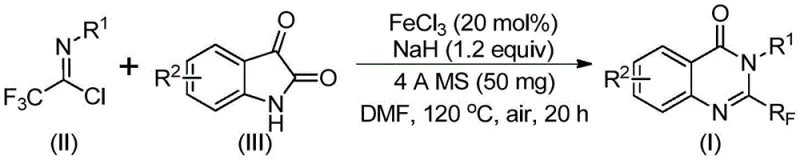
In stark contrast, the method disclosed in the patent utilizes trifluoroethylimidoyl chloride and isatin as starting raw materials, catalyzed by inexpensive ferric chloride. This innovative approach circumvents the need for precious metal catalysts and harsh reagents, operating under relatively mild conditions that are safer and more energy-efficient. The reaction proceeds through an alkali-promoted carbon-nitrogen bond formation followed by an iron-catalyzed decarbonylation and cyclization. This sequence not only improves the overall atom economy but also demonstrates exceptional functional group tolerance, allowing for the synthesis of diverse derivatives with high efficiency. By shifting to this robust catalytic system, manufacturers can achieve substantial cost reductions and streamline the production workflow for complex heterocyclic intermediates.
Mechanistic Insights into FeCl3-Catalyzed Cyclization
The core of this synthetic strategy lies in the dual-activation mechanism facilitated by the FeCl3/NaH system. Initially, sodium hydride acts as a base to promote the nucleophilic attack, forming a carbon-nitrogen bond between the trifluoroethylimidoyl chloride and the isatin derivative. This intermediate then undergoes a crucial iron-catalyzed decarbonylation step, which is the rate-determining factor in many similar transformations. The presence of ferric chloride stabilizes the transition state, lowering the activation energy required for the cyclization to occur. This mechanistic pathway is highly selective, minimizing the formation of side products that typically plague quinazolinone synthesis. The use of 4A molecular sieves further drives the reaction equilibrium forward by sequestering moisture, ensuring high conversion rates even with sensitive substrates.
From an impurity control perspective, this mechanism offers distinct advantages. The mild reaction conditions prevent the degradation of sensitive functional groups such as halogens or nitro groups, which are common in medicinal chemistry scaffolds. The high specificity of the iron catalyst ensures that the trifluoromethyl group is incorporated precisely at the 2-position of the quinazolinone ring, avoiding regio-isomers that are difficult to separate. This level of control is critical for meeting the stringent purity specifications required for pharmaceutical ingredients. The ability to tolerate a wide range of substituents on both the aryl ring of the imidoyl chloride and the benzene ring of the isatin allows for the rapid generation of structure-activity relationship (SAR) libraries without the need for extensive process re-optimization.
How to Synthesize 2-Trifluoromethyl Quinazolinone Efficiently
The operational simplicity of this protocol makes it highly attractive for process chemists looking to implement this route in a pilot or production plant. The procedure involves mixing the catalyst, base, molecular sieves, and substrates in a polar aprotic solvent like DMF, followed by a two-stage heating profile. This standardized approach minimizes the risk of operator error and ensures batch-to-batch consistency. For detailed operational parameters and safety guidelines, please refer to the structured synthesis guide below.
- Mix ferric chloride (20 mol%), sodium hydride (1.2 equiv), 4A molecular sieves, trifluoroethylimidoyl chloride, and isatin derivative in DMF solvent.
- Stir the reaction mixture at 40°C for 8-10 hours, then heat to 120°C and continue reacting for 18-20 hours under air.
- Filter the reaction mixture, mix with silica gel, and purify via column chromatography to isolate the target 2-trifluoromethyl quinazolinone.
Commercial Advantages for Procurement and Supply Chain Teams
For procurement managers and supply chain heads, the transition to this iron-catalyzed methodology offers tangible strategic benefits beyond mere technical feasibility. The primary driver for adoption is the dramatic reduction in raw material costs. By replacing expensive precious metal catalysts and specialized fluorinating agents with commodity chemicals like ferric chloride and readily available isatins, the direct material cost of goods sold (COGS) is significantly lowered. Additionally, the high yields reported in the patent data, often exceeding 90% for optimized substrates, mean that less raw material is wasted per kilogram of final product, further enhancing the economic viability of the process.
- Cost Reduction in Manufacturing: The elimination of precious metal catalysts removes the need for expensive metal scavenging steps and rigorous heavy metal testing, which are costly and time-consuming regulatory hurdles. The use of DMF as a solvent, while requiring careful handling, is a standard industrial solvent with well-established recovery and recycling protocols, contributing to lower waste disposal costs. The overall process efficiency translates into a leaner manufacturing operation with reduced overheads.
- Enhanced Supply Chain Reliability: The starting materials, specifically isatin derivatives and aromatic amines used to prepare the imidoyl chlorides, are commercially available in bulk quantities from multiple global suppliers. This diversification of the supply base mitigates the risk of single-source dependency and ensures continuity of supply even during market fluctuations. The robustness of the reaction conditions also means that the process is less susceptible to minor variations in raw material quality, providing a buffer against supply chain disruptions.
- Scalability and Environmental Compliance: The patent explicitly mentions the potential for industrial scale application, supported by the successful gram-level expansion demonstrated in the examples. The reaction generates minimal hazardous waste compared to traditional methods, aligning with modern green chemistry principles and reducing the environmental footprint of the manufacturing site. This compliance with environmental standards facilitates faster regulatory approvals and smoother operations in regions with strict emission controls.
Frequently Asked Questions (FAQ)
The following questions address common technical and commercial inquiries regarding the implementation of this synthesis route. These answers are derived directly from the experimental data and beneficial effects described in the patent documentation, providing a clear understanding of the technology's capabilities and limitations for potential partners.
Q: What are the key advantages of using FeCl3 over traditional catalysts for quinazolinone synthesis?
A: The use of Ferric Chloride (FeCl3) offers significant cost advantages as it is an inexpensive, earth-abundant metal compared to precious metals like palladium or rhodium. Furthermore, the patent data indicates high functional group tolerance and excellent yields (up to 93%), simplifying the purification process and reducing overall manufacturing costs.
Q: Can this synthesis method be scaled for industrial production of API intermediates?
A: Yes, the patent explicitly states that the method is capable of gram-level expansion and provides possibilities for industrial scale application. The use of readily available starting materials like isatin and trifluoroethylimidoyl chloride, combined with a simple workup procedure involving filtration and column chromatography, supports robust commercial scale-up.
Q: What is the substrate scope for R1 and R2 groups in this reaction?
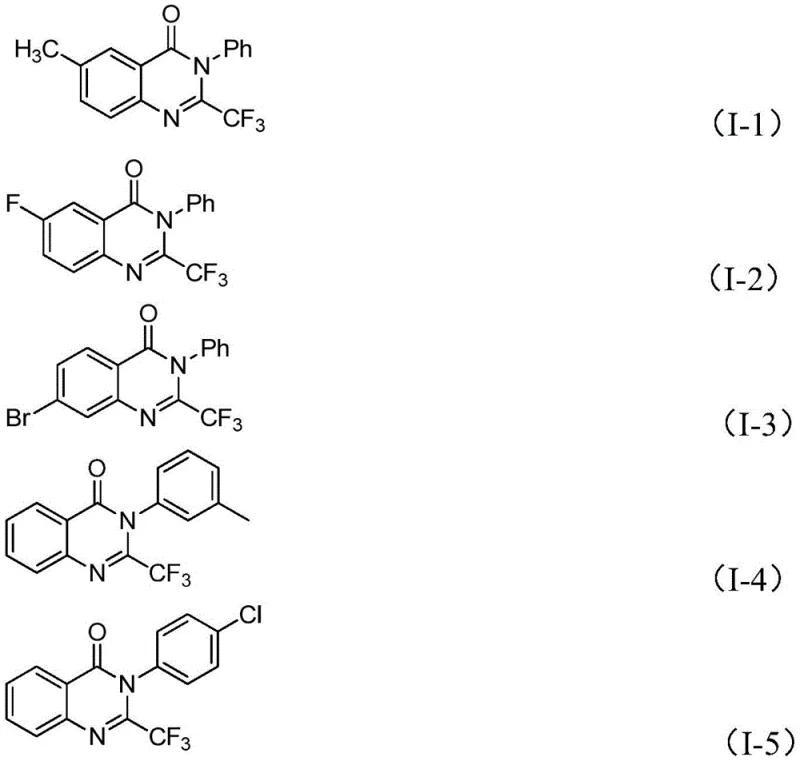
A: The reaction demonstrates broad substrate scope. R1 can be substituted or unsubstituted aryl groups (including methyl, fluoro, bromo, chloro, nitro, and methoxy substituents), while R2 on the isatin ring can be alkyl, halogen, or methoxy. This versatility allows for the synthesis of diverse quinazolinone libraries for drug discovery.
Partnering with NINGBO INNO PHARMCHEM: Your Reliable 2-Trifluoromethyl Quinazolinone Supplier
At NINGBO INNO PHARMCHEM, we recognize the critical role that efficient synthetic routes play in accelerating drug development and commercialization. Our team of expert process chemists has extensively evaluated the FeCl3-catalyzed cyclization method and is fully equipped to translate this laboratory-scale innovation into commercial reality. We possess extensive experience scaling diverse pathways from 100 kgs to 100 MT/annual commercial production, ensuring that your supply needs are met with precision and reliability. Our state-of-the-art facilities are designed to handle complex heterocyclic chemistry with stringent purity specifications, supported by rigorous QC labs that guarantee every batch meets the highest international standards.
We invite you to collaborate with us to leverage this cost-effective technology for your next project. By partnering with our technical procurement team, you can request a Customized Cost-Saving Analysis tailored to your specific volume requirements. We encourage you to reach out today to obtain specific COA data and route feasibility assessments, allowing us to demonstrate how our expertise can optimize your supply chain and reduce your time to market for high-purity pharmaceutical intermediates.