
Advanced Synthesis of Indole Acetyl Imino Sulfone Derivatives for Pharmaceutical Applications
The pharmaceutical industry continuously seeks efficient pathways to construct complex heterocyclic scaffolds that serve as critical building blocks for new drug candidates. Patent CN113173877A discloses a groundbreaking transition metal-catalyzed multicomponent synthesis technology specifically designed for the preparation of indole acetyl imino sulfone series compounds. These molecules are of immense interest in medicinal chemistry due to the biological significance of both the indole ring system and the sulfenimide structure, which are found in various clinical drugs ranging from hypotensive agents to kinase inhibitors. The disclosed method represents a significant leap forward by integrating the formation of the indole core and the installation of the acetyl imino sulfone moiety into a streamlined, one-pot process. This innovation not only simplifies the synthetic route but also enhances the overall atom economy and operational safety, making it a highly attractive strategy for the commercial scale-up of complex pharmaceutical intermediates.
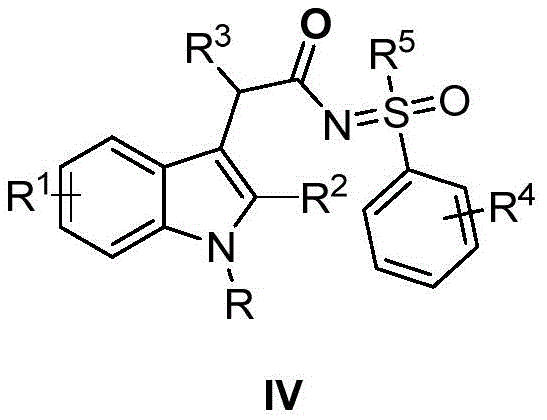
The structural versatility of the target compounds, as illustrated in the general formula, allows for extensive modification at multiple positions (R, R1-R5), enabling medicinal chemists to fine-tune pharmacological properties. The ability to access such diverse chemical space efficiently is a key driver for modern drug discovery programs. By leveraging this patented technology, research teams can rapidly generate libraries of novel analogs for structure-activity relationship (SAR) studies, accelerating the identification of lead compounds with improved efficacy and safety profiles.
The Limitations of Conventional Methods vs. The Novel Approach
The Limitations of Conventional Methods
Traditional synthetic routes to functionalized indole derivatives often suffer from significant drawbacks that hinder their practical application in large-scale manufacturing. Conventional methods typically involve multi-step sequences where intermediates must be isolated and purified after each transformation, leading to substantial material loss and increased processing time. Furthermore, many existing protocols require harsh reaction conditions, such as high temperatures or the use of hazardous reagents, which pose safety risks and environmental concerns. The construction of the sulfenimide linkage, in particular, can be challenging, often requiring specialized precursors or forcing conditions that limit the tolerance of sensitive functional groups. These inefficiencies result in higher production costs and longer lead times, creating bottlenecks in the supply chain for high-purity pharmaceutical intermediates.
The Novel Approach
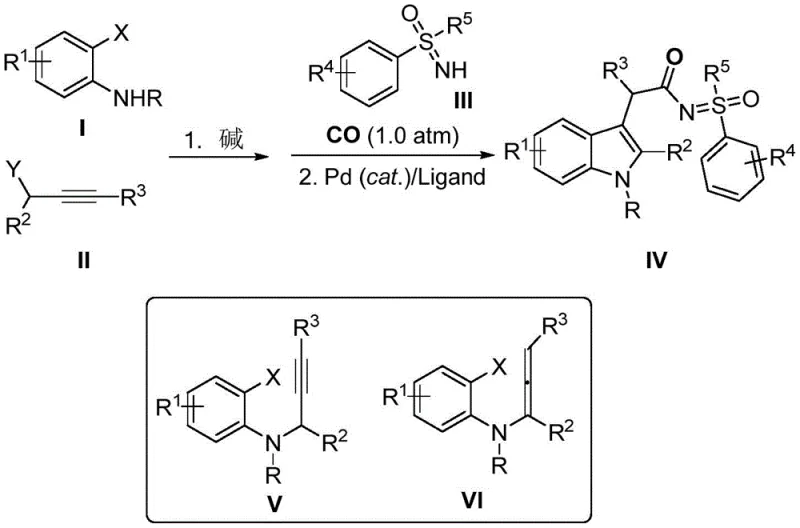
In stark contrast, the novel approach described in the patent utilizes a sophisticated palladium-catalyzed carbonylation strategy that operates under mild conditions. By employing ortho-halogen-substituted aromatic amines, propargyl halides, and sulfoxide sulfonimides as readily available starting materials, the method achieves the target structure in a single reaction vessel. A defining feature of this process is the use of carbon monoxide at atmospheric pressure (1.0 atm), which eliminates the need for specialized high-pressure autoclaves often required for carbonylation reactions. This simplification of equipment requirements drastically reduces capital expenditure and operational complexity. Moreover, the reaction proceeds with high efficiency and selectivity, generating the desired indole acetyl imino sulfone derivatives in excellent yields without the need to isolate unstable intermediates, thereby representing a paradigm shift in cost reduction in pharmaceutical intermediate manufacturing.
Mechanistic Insights into Pd-Catalyzed Carbonylative Cyclization
The core of this synthetic breakthrough lies in the intricate interplay between the palladium catalyst, the phosphine ligand, and the reaction substrates. The mechanism initiates with the activation of the ortho-halogen-substituted aromatic amine by the palladium species, followed by the insertion of the alkyne component derived from the propargyl halide. This sequence generates key organopalladium intermediates that are poised for carbonyl insertion. The introduction of carbon monoxide into the coordination sphere of the palladium center facilitates the formation of an acyl-palladium species, which is a critical step in constructing the acetyl backbone of the final product. Subsequent nucleophilic attack by the sulfoxide sulfonimide nitrogen and reductive elimination releases the final indole product while regenerating the active catalyst. This catalytic cycle is highly optimized to minimize side reactions, ensuring that the complex molecular architecture is assembled with precision.
Impurity control is another critical aspect addressed by this mechanistic design. The high selectivity of the palladium catalyst, particularly when paired with appropriate phosphine ligands like triphenylphosphine, ensures that competing pathways such as homocoupling of the alkyne or dehalogenation of the aryl amine are suppressed. The use of a base, such as cesium carbonate or potassium tert-butoxide, plays a dual role in neutralizing acidic byproducts and facilitating the deprotonation steps necessary for cyclization. The result is a clean reaction profile that simplifies downstream purification, often allowing for the isolation of the target compound via standard flash column chromatography with high purity. This level of control is essential for meeting the stringent quality standards required for reliable pharmaceutical intermediate supplier operations, where impurity profiles must be tightly managed to ensure patient safety.
How to Synthesize Indole Acetyl Imino Sulfone Efficiently
The synthesis protocol outlined in the patent provides a robust framework for producing these valuable compounds. The process begins by mixing the ortho-halogenated arylamine and propargyl halide in a suitable organic solvent such as acetone or THF, followed by the addition of a base to generate the reactive intermediate in situ. Without isolating this intermediate, the reaction mixture is then subjected to a carbon monoxide atmosphere in the presence of the palladium catalyst, ligand, and sulfoxide sulfonimide. The reaction typically proceeds at room temperature or mild heating, completing within a few hours as monitored by TLC. For a detailed, step-by-step guide including specific molar ratios, solvent volumes, and workup procedures, please refer to the standardized synthesis instructions below.
- React ortho-halogen-substituted aromatic amines with propargyl halides in the presence of a base to form key intermediates without isolation.
- Introduce sulfoxide sulfonimides and atmospheric carbon monoxide to the reaction mixture containing the intermediates.
- Utilize a palladium catalyst and phosphine ligand system to facilitate carbonyl insertion and cyclization, yielding the target indole acetyl imino sulfone compounds.
Commercial Advantages for Procurement and Supply Chain Teams
From a procurement and supply chain perspective, this patented methodology offers compelling advantages that directly impact the bottom line and operational resilience. The reliance on commercially available, commodity-grade starting materials such as substituted anilines and propargyl bromide ensures a stable and predictable supply chain, mitigating the risks associated with sourcing exotic or custom-synthesized reagents. Furthermore, the elimination of intermediate isolation steps not only saves time but also reduces the consumption of solvents and silica gel typically used in purification, contributing to a greener and more cost-effective process. The ability to run the reaction at atmospheric pressure removes the need for expensive high-pressure reactors, lowering the barrier to entry for contract manufacturing organizations and enabling faster technology transfer.
- Cost Reduction in Manufacturing: The economic benefits of this process are driven by its high atom economy and operational simplicity. By avoiding the use of high-pressure equipment and reducing the number of unit operations, manufacturers can achieve substantial cost savings in both capital investment and daily operational expenses. The high yields reported across a broad range of substrates mean that less raw material is wasted, further driving down the cost per kilogram of the final product. Additionally, the mild reaction conditions reduce energy consumption for heating and cooling, aligning with sustainability goals while enhancing profitability.
- Enhanced Supply Chain Reliability: The robustness of the reaction conditions contributes significantly to supply chain reliability. Because the process tolerates a wide variety of functional groups and does not require sensitive anhydrous or cryogenic conditions, it is less prone to batch failures caused by minor variations in raw material quality or environmental factors. This consistency ensures that production schedules can be met reliably, reducing the risk of stockouts for downstream drug manufacturers. The use of common solvents like toluene and acetone also simplifies logistics, as these materials are readily available globally, preventing bottlenecks in the procurement of specialized chemicals.
- Scalability and Environmental Compliance: Scaling this process from laboratory to industrial production is straightforward due to the absence of hazardous high-pressure gases and the use of standard organic solvents. The simplified workup procedure, which often involves basic extraction and chromatography, can be easily adapted for larger batches without significant re-engineering. From an environmental standpoint, the reduced solvent usage and higher efficiency translate to a lower E-factor (mass of waste per mass of product), facilitating compliance with increasingly strict environmental regulations. This makes the technology not only economically viable but also environmentally responsible, a key consideration for modern chemical enterprises.
Frequently Asked Questions (FAQ)
The following questions address common technical and commercial inquiries regarding the synthesis and application of indole acetyl imino sulfone derivatives. These answers are derived directly from the experimental data and technical specifications provided in the patent documentation, ensuring accuracy and relevance for industry professionals. Understanding these details is crucial for evaluating the feasibility of adopting this technology for specific project needs.
Q: What are the key advantages of this Pd-catalyzed synthesis over traditional methods?
A: This method utilizes a one-pot multicomponent reaction under atmospheric carbon monoxide pressure, eliminating the need for high-pressure equipment and intermediate isolation. It offers high selectivity, mild reaction conditions, and significantly reduced operational complexity compared to multi-step conventional routes.
Q: What is the substrate scope for this indole acetyl imino sulfone preparation?
A: The process demonstrates wide applicability, accommodating various substituents on the aromatic amine and sulfoxide sulfonimide components. Electron-donating and electron-withdrawing groups such as halogens, alkyls, and alkoxy groups are well-tolerated, allowing for the synthesis of diverse derivative libraries.
Q: Is this process suitable for large-scale commercial production?
A: Yes, the method is highly suitable for scale-up due to its use of commercially available raw materials, atmospheric pressure conditions, and simple post-treatment procedures. The high yields and purity achieved in laboratory examples suggest strong potential for cost-effective industrial manufacturing.
Partnering with NINGBO INNO PHARMCHEM: Your Reliable Indole Acetyl Imino Sulfone Supplier
At NINGBO INNO PHARMCHEM, we recognize the transformative potential of advanced catalytic technologies like the one described in CN113173877A for accelerating drug development pipelines. As a leading CDMO partner, we possess extensive experience scaling diverse pathways from 100 kgs to 100 MT/annual commercial production, ensuring that promising laboratory discoveries can be seamlessly translated into market-ready supplies. Our state-of-the-art facilities are equipped to handle complex transition metal catalyzed reactions with stringent purity specifications, supported by rigorous QC labs that guarantee the quality of every batch. We are committed to delivering high-purity pharmaceutical intermediates that meet the exacting standards of the global pharmaceutical industry.
We invite you to collaborate with us to leverage this efficient synthesis route for your next project. Our technical team is ready to provide a Customized Cost-Saving Analysis tailored to your specific volume requirements and timeline. Please contact our technical procurement team today to request specific COA data and route feasibility assessments, and let us help you optimize your supply chain with reliable, high-quality chemical solutions.