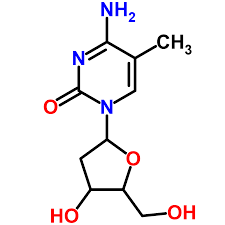
5-Methyl-2'-deoxycytidine
- CAS No.838-07-3
- GradeIndustrial / Pharmaceutical
- Availability● In Stock
High-purity 5-Methyl-2'-deoxycytidine (CAS 838-07-3) designed for epigenetic research and pharmaceutical synthesis.
Request Bulk PricingProduct Technical Details
Product Overview
5-Methyl-2'-deoxycytidine, frequently abbreviated as 5-Me-dC, is a specialized nucleoside analog that plays a pivotal role in biochemical research and pharmaceutical development. As a methylated form of deoxycytidine, this compound serves as a critical building block for understanding DNA methylation patterns, which are essential mechanisms in epigenetic regulation. Our facility produces this high-value chemical intermediate under strict quality control standards to ensure consistency for downstream applications in oligonucleotide synthesis and molecular biology studies.
This compound is chemically defined as 4-amino-1-[(2R,4S,5R)-4-hydroxy-5-(hydroxymethyl)oxolan-2-yl]-5-methylpyrimidin-2-one. It acts as an isostere of thymidine, making it invaluable for researchers investigating gene expression silencing and genomic stability. The precise incorporation of this modified nucleoside into DNA strands allows scientists to mimic natural methylation processes in vitro, facilitating breakthroughs in cancer research and developmental biology.
Technical Specifications
We adhere to rigorous analytical protocols to guarantee the purity and reliability of every batch. The following table outlines the key physical and chemical parameters verified through high-performance liquid chromatography and spectral analysis.
| Parameter | Specification |
|---|---|
| CAS Number | 838-07-3 |
| Molecular Formula | C10H15N3O4 |
| Molecular Weight | 241.24 g/mol |
| Appearance | White or off-white powder |
| Assay (HPLC) | ≥99.0% |
| Moisture Content | ≤2.0% |
| Loss on Drying | ≤1.0% |
| Melting Point | 217-219°C |
| Density | 1.64 g/cm³ |
Industrial Applications
The primary utility of 5-Methyl-2'-deoxycytidine lies in its capacity to serve as a precursor for complex pharmaceutical intermediates and research reagents. In the realm of epigenetics, it is used to synthesize methylated DNA standards required for bisulfite sequencing and methylation-specific PCR. These techniques are fundamental for diagnosing methylation-related disorders and studying tumor suppressor gene inactivation.
Furthermore, this nucleoside is employed in the development of antisense oligonucleotides and siRNA therapeutics. By incorporating modified bases like 5-Me-dC, medicinal chemists can enhance the stability and binding affinity of nucleic acid drugs. Our manufacturing process ensures that the product is free from contaminants that could interfere with enzymatic reactions or cellular assays, making it suitable for sensitive laboratory environments.
Quality Assurance and Storage
Quality is the cornerstone of our production philosophy. Each lot undergoes comprehensive testing against international pharmacopoeia standards. We provide a Certificate of Analysis (COA) with every shipment, detailing batch-specific data including purity profiles and impurity limits. Our production facility operates under Good Manufacturing Practice (GMP) guidelines to maintain a controlled environment throughout synthesis and packaging.
To maintain optimal stability, the product should be stored in a cool, ventilated area away from direct sunlight and moisture. The standard packaging consists of 25 kg drums, though we offer flexible customization to meet specific logistical requirements. Proper handling procedures should be followed to prevent degradation, ensuring the material retains its specified physicochemical properties until use. For large-scale procurement or technical inquiries regarding synthesis routes, our global support team is available to assist with supply chain solutions.