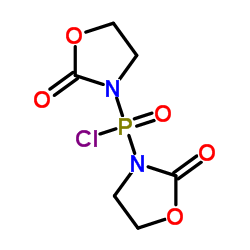
Bis(2-oxo-3-oxazolidinyl)phosphinic chloride
- CAS No.68641-49-6
- GradeIndustrial / Pharmaceutical
- Availability● In Stock
High-purity BOP-Cl condensing agent for efficient peptide synthesis. Available in bulk with full documentation.
Request Bulk PricingProduct Technical Details
Product Overview
Bis(2-oxo-3-oxazolidinyl)phosphinic chloride, commonly known in the industry as BOP-Cl, represents a critical reagent in modern organic synthesis and peptide chemistry. This phosphinic chloride derivative serves as a highly effective condensing agent, facilitating the formation of peptide bonds with exceptional efficiency. Our manufacturing process ensures that every batch meets rigorous pharmaceutical standards, making it an ideal choice for research laboratories and industrial production facilities focused on peptide therapeutics and complex organic molecules.
The chemical structure of this compound allows for the activation of carboxyl groups, enabling them to react with amines to form amide bonds. This mechanism is fundamental in solid-phase peptide synthesis (SPPS) and solution-phase synthesis. By minimizing racemization during the coupling process, BOP-Cl helps maintain the stereochemical integrity of the final peptide product, which is crucial for biological activity and efficacy in pharmaceutical applications.
Technical Specifications
| Parameter | Specification |
|---|---|
| Chemical Name | Bis(2-oxo-3-oxazolidinyl)phosphinic chloride |
| CAS Number | 68641-49-6 |
| Molecular Formula | C6H8ClN2O5P |
| Molecular Weight | 254.57 g/mol |
| Purity | ≥99.0% |
| Appearance | Off-white to white crystalline powder |
| Melting Point | 191°C |
| Density | 1.71 g/cm³ |
| Refractive Index | 1.572 |
Industrial Applications
As a versatile condensing agent, this product is extensively utilized in the synthesis of polypeptides and pharmaceutical intermediates. It is particularly valued in the development of therapeutic peptides where high coupling yields and low epimerization are required. Beyond peptide synthesis, it finds application in the preparation of various organic compounds requiring amide bond formation. The reagent's stability and reactivity profile make it suitable for both small-scale laboratory research and large-scale manufacturing processes.
Researchers utilize this chemical to streamline synthesis routes, reducing the number of steps required to achieve target molecules. Its compatibility with various protecting groups enhances its utility in complex multi-step syntheses. Whether used in academic research or industrial drug development, the consistency of our supply ensures reproducible results across different batches and projects.
Safety and Storage
Proper handling of Bis(2-oxo-3-oxazolidinyl)phosphinic chloride is essential due to its chemical properties. Classified under Hazard Class 8 with UN Number 3261, it requires careful management during transport and storage. The material should be stored in a cool, ventilated area away from moisture and incompatible substances. We recommend using appropriate personal protective equipment, including gloves and eye protection, when handling this reagent to prevent exposure.
Our packaging options include 25 kg drums, with customization available to meet specific logistical requirements. Each shipment is accompanied by a Certificate of Analysis (COA) and safety data sheets to ensure compliance with international regulations. By adhering to strict quality control protocols, we guarantee that the product arrives in optimal condition, ready for immediate use in your synthesis workflows.