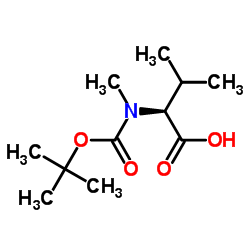
N-(tert-Butoxycarbonyl)-N-methyl-L-valine
- CAS No.45170-31-8
- GradeIndustrial / Pharmaceutical
- Availability● In Stock
High purity N-(tert-Butoxycarbonyl)-N-methyl-L-valine (CAS 45170-31-8) designed for advanced peptide synthesis and pharmaceutical intermediate applications.
Request Bulk PricingProduct Technical Details
Product Overview
N-(tert-Butoxycarbonyl)-N-methyl-L-valine, frequently referred to in the industry as Boc-N-Me-Val-OH, represents a highly specialized protected amino acid derivative essential for modern peptide chemistry. This compound features a tert-butoxycarbonyl (Boc) protecting group on the nitrogen atom, alongside a methyl substitution, which distinguishes it from standard valine derivatives. The strategic incorporation of N-methylated amino acids into peptide sequences is a critical technique used by medicinal chemists to improve the pharmacokinetic profiles of therapeutic candidates. By modifying the backbone hydrogen bonding capability, this building block helps enhance metabolic stability and membrane permeability, making it invaluable for the development of next-generation peptide drugs.
Our manufacturing process ensures that every batch meets rigorous international standards for pharmaceutical intermediates. We understand that the success of complex synthesis routes depends heavily on the quality of the starting materials. Therefore, our production facility employs advanced purification technologies to minimize impurities and ensure consistent stereochemical integrity. This product is supplied as a stable, white to off-white powder, ready for immediate use in both solid-phase and solution-phase peptide synthesis protocols.
Technical Specifications
| Parameter | Specification |
|---|---|
| Chemical Name | N-(tert-Butoxycarbonyl)-N-methyl-L-valine |
| CAS Registry Number | 45170-31-8 |
| Molecular Formula | C11H21NO4 |
| Molecular Weight | 231.29 g/mol |
| Purity | ≥99.0% |
| Appearance | White to off-white powder |
| Storage Conditions | Room temperature, tightly closed |
Key Advantages
- Enhanced Metabolic Stability: The N-methyl group protects against enzymatic degradation, extending the half-life of peptide therapeutics.
- High Chemical Purity: Rigorous quality control ensures minimal presence of diastereomers or unprotected byproducts.
- Scalable Supply Chain: Capable of fulfilling bulk orders for clinical trial materials and commercial production needs.
- Robust Protection Group: The Boc group offers excellent stability under various reaction conditions while remaining removable under standard acidic conditions.
- Comprehensive Documentation: Each shipment includes a detailed Certificate of Analysis (COA) and technical support data.
Industrial Applications
This protected amino acid is primarily utilized in the pharmaceutical and biotechnology sectors for the synthesis of bioactive peptides. It serves as a crucial component in the design of cyclic peptides, peptidomimetics, and constrained peptide structures. Researchers utilize this building block to modulate the conformational flexibility of peptide chains, thereby optimizing binding affinity to specific biological targets. Common applications include the development of hormone analogs, enzyme inhibitors, and receptor antagonists. Furthermore, it is suitable for use in combinatorial chemistry libraries where diverse structural modifications are required to identify lead compounds.
Storage and Handling
To maintain optimal quality, N-(tert-Butoxycarbonyl)-N-methyl-L-valine should be stored in a cool, dry environment at room temperature. The container must remain tightly sealed to prevent exposure to moisture and atmospheric contaminants, which could compromise the integrity of the protecting group. For long-term storage, keeping the material in a desiccator is recommended. We offer flexible packaging options, including standard 25 kg drums, with custom packaging available upon request to suit specific logistical requirements. Our global distribution network ensures timely delivery with full compliance to international shipping regulations for chemical substances.