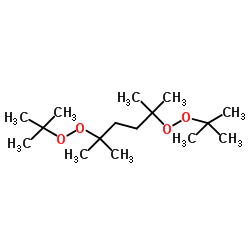
2,5-Dimethyl-2,5-di(tert-butylperoxy)hexane
- CAS No.78-63-7
- GradeIndustrial / Pharmaceutical
- Availability● In Stock
High-purity organic peroxide initiator for rubber vulcanization and polymer degradation. Offers excellent thermal stability and consistent curing performance for silicone and EPDM applications.
Request Bulk PricingProduct Technical Details
Product Overview
2,5-Dimethyl-2,5-di(tert-butylperoxy)hexane is a high-efficiency organic peroxide widely recognized for its exceptional performance as a radical initiator and crosslinking agent. This specialized chemical compound is engineered to provide precise control over polymerization processes, making it an indispensable component in the manufacturing of advanced elastomers and thermoplastics. With a distinct molecular structure that ensures reliable decomposition characteristics, it serves as a critical enabler for producing high-quality rubber materials with superior mechanical properties.
Key Performance Features
Our premium grade 2,5-Dimethyl-2,5-di(tert-butylperoxy)hexane is manufactured under strict quality control protocols to ensure consistency across batches. The product exhibits a high active oxygen content, which translates to greater curing efficiency and reduced dosage requirements in final formulations. Its specific half-life temperature profile allows for optimized processing windows, minimizing the risk of premature decomposition while ensuring complete curing during vulcanization. Additionally, the low volatility and excellent solubility in various polymer matrices facilitate uniform dispersion, resulting in homogeneous material properties.
- High active oxygen content for efficient radical generation
- Stable decomposition profile for controlled curing processes
- Excellent compatibility with silicone, EPDM, and polyethylene
- Low odor and minimal residue after decomposition
- Consistent quality backed by comprehensive COA documentation
Industrial Applications
This organic peroxide is primarily utilized as a vulcanizing agent for silicone rubber, polyurethane rubber, and ethylene propylene diene monomer (EPDM) compounds. It enables the formation of robust crosslinks that enhance heat resistance, compression set, and tensile strength. Beyond rubber curing, it functions effectively as a degradation agent for polypropylene and other polymers, allowing manufacturers to control rheology and improve processability. Whether used in high-temperature molding or continuous extrusion processes, this initiator delivers reliable performance that meets the demanding standards of the automotive, aerospace, and industrial manufacturing sectors.
Technical Specifications
| Items of Analysis | Standard of Analysis | Test Results |
|---|---|---|
| Appearance | Light yellow oily liquid | Conform |
| Assay | ≥92.0% | 94.7% |
| Active Oxygen | ≥10.1% | 11.2% |
| Hydroperoxides | ≤0.3% | 0.14% |
| Color (Pt-Co) | ≤100 | 50 |
| Conclusion | Conforms to Factory Standard | |
Safety and Storage
Proper handling and storage are essential to maintain the stability and safety of this organic peroxide. The material should be stored in a ventilated, low-temperature, and dry warehouse, strictly separated from organic matter, reducing agents, flammable substances, and strong acids. It is incompatible with strong oxidizing agents and powdered metals. Users are advised to follow all relevant safety data sheet (SDS) guidelines and local regulations to ensure safe transportation and usage within industrial facilities. Our team provides full technical support to assist with integration into your specific manufacturing processes.