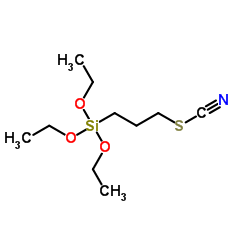
3-Triethoxysilylpropyl Thiocyanate
- CAS No.34708-08-2
- GradeIndustrial / Pharmaceutical
- Availability● In Stock
High-purity 3-Triethoxysilylpropyl Thiocyanate designed for superior rubber reinforcement. Enhances tensile strength and abrasion resistance in vulcanizates.
Request Bulk PricingProduct Technical Details
Product Overview
3-Triethoxysilylpropyl Thiocyanate is a high-performance organosilicon compound specifically engineered for the rubber and polymer industries. As a specialized silane coupling agent, it serves as a critical molecular bridge between inorganic fillers, such as silica or glass fibers, and organic polymer matrices. This unique chemical structure facilitates improved interfacial adhesion, resulting in enhanced mechanical properties and durability in final compounded products. Our manufacturing process ensures consistent quality and high purity levels suitable for demanding industrial applications.
The presence of the thiocyanate functional group provides distinct advantages in sulfur vulcanization systems. Unlike traditional silanes, this compound actively participates in the cross-linking network, contributing to superior dynamic mechanical performance. It is particularly valued in the production of high-grade tires and mechanical rubber goods where balance between processability and final physical properties is essential.
Key Specifications
We adhere to strict quality control protocols to guarantee product consistency. Each batch is analyzed using gas chromatography to verify purity levels. The following table outlines the standard technical parameters for this material:
| Parameter | Specification |
|---|---|
| CAS Number | 34708-08-2 |
| Molecular Formula | C10H21NO3SSi |
| Molecular Weight | 263.43 g/mol |
| Purity (GC) | ≥97.0% |
| Density | 1.03 g/cm3 |
| Boiling Point | 95°C |
| Flash Point | 112°C |
| Refractive Index | 1.446 |
| Appearance | Straw to yellowish liquid |
Industrial Applications
This silane coupling agent is primarily utilized in the rubber processing industry to optimize the interaction between fillers and elastomers. Its ability to modify surface chemistry makes it indispensable for manufacturers seeking to improve product longevity and performance metrics. Key benefits observed in downstream applications include:
- Significant improvement in the reinforcing properties of fillers containing hydroxyl groups.
- Enhanced physical and mechanical properties of vulcanizates, including tensile and tearing strength.
- Superior abrasive resistance, extending the service life of rubber components.
- Reduced compression set, ensuring better dimensional stability under load.
- Lowered viscosity during mixing, which improves overall processability and energy efficiency.
Common use cases extend to green tire technology, conveyor belts, and various industrial rubber profiles where silica reinforcement is preferred over carbon black for reduced rolling resistance.
Storage and Handling
To maintain chemical stability and safety, proper storage conditions are required. The product should be kept in a cool, ventilated area away from direct sunlight and moisture sources. Containers must remain tightly sealed when not in use to prevent hydrolysis of the ethoxy groups. Standard personal protective equipment, including gloves and eye protection, is recommended during handling. We offer flexible packaging options, including 200 kg drums, to accommodate various logistical requirements for global shipment.