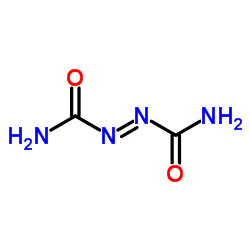
Azodicarbonamide
- CAS No.123-77-3
- GradeIndustrial / Pharmaceutical
- Availability● In Stock
High-purity Azodicarbonamide (CAS 123-77-3) serving as a premier blowing agent for polymers and rubber. Delivers consistent cell structure and superior thermal stability for industrial manufacturing.
Request Bulk PricingProduct Technical Details
Product Overview
Azodicarbonamide, widely recognized in the global chemical industry as a high-efficiency blowing agent, serves as a critical component for advanced polymer and rubber manufacturing processes. Registered under CAS number 123-77-3, this compound delivers exceptional thermal stability and consistent gas evolution profiles essential for modern production lines. Our premium grade material is engineered to meet rigorous international standards, ensuring reliable performance in diverse industrial applications ranging from synthetic leather production to automotive component molding and footwear manufacturing.
The unique chemical structure of Azodicarbonamide allows for controlled decomposition upon heating, releasing nitrogen, carbon monoxide, and carbon dioxide gases in a predictable manner. This mechanism creates a uniform cellular structure within the host matrix, significantly reducing material density while maintaining mechanical integrity and strength. Manufacturers rely on this substance for its ability to enhance insulation properties, improve cushioning effects, and optimize material usage efficiency without compromising the final product quality.
Key Performance Features
- High Gas Yield: Generates substantial volume expansion per unit weight, optimizing production costs and material usage.
- Thermal Stability: Decomposes within a specific temperature range suitable for most thermoplastic processing environments.
- Fine Particle Size: Ensures even dispersion throughout the polymer matrix for consistent cell structure and smooth surface finish.
- Low Residue: Minimal ash content post-decomposition preserves the aesthetic and physical qualities of the final product.
- Versatile Compatibility: Works effectively with PVC, PE, PP, ABS resins, and various rubber compounds.
Technical Specifications
| Items of Analysis | Standard of Analysis | Test Results |
|---|---|---|
| Appearance | Yellow powder | Conform |
| Assay | 99.0%-100.5% | 99.2% |
| Nitrogen Content | 47.2%-48.7% | 48.0% |
| PH Value | ≥5 | 6.6 |
| Residue on Ignition | ≤0.15% | 0.1% |
| Conclusion | Conforms to Factory Standard | |
Industrial Applications
This specialty chemical is extensively utilized in the foaming of polyvinyl chloride, polyethylene, polypropylene, and ABS resins. It is also a preferred choice for rubber compounding, where it facilitates the creation of lightweight, durable materials used in footwear soles, sports equipment, sealing gaskets, and insulation panels. The precise control over cell size makes it indispensable for high-quality synthetic leather, wallpaper, and carpet backing production where texture and density are paramount.
Beyond polymers, specific grades serve as oxidizing agents in flour treatment, enhancing dough strength and texture for bakery products where regulatory compliance permits. Our supply chain ensures that customers receive comprehensive documentation supporting the intended use category, whether for industrial plastics or approved food additive applications in compliant regions. We prioritize transparency and regulatory adherence in all transactions.
Quality Assurance and Manufacturing
Our manufacturing facility employs advanced crystallization techniques to ensure uniform particle size distribution across every batch. Each production lot undergoes strict quality control testing using high-performance liquid chromatography and thermal analysis to verify purity and decomposition characteristics. We maintain a robust quality management system that tracks materials from raw source to final packaging, ensuring consistency and reliability for our global partners.
Safety and Storage Guidelines
Azodicarbonamide should be stored in a ventilated, low-temperature, and dry environment to maintain long-term stability and prevent premature decomposition. The substance is incompatible with strong oxidizing agents, strong acids, strong bases, and heavy metal salts, which may trigger hazardous reactions. Personnel handling this material must adhere to standard safety protocols, including the use of appropriate personal protective equipment to prevent inhalation of dust. Proper storage conditions ensure the longevity and efficacy of the product upon deployment in your manufacturing processes.