Bis(triethoxysilylpropyl)tetrasulfide
- CAS No.40372-72-3
- GradeIndustrial / Pharmaceutical
- Availability● In Stock
High-purity silane coupling agent designed for rubber reinforcement, offering superior heat aging and wear resistance in silica-filled compounds.
Request Bulk PricingProduct Technical Details
Product Overview
Bis(triethoxysilylpropyl)tetrasulfide is a premier organosilicon compound engineered specifically for the rubber and tire industry. As a multifunctional silane coupling agent, it bridges the interface between inorganic fillers, such as silica and silicates, and organic rubber matrices. This unique chemical structure facilitates enhanced bonding, resulting in improved mechanical properties and durability in final rubber products. Our manufacturing process ensures high purity and consistent quality, making it an ideal choice for demanding industrial applications where performance reliability is paramount.
Key Specifications
| Parameter | Specification |
|---|---|
| Appearance | Light yellow liquid |
| Volatile Matter | ≤4.0% |
| Average Sulfur Chain Length | 3.75 ±0.15 |
| Total Sulfur Content | 22.7 ± 0.8 % |
Industrial Applications
This product serves as a critical additive in the formulation of high-performance rubber compounds. When utilized in silica-filled systems, it acts as a robust coupling agent that significantly improves the dispersion of non-black fillers. By incorporating this silane into clay or silica pigment mixtures, manufacturers can achieve superior bonding between the filler and the rubber polymer. This interaction leads to notable increases in modulus and wear resistance, which are essential qualities for tire treads and industrial rubber components. Additionally, it functions effectively as a vulcanizing agent when paired with thiuram accelerators, replacing traditional sulfur in specific mixtures like NR, SBR, and NBR to deliver excellent heat aging performance.
Technical Mechanism
The efficacy of Bis(triethoxysilylpropyl)tetrasulfide lies in its dual-functional molecular structure. The silane groups undergo a condensation reaction with hydroxyl groups on the surface of white carbon black or silicate structures, creating a stable chemical link. Simultaneously, the tetrasulfide chain participates in the vulcanization process. During curing, the sulfur atoms engage in polysulfide crosslinking reactions. The cross-linking speed of the tetrasulfanyl group is balanced with sulfur reversion rates, promoting what is known as balanced vulcanization. This mechanism resist reversion and forms anti-reversion compounds, significantly enhancing dynamic bending properties such as heat generation resistance and crack elongation stability.
Storage and Packaging
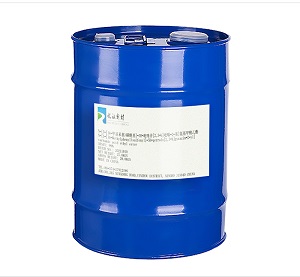
To maintain optimal chemical stability, this product should be stored in its original unopened container at temperatures of 25°C or below. Under these conditions, the shelf life is guaranteed for six months from the production date. Expired material may still be usable subject to successful quality testing. Standard packaging options include 200Kg iron drums and 1000Kg IBC containers to accommodate various bulk production needs. Classified as non-dangerous goods, it ensures safer logistics and handling during global shipment.