Cupric Acetylacetonate
- CAS No.13395-16-9
- GradeIndustrial / Pharmaceutical
- Availability● In Stock
High purity Cupric Acetylacetonate (CAS 13395-16-9) serves as a versatile catalyst for organic synthesis, available in bulk quantities with comprehensive COA documentation.
Request Bulk PricingProduct Technical Details
Product Overview
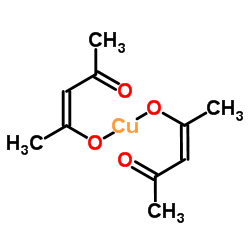
Cupric Acetylacetonate, frequently recognized in industrial chemistry as Copper(II) Acetylacetonate, represents a pivotal coordination complex utilized extensively across organic synthesis and material science sectors. This chemical compound, defined by the molecular formula C10H14CuO4, functions primarily as a versatile catalyst and reagent. Our manufacturing process ensures high purity levels, making it an ideal choice for demanding chemical transformations where consistency and reliability are paramount for downstream production.
As a leading global manufacturer, we understand the critical nature of supply chain stability for specialty chemicals. This product is synthesized under strict quality control protocols to meet international standards. The complex features copper in the plus two oxidation state coordinated with two acetylacetonate ligands, resulting in a stable structure that facilitates various catalytic cycles without premature decomposition. This stability is crucial for maintaining reaction integrity in large-scale industrial applications.
Technical Specifications
| Parameter | Value |
|---|---|
| CAS Number | 13395-16-9 |
| Molecular Formula | C10H14CuO4 |
| Molecular Weight | 261.76 g/mol |
| Purity | 95% Minimum |
| Appearance | Brown-Red Powder |
| Melting Point | 245ºC |
| Boiling Point | 160ºC (9.8 mmHg) |
| Flash Point | 71.9ºC |
Industrial Applications
The utility of Cupric Acetylacetonate extends across multiple domains of chemical manufacturing. Its primary role involves catalyzing a wide array of organic reactions, thereby enhancing reaction rates and selectivity. This capability makes it indispensable for researchers and production facilities focused on complex molecule construction. Key applications include but are not limited to oligomerization processes where chain growth must be carefully controlled.
- Organic Synthesis: Facilitating oligomerization and hydrosilation processes efficiently.
- Polymerization: Acting as a catalyst in hydrogenation and reduction reactions.
- Cross-Coupling: Enabling efficient bond formation in complex molecule construction.
- Oxidation Reactions: Serving as an oxidant catalyst in specific industrial workflows.
- Conjugate Addition: Supporting addition to unsaturated bonds with high precision.
Furthermore, this compound is valued in the production of advanced materials where copper incorporation is necessary. Its stability profile allows for safe handling in standard laboratory and plant environments, provided appropriate safety measures are observed. The reagent is particularly effective in scenarios requiring thermal stability during reaction phases.
Quality Assurance and Storage
We prioritize product integrity throughout the logistics chain. Each batch undergoes rigorous testing to verify purity and composition before release. A Certificate of Analysis (COA) is available upon request to confirm compliance with specified parameters. This documentation ensures that your quality control teams have all necessary data for incoming inspection protocols.
Regarding stability, the compound remains stable under normal conditions but is incompatible with strong oxidizing agents. To maintain optimal quality, storage should be in a cool, dry environment with containers tightly closed to prevent moisture absorption or contamination. Proper storage ensures the longevity and efficacy of the material for your specific manufacturing processes. We recommend following standard hazardous material handling guidelines during transport and usage to ensure workplace safety.