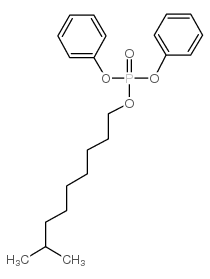
Diphenyl Isodecyl Phosphate
- CAS No.29761-21-5
- GradeIndustrial / Pharmaceutical
- Availability● In Stock
Diphenyl Isodecyl Phosphate (DPDP) is a high-performance phosphate ester serving as both a flame retardant and plasticizer for PVC, resins, and industrial polymers.
Request Bulk PricingProduct Technical Details
Product Overview
Diphenyl Isodecyl Phosphate, commonly known as DPDP, represents a class of high-performance organophosphate esters designed for demanding industrial applications. This colorless transparent liquid functions dualistically as an effective flame retardant and a robust plasticizer. Engineered for compatibility with a wide range of polymer matrices, it provides exceptional thermal stability and low volatility, making it a preferred choice for manufacturers seeking to enhance the safety and durability of their final products without compromising mechanical properties.
Technical Specifications
| Parameter | Specification |
|---|---|
| CAS Number | 29761-21-5 |
| Molecular Formula | C22H31O4P |
| Molecular Weight | 390.45 g/mol |
| Appearance | Colorless transparent liquid |
| Phosphate Content (P%) | 7.9 |
| Specific Gravity (20℃) | 1.070-1.080 |
| Viscosity (25℃) | 25-30 mPas |
| Acid Value | Max 0.1 mgKOH/g |
| Flash Point | Min 240℃ |
Industrial Applications
DPDP is extensively utilized across the polymer and resin industries. Its primary application lies in the modification of Polyvinyl Chloride (PVC), where it imparts significant flame retardancy while maintaining flexibility. It is particularly effective in PVC wallpapers, plates, and membranes, offering superior cold tolerance that prevents cracking in low-temperature environments. Beyond PVC, this phosphate ester is compatible with Polycarbonate (PC), Polyvinyl Acetate (PVA), Cellulose Acetate (CA), Cellulose Acetate Butyrate (CAB), Cellulose Nitrate (CN), Ethyl Cellulose (EC), and Epoxy resins. It is also suitable for phenol formaldehyde, nitrile, acrylic, and vinyl resin systems, providing a versatile solution for complex formulation requirements.
Key Advantages
- Dual functionality as both a flame retardant and plasticizer reduces formulation complexity.
- Low volatility ensures long-term performance and reduces emissions during processing.
- Excellent compatibility with a broad spectrum of synthetic resins and polymers.
- Superior cold tolerance enhances product durability in varying climatic conditions.
- High flash point contributes to improved safety during manufacturing and storage.
Quality Assurance and Supply
Our facility specializes in the research, development, and commercialization of phosphate-based flame retardants, plasticizers, and stabilizers. With an annual production capacity exceeding 8,000 tons, we ensure consistent supply chain reliability for global partners. Each batch undergoes rigorous quality control testing to verify compliance with international standards. We provide comprehensive documentation, including Certificates of Analysis (COA), to support regulatory compliance and quality assurance protocols. Packaging options include 200L drums, 1000KG IBCs, and 20000KG ISOTANKs, tailored to meet specific logistical requirements.