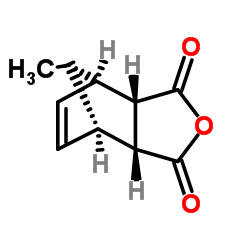
Methyl-5-Norbornene-2,3-Dicarboxylic Anhydride
- CAS No.25134-21-8
- GradeIndustrial / Pharmaceutical
- Availability● In Stock
High-purity Methyl-5-Norbornene-2,3-Dicarboxylic Anhydride serving as a superior epoxy curing agent for electrical insulation applications.
Request Bulk PricingProduct Technical Details
Product Overview
Methyl-5-Norbornene-2,3-Dicarboxylic Anhydride, frequently recognized in the industry as Methyl Nadic Anhydride (MNA), represents a high-performance chemical solution designed for advanced polymer curing systems. This specialized anhydride is engineered to meet the rigorous demands of the electrical insulation and composite materials sectors. Our manufacturing process ensures exceptional purity levels, typically exceeding 98 percent, which is critical for achieving consistent cross-linking density in epoxy resin formulations. The unique norbornene backbone provides structural rigidity that translates directly into enhanced thermal and mechanical properties in the final cured product.
Technical Specifications
| Items of Analysis | Standard of Analysis | Test Results |
|---|---|---|
| Appearance | Light yellow liquid | Conform |
| Viscosity | 170-300 | 275 |
| Content | Greater than or equal to 98 percent | 99.0 percent |
| Freezing Point | Less than or equal to -15 Celsius | Less than -15 Celsius |
| Specific Gravity | 1.20-1.25 | 1.24 |
| Conclusion | Conforms to Factory Standard | |
Key Performance Advantages
The integration of this anhydride into epoxy systems delivers a distinct set of performance benefits that are essential for high-reliability applications. Users can expect a heat distortion temperature ranging between 150 and 175 degrees Celsius, ensuring stability under significant thermal load. The maximum operating temperature reaches up to 163 degrees Celsius, making it suitable for demanding environments. Furthermore, the cured products exhibit excellent electrical properties, minimal shrinkage during the curing process, and superior chemical resistance against various solvents. While alkali resistance is moderate, the overall thermal stability and mechanical strength make it a preferred choice for insulation materials.
Industrial Applications
This chemical is primarily utilized as a curing agent for epoxy resins in the fabrication of fiber-reinforced plastics and electrical insulation components. Key application areas include the insulation fields of large generators, automotive motors, transformers, and rotors. The recommended reference amount for formulation is typically between 80 and 85 parts per hundred resin. When combined with 0.5 parts of a tertiary amine accelerator such as BDMA, the system maintains a pot life of approximately two months under appropriate storage conditions. This extended working time allows for complex manufacturing processes without premature gelation.
Processing and Curing Cycles
To achieve optimal physical properties, specific curing cycles are recommended based on the production requirements. Standard protocols include curing at 100 degrees Celsius for two hours followed by 150 degrees Celsius for four hours. Alternative schedules such as 120 degrees Celsius for six hours plus 180 degrees Celsius for one hour are also effective. For step-wise curing, a sequence of 90 degrees Celsius for two hours, 120 degrees Celsius for two hours, and finally 160 degrees Celsius for one hour ensures thorough cross-linking. These flexible parameters allow manufacturers to tailor the process to their specific equipment and throughput needs.
Quality Assurance and Storage
Every batch undergoes rigorous quality control testing to verify viscosity, content purity, and specific gravity against strict factory standards. We provide comprehensive Certificates of Analysis (COA) with each shipment to guarantee traceability and compliance. The product is available in various packaging options including 1kg, 25kg, and 200kg containers to suit both laboratory and industrial scale requirements. Proper storage in a cool, dry environment is essential to maintain the specified freezing point and viscosity characteristics over time. Our global supply chain ensures timely delivery for manufacturers worldwide.