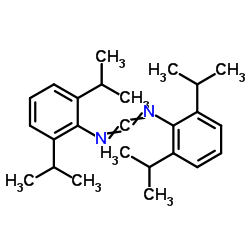
N,N'-Bis(2,6-diisopropylphenyl)carbodiimide
- CAS No.2162-74-5
- GradeIndustrial / Pharmaceutical
- Availability● In Stock
High-purity hydrolysis stabilizer for polyesters and polyurethanes. Ensures long-term thermal stability and performance in demanding polymer applications.
Request Bulk PricingProduct Technical Details
Product Overview
N,N'-Bis(2,6-diisopropylphenyl)carbodiimide, commercially known as Staboxol 1, is a high-performance carbodiimide derivative designed primarily as a hydrolysis stabilizer for engineering plastics. This advanced chemical additive plays a critical role in enhancing the durability and lifespan of polyesters, polyurethanes, and other condensation polymers susceptible to moisture-induced degradation. Our manufacturing process ensures exceptional purity levels, making it an ideal choice for demanding industrial applications where material integrity is paramount.
As a leading global manufacturer, we provide this speciality chemical with comprehensive quality assurance. The compound functions by scavenging carboxylic acid groups formed during polymer hydrolysis, effectively interrupting the autocatalytic degradation cycle. This mechanism significantly preserves the mechanical properties and molecular weight of the host polymer matrix over extended service periods.
Key Features and Benefits
- Superior hydrolysis stabilization for polyesters and polyurethanes
- Enhances thermal stability during processing and end-use
- High purity grade ensuring consistent performance batch-to-batch
- Low volatility with excellent compatibility in polymer matrices
- Extends product lifecycle and reduces maintenance costs
Technical Specifications
| Parameter | Specification | Typical Result |
|---|---|---|
| Appearance | White crystal | Conform |
| Melting Point | ≥49°C | 50.2°C - 51.1°C |
| Purity | ≥99.0% | 99.8% |
| Loss on Drying | ≤0.5% | 0.2% |
| CAS Number | 2162-74-5 | Confirmed |
Industrial Applications
This carbodiimide stabilizer is extensively utilized in the production of high-performance polymers. Key application areas include automotive components, electrical insulation materials, and industrial coatings where exposure to humidity and heat is common. By incorporating this additive during the compounding stage, manufacturers can achieve superior resistance against hydrolytic degradation, ensuring that final products meet rigorous international standards for longevity and safety.
We support our clients with detailed technical data sheets and formulation guidance to optimize the integration of this stabilizer into specific polymer systems. Our commitment to quality is backed by full traceability and Certificate of Analysis (COA) documentation with every shipment.