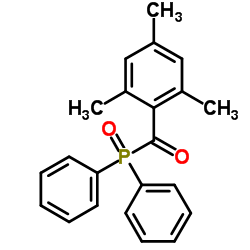
Photoinitiator TPO
- CAS No.75980-60-8
- GradeIndustrial / Pharmaceutical
- Availability● In Stock
Photoinitiator TPO is a high-efficiency Type I free radical UV photoinitiator ideal for colored systems and thick-film curing in inks, coatings, and adhesives.
Request Bulk PricingProduct Technical Details
Product Overview
Photoinitiator TPO, chemically known as diphenyl (2,4,6-trimethylbenzoyl) phosphine oxide, is a high-performance Type I free radical photoinitiator widely employed in ultraviolet (UV) curable formulations. With its broad absorption spectrum extending into the near-UV range, TPO excels in applications requiring deep cure, especially in pigmented or opaque systems where conventional photoinitiators may underperform.
Specifications
| Molecular Formula | C₂₂H₂₁O₂P |
|---|---|
| Molecular Weight | 348.38 g/mol |
| Melting Point | 88–92 °C |
| Density | 1.12 g/mL at 25 °C |
| Boiling Point | 519.6 °C at 760 mmHg |
| Refractive Index | n²⁰/D 1.475 |
| Assay | ≥99% |
| Volatile Matter | ≤0.30% |
| UN Number | UN3077 |
| Transport Hazard Class | Class 9 (Environmentally Hazardous Substance, Solid, N.O.S.) |
| Packing Group | III |
Industrial Applications
Photoinitiator TPO demonstrates exceptional solubility in common UV-curable resins, including acrylates and unsaturated polyester systems. It is particularly valued for its rapid curing speed and effectiveness in demanding applications such as screen printing inks, lithographic and flexographic inks, wood coatings, metal and plastic surface finishes, and industrial adhesives. Its ability to initiate polymerization efficiently—even in thick or heavily pigmented films—makes it a preferred choice for formulators seeking robust performance without compromising on cure depth or surface quality.
- Can be used alone or synergistically with other photoinitiators to optimize cure profiles.
- Recommended dosage: 0.5–4% w/w, depending on formulation and application requirements.
- Especially effective in colored and white UV-curable systems due to extended absorption characteristics.
Handling and Storage
Store in a cool, dry, and well-ventilated area. Keep container tightly closed to prevent moisture uptake and degradation. Standard industrial hygiene practices should be followed during handling.