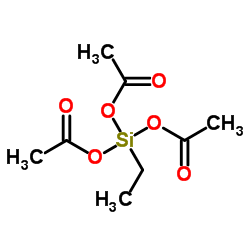
Triacetoxyethylsilane
- CAS No.17689-77-9
- GradeIndustrial / Pharmaceutical
- Availability● In Stock
High-purity Triacetoxyethylsilane serving as an efficient acetoxy crosslinker for RTV-1 silicone sealants. Ideal for industrial manufacturing requiring reliable curing performance and consistent quality.
Request Bulk PricingProduct Technical Details
Product Overview
Triacetoxyethylsilane is a specialized organosilicon compound designed primarily for use as a crosslinking agent in the production of room temperature vulcanizing (RTV) silicone sealants. This chemical functions as a critical curing agent within acetoxy crosslinking systems, facilitating the formation of durable silicone networks upon exposure to atmospheric moisture. Our manufacturing process ensures exceptional purity levels, making it a preferred choice for formulators seeking consistent performance in industrial adhesive and sealant applications.
The compound is characterized by its reactivity with moisture, which initiates the curing process through the release of acetic acid as a byproduct. This mechanism allows for rapid surface curing while maintaining deep-section flexibility. Due to its specific chemical structure, it provides excellent adhesion properties to various substrates, although users must account for the corrosive nature of the released acetic acid when selecting compatible materials such as metals or sensitive stones.
Technical Specifications
We adhere to strict quality control protocols to guarantee that every batch meets rigorous industry standards. The following table outlines the key physical and chemical properties typically associated with our premium grade supply.
| Parameter | Value |
|---|---|
| CAS Number | 17689-77-9 |
| Molecular Formula | C8H14O6Si |
| Molecular Weight | 234.28 g/mol |
| Appearance | Colorless or yellowish transparent liquid |
| Purity (GC) | ≥95.0% |
| Density | 1.14 g/cm3 |
| Boiling Point | 107oC |
| Flash Point | 106oC |
| Refractive Index | 1.411 |
Industrial Applications
The primary application of Triacetoxyethylsilane lies in the formulation of RTV-1 silicone sealants. It acts as a crosslinker that reacts with hydroxyl-terminated polydimethylsiloxane polymers. During the curing reaction, acetic acid is generated, which necessitates careful consideration regarding substrate compatibility. For instance, when used near marble, limestone, or certain metals like iron and copper, the acidic byproduct may cause corrosion or etching. Therefore, formulation chemists must evaluate the end-use environment to ensure material compatibility.
This product does not contain pre-added catalysts, stabilizers, or adhesion promoters. This blank slate approach allows manufacturers to customize their formulations by adding specific additives tailored to their unique performance requirements. Whether enhancing UV stability, adjusting cure speed, or improving adhesion to specific plastics, the base purity of our silane ensures predictable reaction kinetics.
Storage and Handling
To maintain optimal quality and safety, Triacetoxyethylsilane should be stored in a cool, well-ventilated area away from direct sunlight and sources of ignition. Containers must be kept tightly sealed when not in use to prevent premature hydrolysis due to atmospheric humidity. We recommend using corrosion-resistant equipment during handling due to the potential generation of acetic acid upon exposure to moisture. Our standard packaging includes 25 kg drums, though we offer flexible packaging solutions to accommodate large-scale industrial procurement needs. Always consult the safety data sheet (SDS) for comprehensive handling instructions and regulatory compliance information.