Trioctyl Phosphate
- CAS No.78-42-2
- GradeIndustrial / Pharmaceutical
- Availability● In Stock
High purity Trioctyl Phosphate (TOP) serving as an efficient flame retardant plasticizer and critical extractant for hydrogen peroxide production.
Request Bulk PricingProduct Technical Details
Product Overview
Trioctyl Phosphate, frequently abbreviated as TOP within the industrial chemical sector, is a high-performance organophosphate compound distinguished by its colorless transparent liquid appearance. As a premier manufacturer, we ensure that every batch meets rigorous international standards for purity and consistency. This speciality chemical is synthesized through advanced esterification processes, resulting in a product with exceptional stability and low volatility. Its unique molecular structure provides superior solvation properties, making it an indispensable component in various complex chemical manufacturing workflows.
Our production facility adheres to strict quality assurance protocols, guaranteeing that the final product exhibits minimal impurities. The low acid value and high phosphate content ensure optimal performance in sensitive applications such as pharmaceutical intermediates processing and high-grade polymer modification. Clients relying on our supply chain benefit from consistent batch-to-b reproducibility, which is critical for maintaining downstream product quality.
Key Industrial Applications
The primary application of Trioctyl Phosphate lies in the anthraquinone process for hydrogen peroxide production. In this context, it serves as a vital solvent for hydroanthraquinone, offering high solubility and an excellent partition coefficient for hydrogen peroxide between water and the organic phase. This functionality enhances the overall efficiency of the oxidation cycle, leading to higher product concentrations and reduced self-consumption of working solutions.
Additionally, TOP functions as a highly effective flame retardant plasticizer for vinyl resins, cellulose resins, and synthetic rubber. When incorporated into polyvinyl chloride (PVC) formulations, it imparts excellent cold resistance, maintaining flexibility and elasticity even at temperatures as low as negative sixty degrees Celsius. This makes it superior to many adipate-based alternatives for applications requiring extreme low-temperature performance. Furthermore, its inherent flame retardancy contributes to the safety profile of finished goods, making it suitable for self-extinguishing materials used in calendering, extrusion, and coating industries.
Technical Specifications
| Parameter | Specification |
|---|---|
| Appearance | Colorless transparent liquid |
| Color (Platinum-Cobalt) | ≤20 |
| Acid Value (mgKOH/g) | ≤0.10 |
| Trioctyl Phosphate Content (GC) | ≥99.0% |
| Dioctyl Phosphate Content (GC) | ≤0.10% |
| Octanol (GC) | <0.10% |
| Flash Point | ≥192℃ |
| Interfacial Tension (20~25℃) | ≥18.0mN/m |
| Moisture | ≤0.15% |
Storage and Handling
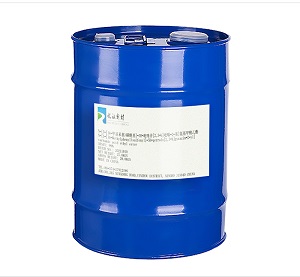
To maintain the integrity of Trioctyl Phosphate, proper storage conditions are essential. The product should be kept in a dry and ventilated warehouse, strictly away from direct sunlight and sources of ignition. Although classified as non-dangerous goods, precautions against moisture and fire are necessary to preserve its chemical stability. We recommend storing the material in sealed containers, typically available in 200KG galvanized iron drums, to prevent contamination and evaporation. Our logistics team ensures safe global delivery, accompanied by comprehensive documentation including Certificates of Analysis (COA) for every shipment.