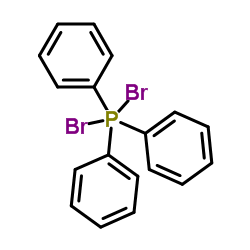
Triphenylphosphine Dibromide
- CAS No.1034-39-5
- GradeIndustrial / Pharmaceutical
- Availability● In Stock
High-purity Triphenylphosphine Dibromide serves as a potent brominating agent for organic synthesis, ensuring reliable reaction outcomes and consistent yields in pharmaceutical manufacturing.
Request Bulk PricingProduct Technical Details
Product Overview
Triphenylphosphine Dibromide, identified by CAS number 1034-39-5, is a highly specialized chemical reagent widely utilized in advanced organic synthesis. As a phosphorane derivative, this compound functions as an effective brominating agent, facilitating the conversion of alcohols to alkyl bromides and other critical transformations within complex molecular structures. Our manufacturing process ensures exceptional stability and reactivity, making it an indispensable tool for research laboratories and industrial production facilities focused on fine chemicals and pharmaceutical intermediates.
The compound is characterized by its distinct crystalline structure, typically appearing as a light yellow to light pink powder. This visual indicator often correlates with the high purity standards maintained during production. For chemists and process engineers, reliability in reagent performance is paramount, and our Triphenylphosphine Dibromide delivers consistent results across various synthetic pathways.
Technical Specifications
We adhere to strict quality control protocols to guarantee that every batch meets the rigorous demands of modern chemical synthesis. The following table outlines the key physical and chemical properties of this product:
| Parameter | Specification |
|---|---|
| Chemical Name | Triphenylphosphine Dibromide |
| CAS Number | 1034-39-5 |
| Molecular Formula | C18H15Br2P |
| Molecular Weight | 422.09 g/mol |
| Purity | >95% |
| Appearance | Light yellow to light pink crystalline powder |
| Melting Point | 235 °C (dec.) |
| Storage Temperature | 2-8 °C |
Applications and Industrial Benefits
The primary application of Triphenylphosphine Dibromide lies in its capability to act as a very effective special reagent in bromination reactions. In the pharmaceutical industry, precise halogenation is often a critical step in the synthesis of active pharmaceutical ingredients (APIs). This reagent offers several distinct advantages:
- High Reactivity: Ensures efficient conversion rates, reducing reaction times and improving overall process throughput.
- Selectivity: Provides controlled bromination, minimizing unwanted side reactions and simplifying downstream purification processes.
- Versatility: Suitable for a wide range of organic substrates, making it a valuable asset in diverse synthetic routes.
- Consistency: Batch-to-batch uniformity supports scalable manufacturing from laboratory pilot studies to full-scale production.
Furthermore, its utility extends beyond pharmaceuticals into agrochemicals and material sciences, where specific functional group modifications are required. By utilizing high-purity reagents, manufacturers can reduce waste and enhance the safety profile of their chemical processes.
Storage and Handling Guidelines
To maintain the integrity and efficacy of Triphenylphosphine Dibromide, proper storage conditions are essential. The product should be kept in a cool, dry environment, specifically within the range of 2-8 °C. Exposure to moisture or excessive heat can lead to degradation, affecting performance in sensitive reactions. Containers should be tightly sealed when not in use to prevent contamination. Always consult the provided Safety Data Sheet (SDS) and Certificate of Analysis (COA) for detailed handling instructions and safety precautions before integration into your workflow.