
Advanced Photocatalytic C-C Bond Coupling for Scalable Biaryl Intermediate Manufacturing
The global fine chemical industry is currently undergoing a paradigm shift towards sustainable manufacturing processes, driven by the urgent need to reduce environmental footprints and operational costs. In this context, the technology disclosed in Chinese Patent CN112138718B represents a significant breakthrough in the synthesis of biaromatic compounds, which are critical structural motifs in countless active pharmaceutical ingredients (APIs) and agrochemical agents. This patent details a novel method for synthesizing biaryl compounds through the photochemical catalytic dehydrohalogenation of halogenated aromatic compounds and aromatic compounds. Unlike traditional thermal methods, this approach leverages the unique properties of Covalent Organic Frameworks (COFs) such as TpTta, TAPA-TFP, and TpPa-1 to facilitate C-C bond formation under visible light irradiation. For R&D directors and procurement managers seeking a reliable pharmaceutical intermediate supplier, this technology offers a pathway to greener, more economical production that does not compromise on yield or purity.
The Limitations of Conventional Methods vs. The Novel Approach
The Limitations of Conventional Methods
Historically, the construction of biaryl scaffolds has relied heavily on transition metal-catalyzed cross-coupling reactions, most notably the Suzuki-Miyaura, Stille, and Negishi reactions. While these methods are chemically robust, they suffer from inherent limitations that pose significant challenges for modern industrial scale-up. Primarily, these reactions require the use of stoichiometric amounts of organometallic reagents and expensive noble metal catalysts, typically based on palladium. The reliance on palladium not only drives up the raw material costs but also introduces severe downstream processing challenges, specifically the difficulty of removing trace metal residues to meet stringent regulatory limits for pharmaceutical products. Furthermore, these conventional processes often demand harsh reaction conditions, including high temperatures and the use of toxic solvents, which complicates waste management and increases the overall environmental burden of the manufacturing process.
The Novel Approach
The methodology presented in patent CN112138718B fundamentally disrupts this status quo by replacing homogeneous noble metal catalysis with heterogeneous photocatalysis using Covalent Organic Frameworks. This novel approach utilizes visible light to drive the dehalogenation and subsequent C-C coupling, operating under exceptionally mild conditions such as ambient temperature (25°C) and atmospheric pressure. By employing COFs like TAPA-TFP or TpPa-1, the process achieves high selectivity and efficiency without the need for toxic heavy metals. The heterogeneous nature of the catalyst allows for straightforward separation via simple filtration or centrifugation, and the patent data indicates that the catalyst can be recycled and reused multiple times with minimal loss in activity. This translates directly to cost reduction in pharmaceutical intermediate manufacturing by eliminating expensive metal scavenging steps and reducing solvent waste.
Mechanistic Insights into COF-Mediated Photocatalytic C-C Coupling
To fully appreciate the technical superiority of this method, one must understand the mechanistic role of the Covalent Organic Frameworks. COFs are crystalline porous polymers with high specific surface areas and tunable pore structures. Under visible light irradiation, specifically using 395nm or 420nm LED sources, these materials undergo charge separation to generate electron-hole pairs. The conduction band electrons and valence band holes trigger surface oxidation and reduction reactions essential for the coupling process. A critical challenge in previous photocatalytic systems was the short lifetime of excited state carriers in COFs, which often hindered synthetic utility. However, this patent overcomes that limitation by incorporating specific cocatalysts and hydrogen donors, such as quinuclidine or thiophenol, which facilitate the rapid transfer of charges and stabilize reactive intermediates.
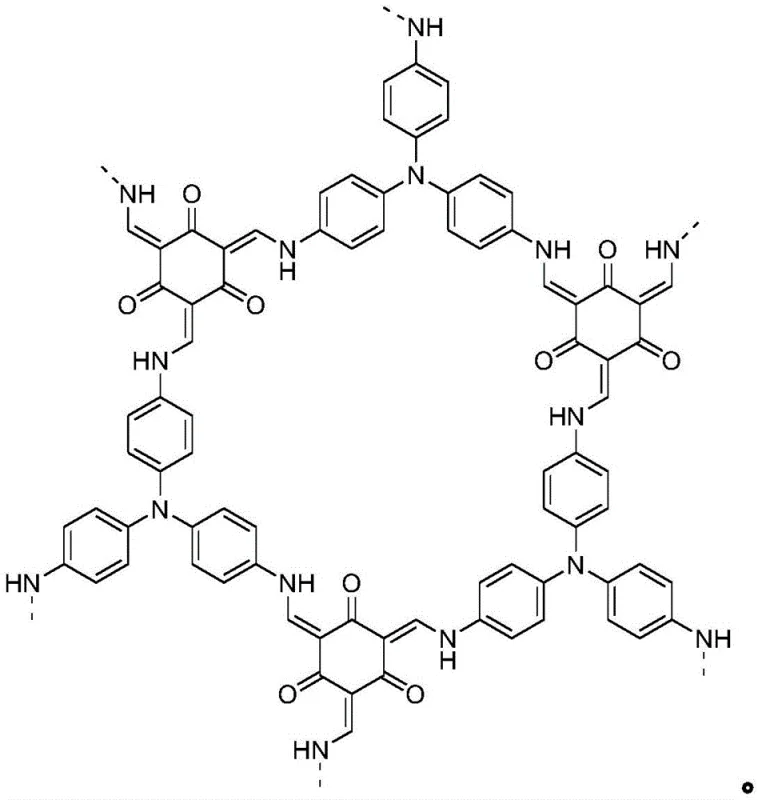
The structural integrity of the catalyst is paramount for its performance. As illustrated in the molecular architecture of TAPA-TFP COF, the extended pi-conjugated system facilitates efficient light harvesting and charge transport. This specific framework provides the necessary electronic environment to activate the carbon-halogen bond in the substrate while simultaneously activating the C-H bond of the aromatic coupling partner. The presence of basic additives, such as potassium carbonate or cesium carbonate, further assists in the deprotonation steps required to close the catalytic cycle. This synergistic interaction between the light source, the COF catalyst, and the chemical additives ensures that the reaction proceeds with high isolated yields, reported in the patent to be above 65% even in the initial cycles, demonstrating the robustness of the mechanistic design.
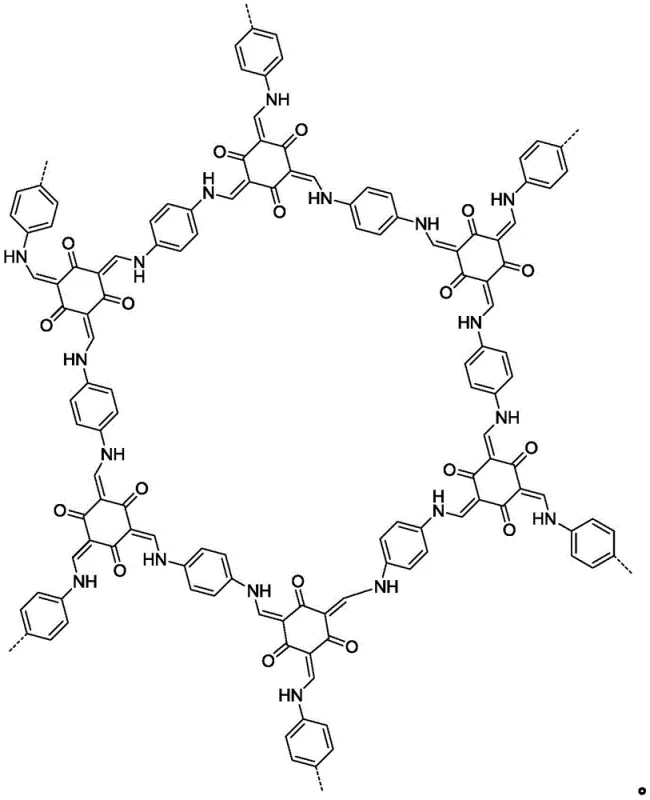
Furthermore, the versatility of this catalytic system is evidenced by its tolerance to various functional groups. The mechanism accommodates a wide range of substrates, including those with electron-withdrawing groups like cyano or trifluoromethyl moieties, as well as electron-donating groups like alkoxy chains. This broad substrate scope is crucial for medicinal chemists who require flexibility in late-stage functionalization. The ability to utilize simple halogenated aromatics and unfunctionalized arenes as starting materials simplifies the supply chain, as these are commodity chemicals readily available from bulk suppliers. The mechanistic pathway avoids the formation of hazardous byproducts often associated with stoichiometric metal reductants, thereby aligning the synthesis with the principles of green chemistry and atom economy.
How to Synthesize Biaromatic Compounds Efficiently
Implementing this photocatalytic protocol requires precise control over reaction parameters to maximize yield and catalyst longevity. The process begins with the preparation of a reaction mixture containing the halogenated aromatic substrate and the aromatic coupling partner in a molar ratio optimized for conversion, typically ranging from 1:1 to 1:100 depending on the specific reactivity of the substrates. A cocatalyst and a hydrogen donor are added to facilitate the radical propagation steps, along with an inorganic base to neutralize the acid byproduct generated during dehydrohalogenation. The choice of solvent is also critical; while the reaction can proceed under solvent-free conditions, inert organic solvents like acetonitrile or acetone are often preferred to ensure homogeneous mixing and efficient light penetration. Detailed standardized synthesis steps for optimizing these parameters are provided in the guide below.
- Prepare the reaction mixture by combining halogenated aromatic compounds, aromatic compounds, a cocatalyst (e.g., quinuclidine), a hydrogen donor (e.g., amine), and a base in a solvent.
- Add the heterogeneous photocatalyst (TpTta, TAPA-TFP COF, or TpPa-1) to the system at a concentration of 1-8 g/L and stir under inert atmosphere.
- Irradiate the mixture with visible light (395nm or 420nm LED) at mild temperatures (10-50°C) for 8-24 hours, then separate the product via column chromatography.
Commercial Advantages for Procurement and Supply Chain Teams
For procurement managers and supply chain heads, the transition from traditional palladium-catalyzed methods to this COF-based photocatalytic process offers tangible strategic advantages beyond mere technical novelty. The most immediate impact is seen in the cost structure of the final API intermediate. By eliminating the requirement for precious metal catalysts, manufacturers can avoid the volatility associated with palladium pricing and the significant capital expenditure required for metal recovery infrastructure. Additionally, the mild reaction conditions (10-50°C) drastically reduce energy consumption compared to thermal processes that require heating to reflux temperatures for extended periods. This energy efficiency contributes to a lower carbon footprint, which is increasingly becoming a key metric in supplier selection criteria for multinational corporations committed to sustainability goals.
- Cost Reduction in Manufacturing: The economic benefits of this technology are multifaceted, stemming primarily from the substitution of expensive noble metals with earth-abundant organic frameworks. Since the COF catalysts are heterogeneous, they can be recovered via simple physical separation methods like centrifugation or filtration, allowing for multiple reuse cycles without significant degradation in performance. This reusability effectively amortizes the cost of the catalyst over a much larger production volume. Furthermore, the simplified workup procedure eliminates the need for complex chromatographic purification steps often required to remove metal impurities, thereby reducing solvent usage and labor costs associated with downstream processing.
- Enhanced Supply Chain Reliability: From a supply chain perspective, the reliance on commodity chemicals such as bromobenzene, pyrrole, and common organic bases enhances the resilience of the production line. Unlike specialized organometallic reagents that may have limited suppliers and long lead times, the raw materials for this photocatalytic process are widely available in the global chemical market. This abundance ensures a stable supply of inputs, reducing the risk of production stoppages due to material shortages. Moreover, the stability of the COF materials themselves means that catalyst inventory can be maintained for longer periods without the degradation issues common to sensitive metal complexes, further securing the continuity of supply.
- Scalability and Environmental Compliance: Scaling photochemical reactions has historically been challenging due to light penetration limits, but the use of transparent reactors and high-efficiency LED arrays described in the patent mitigates these issues, enabling successful scale-up from gram to kilogram scales. The process generates minimal hazardous waste, as it avoids the use of toxic tin or zinc reagents and produces benign byproducts. This alignment with environmental regulations simplifies the permitting process for new manufacturing facilities and reduces the costs associated with waste disposal and treatment. The ability to operate at near-ambient pressure also lowers the safety barriers for scale-up, making it easier to transition from pilot plant to full commercial production.
Frequently Asked Questions (FAQ)
The following questions address common technical and commercial inquiries regarding the implementation of this COF photocatalytic technology. These answers are derived directly from the experimental data and specifications outlined in the patent documentation, providing a clear understanding of the process capabilities and limitations. Understanding these details is essential for technical teams evaluating the feasibility of integrating this method into existing production workflows.
Q: What are the primary advantages of using COF photocatalysts over traditional Palladium catalysts?
A: COF photocatalysts eliminate the need for expensive noble metals like Palladium, significantly reducing raw material costs. Furthermore, as heterogeneous catalysts, they allow for easy separation via filtration or centrifugation and can be reused multiple times without significant loss of activity, addressing both economic and environmental concerns.
Q: What are the typical reaction conditions for this photocatalytic coupling?
A: The reaction operates under remarkably mild conditions, typically at temperatures between 10-50°C (often 25°C) using visible light sources such as 395nm or 420nm LEDs. It utilizes common organic solvents and proceeds under inert atmosphere with reaction times ranging from 8 to 24 hours.
Q: Is this method suitable for large-scale industrial production?
A: Yes, the method is highly scalable due to its mild operating conditions which reduce energy consumption and safety risks associated with high pressure or temperature. The use of stable, reusable solid catalysts and simple workup procedures makes it ideal for commercial scale-up of complex pharmaceutical intermediates.
Partnering with NINGBO INNO PHARMCHEM: Your Reliable Biaryl Compound Supplier
At NINGBO INNO PHARMCHEM, we recognize that the adoption of innovative synthetic methodologies is key to maintaining competitiveness in the global pharmaceutical market. Our team of expert chemists has extensively evaluated the COF photocatalytic coupling technology described in CN112138718B and has successfully integrated similar green chemistry principles into our own manufacturing platforms. We possess extensive experience scaling diverse pathways from 100 kgs to 100 MT/annual commercial production, ensuring that the transition from laboratory discovery to industrial reality is seamless. Our state-of-the-art facilities are equipped with rigorous QC labs capable of verifying stringent purity specifications, ensuring that every batch of biaryl intermediate meets the highest international standards for safety and efficacy.
We invite potential partners to engage with our technical procurement team to discuss how this advanced photocatalytic route can be tailored to your specific project needs. By collaborating with us, you gain access to a Customized Cost-Saving Analysis that quantifies the potential economic benefits of switching to this greener synthesis route for your specific molecule. We encourage you to contact us today to request specific COA data for our catalog of biaryl compounds or to initiate a discussion on route feasibility assessments for your proprietary candidates. Let us help you build a more sustainable and cost-effective supply chain for your critical drug substances.