
Advanced Solid-Phase Synthesis of Somaglutide: Scalable High-Purity Manufacturing for Global Supply Chains
Introduction to Next-Generation Somaglutide Manufacturing
The escalating global demand for effective type II diabetes treatments has positioned Glucagon-Like Peptide-1 (GLP-1) receptor agonists as cornerstone therapeutics, with Somaglutide representing a pinnacle of modern peptide engineering due to its prolonged half-life and dual glucose-lowering and weight-reducing effects. The patent CN108359006B discloses a revolutionary solid-phase synthesis method that fundamentally addresses the historical bottlenecks of producing this complex polypeptide, specifically targeting the challenges associated with the hydrophobic fatty acid side chain and the hydrophilic AEEA spacer modifications. Unlike traditional approaches that struggle with solubility issues and low yields during the final conjugation steps, this innovative protocol employs a strategic "one-by-one" condensation method coupled with orthogonal protection chemistry to achieve unprecedented crude product purity levels exceeding 69 percent. By integrating specific resin carriers such as 2-CTC or Wang resin with precise loading capacities, the process ensures that the steric hindrance typically encountered at the Lys26 modification site is effectively managed, offering a robust pathway for industrial-scale production. This technical breakthrough not only enhances the molecular integrity of the final API but also provides a reliable somaglutide supplier framework capable of meeting the stringent quality specifications required by international regulatory bodies.
The Limitations of Conventional Methods vs. The Novel Approach
The Limitations of Conventional Methods
Historically, the manufacturing of long-acting GLP-1 analogues like Somaglutide has been plagued by inefficient synthetic routes that rely heavily on fragment condensation or post-synthetic modification strategies, both of which introduce significant variability and cost burdens into the supply chain. The fragment condensation method, while theoretically time-saving in early stages, invariably leads to substantial raw material wastage and necessitates rigorous purification of multiple intermediate segments, which cumulatively extends the total synthesis cycle and drastically inflates production costs. Furthermore, methods that attempt to graft the modified Lysine residue onto a pre-formed main chain often suffer from incomplete reactions due to steric crowding, resulting in a complex impurity profile that requires multi-step purification protocols to resolve. Another prevalent issue in prior art involves the removal of side-chain protections only after the entire backbone is assembled, a sequence that frequently triggers unwanted side reactions and racemization, particularly at sensitive residues like Histidine, thereby compromising the biological activity and safety profile of the final pharmaceutical product.
The Novel Approach
In stark contrast to these legacy techniques, the novel approach detailed in the patent leverages a sophisticated solid-phase synthesis strategy that prioritizes the sequential assembly of the peptide chain with built-in checkpoints for side-chain modification, effectively circumventing the solubility and reactivity hurdles of the past. By selecting specific orthogonal protecting groups such as Alloc, Dde, Mtt, or Mmt for the Lys26 residue, the methodology allows for the selective deprotection and coupling of the critical AEEA-AEEA-γ-Glu-octadecanedioic acid sequence while the peptide is still anchored to the solid support. This "on-resin" modification strategy ensures that the hydrophobic fatty acid chain is introduced in a controlled environment, preventing the precipitation and aggregation that typically derail solution-phase conjugations. Moreover, the utilization of Boc-His(Trt)-OH at the N-terminus eliminates the final base-labile deprotection step, thereby preserving the stereochemical purity of the histidine residue and significantly reducing the burden on downstream purification processes, ultimately delivering a high-purity GLP-1 agonist with superior batch-to-batch consistency.
Mechanistic Insights into Orthogonal Solid-Phase Peptide Synthesis
The core mechanistic advantage of this synthesis lies in the precise orchestration of orthogonal protecting group chemistry, which enables the differentiation between the alpha-amino group and the epsilon-amino group of the Lysine residue at position 26. During the elongation of the peptide backbone from the C-terminus (Gly37) towards the N-terminus, the Lys26 residue is incorporated with a temporary side-chain protector that is stable to the standard Fmoc removal conditions (typically piperidine) but labile to specific orthogonal reagents such as palladium catalysts for Alloc or hydrazine for Dde. This chemical orthogonality is crucial because it permits the exposure of the epsilon-amino group exclusively when needed for the coupling of the bulky AEEA spacer and fatty acid diacid, ensuring that the reaction proceeds with high efficiency despite the increasing steric bulk of the growing chain. The choice of resin plays a pivotal role in this mechanism; the use of 2-Chlorotrityl Chloride (2-CTC) resin or Wang resin provides an acid-labile anchor that allows for the gentle release of the full-length peptide under mild acidic conditions, preserving the integrity of acid-sensitive moieties within the sequence.
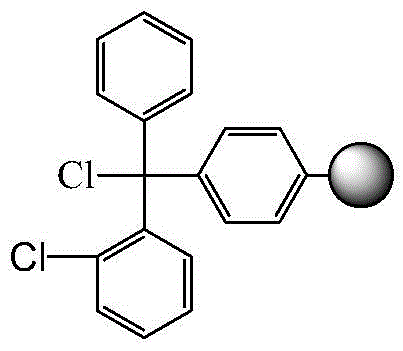
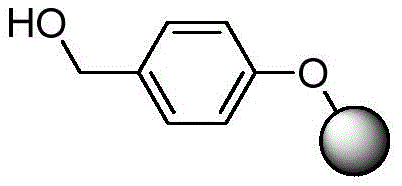
Furthermore, the control of resin substitution degree, maintained strictly between 0.2 and 0.5 mmol/g, serves as a physical mechanism to enhance purity by spatially isolating the growing peptide chains on the polymer matrix. This low-loading strategy mitigates the risk of intermolecular beta-sheet formation and aggregation, which are notorious for causing incomplete couplings and deletion sequences in long peptides. The purification mechanism is equally refined, employing a dual-stage process where reversed-phase high-performance liquid chromatography (RP-HPLC) initially separates the target peptide from truncation products based on hydrophobicity, followed by gel chromatography using Sephadex G-25 for desalting and the removal of small molecule impurities. This comprehensive approach to impurity control ensures that the final product meets the rigorous standards required for clinical application, with HPLC purity consistently reaching above 99.85 percent, demonstrating the efficacy of the mechanistic design in eliminating trace contaminants.
How to Synthesize Somaglutide Efficiently
The synthesis of Somaglutide via this patented route requires meticulous attention to reaction conditions, solvent systems, and coupling reagents to ensure the successful assembly of the 31-amino acid backbone alongside the complex lipid side chain. The process begins with the loading of the first amino acid, Fmoc-Gly-OH, onto the chosen resin carrier, followed by iterative cycles of deprotection and coupling using activators like TBTU, PyBop, or COMU in polar aprotic solvents such as DMF or NMP. Critical to the success of the operation is the timing of the side-chain modification at Lys26, which must occur after the C-terminal segment is assembled but before the N-terminal segment is completed, requiring precise monitoring of the deprotection kinetics for groups like Alloc or Mtt. While the general workflow follows standard solid-phase protocols, the specific stoichiometry of reagents, the temperature controls during activation, and the washing procedures are optimized to maximize yield and minimize epimerization, particularly at the Histidine and Aspartic acid residues. For a detailed breakdown of the specific operational parameters, reagent quantities, and step-by-step instructions required to replicate this high-efficiency synthesis, please refer to the standardized guide below.
- Load Fmoc-Gly-OH onto 2-CTC or Wang resin with controlled substitution degree (0.2-0.5 mmol/g) to minimize aggregation.
- Perform sequential coupling from C-terminus to Lys26 using orthogonal protecting groups (Alloc/Dde/Mtt) to allow selective side-chain access.
- Deprotect Lys26 side chain, couple AEEA-AEEA-γ-Glu-fatty acid sequence, complete backbone synthesis, and purify via RP-HPLC and gel chromatography.
Commercial Advantages for Procurement and Supply Chain Teams
For procurement managers and supply chain directors, the adoption of this advanced solid-phase synthesis protocol translates into tangible strategic benefits that extend far beyond simple technical metrics, fundamentally altering the cost structure and reliability of the Somaglutide supply chain. By shifting away from fragment condensation methods that require the isolation and quality control of multiple large intermediates, this process consolidates the manufacturing workflow into a single continuous solid-phase operation, thereby drastically simplifying the logistical footprint and reducing the inventory holding costs associated with work-in-progress materials. The elimination of transition metal catalysts in certain deprotection steps, or the optimization of their usage, removes the need for expensive and time-consuming heavy metal scavenging processes, which traditionally add significant operational expenditure and extend lead times for batch release. Additionally, the high crude purity achieved directly correlates to a reduction in the volume of solvents and consumables required for preparative chromatography, leading to substantial cost savings in waste disposal and raw material consumption without compromising the final quality of the API.
- Cost Reduction in Manufacturing: The streamlined "one-by-one" condensation strategy eliminates the need for complex fragment purification and the associated analytical overhead, resulting in a significantly leaner production process that lowers the overall cost of goods sold. By avoiding the extensive purification steps required for intermediate fragments in conventional methods, manufacturers can realize drastic reductions in solvent usage, column packing materials, and labor hours, effectively optimizing the economic efficiency of polypeptide manufacturing. Furthermore, the improved yield of the crude product means that less starting material is wasted, providing a direct financial advantage in an environment where high-quality protected amino acids represent a major cost driver.
- Enhanced Supply Chain Reliability: The reliance on commercially available and robust resin technologies, such as 2-CTC and Wang resins, ensures that the supply chain is not vulnerable to the bottlenecks often associated with custom-synthesized linkers or specialized reagents. The modular nature of the solid-phase synthesis allows for flexible scaling, meaning that production capacity can be adjusted rapidly to meet fluctuating market demands without the need for massive capital investment in new infrastructure. This flexibility, combined with the use of standard peptide synthesis equipment, guarantees a consistent and uninterrupted supply of high-purity Somaglutide, mitigating the risks of stockouts that can plague more fragile synthetic routes.
- Scalability and Environmental Compliance: The process is inherently designed for commercial scale-up, utilizing reaction conditions and solvent systems that are compatible with large-scale reactor vessels and automated synthesis modules, facilitating the transition from laboratory grams to multi-ton annual production volumes. The reduction in purification complexity also implies a lower environmental burden, as the decreased consumption of organic solvents and chromatography media aligns with increasingly stringent global environmental regulations and sustainability goals. This alignment not only future-proofs the manufacturing process against regulatory changes but also enhances the corporate social responsibility profile of the supply chain, making it a more attractive partner for environmentally conscious pharmaceutical companies.
Frequently Asked Questions (FAQ)
The following questions address critical technical and commercial aspects of the Somaglutide synthesis method, providing clarity for R&D teams and procurement specialists evaluating this technology for integration into their supply networks. These insights are derived directly from the patent specifications and are intended to highlight the operational feasibility and quality advantages of the described process. Understanding these nuances is essential for stakeholders aiming to optimize their peptide manufacturing strategies and ensure compliance with global pharmacopeial standards.
Q: How does the orthogonal protection strategy improve Somaglutide purity?
A: By using orthogonal protecting groups like Alloc or Dde on the Lys26 side chain, the synthesis allows for selective deprotection and modification of the fatty acid chain while the peptide backbone is still growing on the resin. This prevents the formation of difficult-to-remove deletion sequences and racemization impurities often seen in fragment condensation methods, resulting in crude purity exceeding 69%.
Q: Why is low resin loading (0.2-0.5 mmol/g) critical for this synthesis?
A: Lower substitution degrees on the 2-CTC or Wang resin reduce the local concentration of growing peptide chains. This minimizes intermolecular interactions and aggregation, which are common causes of incomplete couplings and deletions in long peptide sequences like Somaglutide, thereby significantly enhancing the overall yield and final purity.
Q: What are the advantages of using Boc-His(Trt)-OH at the N-terminus?
A: Utilizing Boc-His(Trt)-OH as the final N-terminal amino acid eliminates the need for a final piperidine treatment to remove an Fmoc group. Since piperidine can induce racemization at the Histidine residue, avoiding this step preserves stereochemical integrity and reduces the formation of diastereomeric impurities, simplifying the downstream purification process.
Partnering with NINGBO INNO PHARMCHEM: Your Reliable Somaglutide Supplier
At NINGBO INNO PHARMCHEM, we recognize the critical importance of securing a stable and high-quality supply of complex peptide therapeutics like Somaglutide, and we have positioned ourselves as a premier partner capable of translating advanced patent technologies into commercial reality. Our state-of-the-art facilities are equipped to handle the intricate requirements of solid-phase peptide synthesis, boasting extensive experience scaling diverse pathways from 100 kgs to 100 MT/annual commercial production to meet the needs of the global market. We maintain stringent purity specifications through our rigorous QC labs, ensuring that every batch of Somaglutide delivered meets the highest standards of identity, strength, and quality, thereby minimizing the risk of regulatory delays for our clients. Our commitment to excellence extends beyond mere compliance; we actively collaborate with our partners to refine processes and ensure that the commercial potential of this groundbreaking synthesis method is fully realized.
We invite forward-thinking pharmaceutical companies to engage with our technical procurement team to discuss how our manufacturing capabilities can support your specific project requirements and timelines. By requesting a Customized Cost-Saving Analysis, you can gain a deeper understanding of the economic benefits of switching to this optimized synthesis route for your supply chain. We encourage you to contact us today to obtain specific COA data and route feasibility assessments, allowing you to make informed decisions that will drive efficiency and reliability in your Somaglutide sourcing strategy.