
Advanced Manufacturing of Voriconazole Intermediates via Optimized Reformatsky Coupling
Introduction to Advanced Voriconazole Manufacturing
The global demand for broad-spectrum antifungal agents continues to rise, placing immense pressure on supply chains to deliver high-purity active pharmaceutical ingredients (APIs) efficiently. Voriconazole, a critical triazole-class antifungal medication, relies on complex synthetic pathways that have historically been plagued by safety hazards and low yields. Patent CN102516233B introduces a transformative approach to synthesizing (2R,3S)-3-(5-fluoropyrimidine-4-yl)-2-(2,4-difluorophenyl)-1-(1H-1,2,4-triazole-1-yl)-2-butanol, the core intermediate for voriconazole. This technology leverages an optimized Reformatsky coupling reaction followed by a novel in-situ hydrogenolysis step, fundamentally altering the economic and safety profile of production. By capitalizing on residual reagents rather than introducing new catalytic systems, this method offers a robust pathway for industrial scale-up.
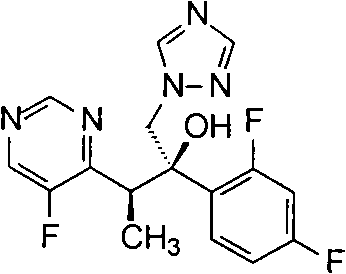
For procurement managers and R&D directors, the implications of this patent are profound. It addresses the perennial challenges of cost reduction in API manufacturing by removing expensive transition metals and simplifying purification protocols. The ability to produce high-purity voriconazole intermediates without relying on cryogenic conditions or high-pressure hydrogenation represents a significant leap forward in process chemistry. As a reliable pharmaceutical intermediate supplier, understanding these mechanistic shifts is essential for evaluating long-term supply stability and cost efficiency.
The Limitations of Conventional Methods vs. The Novel Approach
The Limitations of Conventional Methods
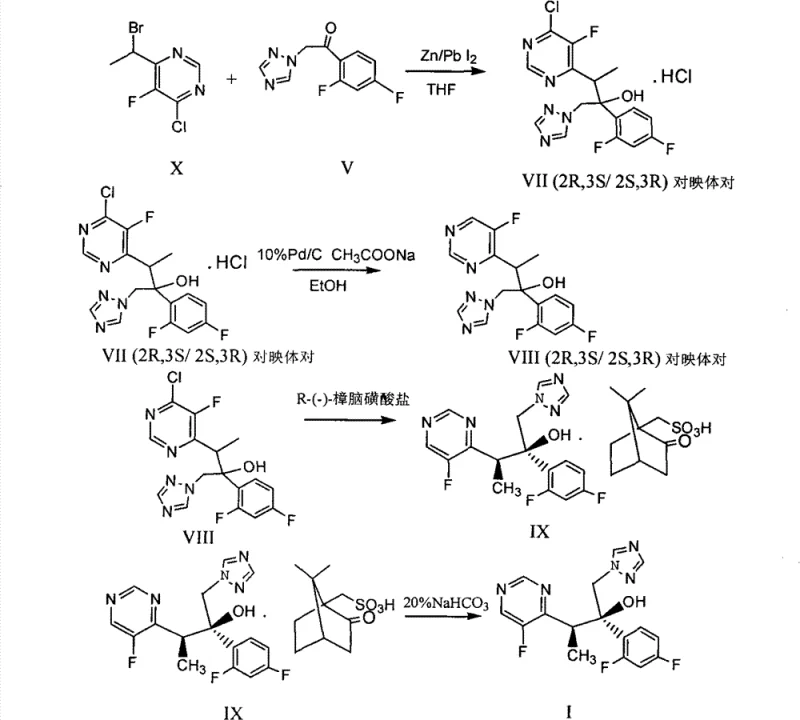
Historically, the synthesis of voriconazole has been hindered by reliance on hazardous reagents and energetically demanding conditions. Traditional routes, such as those described in US5567817, utilize Lithium Diisopropylamide (LDA) at extremely low temperatures of -70°C, creating severe scalability issues and safety risks associated with cryogenic operations. Furthermore, subsequent dechlorination steps often require Palladium on Carbon (Pd/C) or Raney Nickel under high-pressure hydrogen, introducing expensive heavy metals that necessitate rigorous removal processes to meet regulatory standards. Another common pathway, illustrated in prior art like CN96196097.3, employs a Reformatsky reaction but still requires the formation of a hydrochloride salt intermediate followed by alkalization and separate catalytic hydrogenation. These multi-step isolation procedures increase solvent consumption, extend cycle times, and inevitably reduce overall yield due to mechanical losses during filtration and drying.
The Novel Approach
The methodology outlined in CN102516233B disrupts this status quo by integrating the dechlorination step directly into the workup of the coupling reaction. Instead of isolating the chloro-intermediate as a hydrochloride salt, the process utilizes the unreacted zinc powder remaining from the Reformatsky coupling. By carefully adding acid, such as hydrochloric acid or glacial acetic acid, to the reaction mixture, active hydrogen is generated in situ. This active hydrogen immediately effects the hydrogenolysis of the chloro-group, converting the intermediate directly to the desired fluoro-compound. This telescoping of steps eliminates the need for external hydrogen gas, expensive palladium catalysts, and the tedious salt-formation and alkalization cycles. The result is a streamlined process that significantly simplifies the production technique while enhancing production safety and yield.
Mechanistic Insights into Zinc-Mediated Reformatsky Coupling and Hydrogenolysis
The core of this innovation lies in the dual functionality of the zinc reagent. Initially, metallic zinc, activated by lead and iodine in tetrahydrofuran (THF), facilitates the Reformatsky coupling between the bromo-fluoropyrimidine and the triazole ketone. This step forms the carbon-carbon bond necessary for the voriconazole backbone, generating a mixture of stereoisomers where the (2R,3S/2S,3R) diastereomers predominate. Conventionally, the reaction is quenched, and the zinc waste is discarded. However, in this novel process, the residual zinc is recognized as a valuable resource. Upon the addition of acid, the remaining zinc reacts to produce nascent hydrogen. This highly reactive species attacks the carbon-chlorine bond on the pyrimidine ring, cleaving it to form a carbon-hydrogen bond. This mechanism effectively replaces the chloro-substituent with a hydrogen atom without requiring a separate catalytic vessel or high-pressure equipment.
From an impurity control perspective, this method offers distinct advantages. By avoiding the isolation of the hydrochloride salt, the process minimizes the entrapment of mother liquor impurities that often occur during crystallization. The direct resolution of the crude mixture using chiral acids, such as R-(-)-camphorsulfonic acid, allows for the selective precipitation of the target (2R,3S) enantiomer salt. The high stereoselectivity of the initial coupling, combined with the efficient resolution, ensures that the final free base obtained after alkalization possesses an optical purity greater than 99.9%. This level of purity is critical for meeting the stringent specifications required for antifungal APIs, ensuring that toxic or inactive isomers are kept well below the 0.5% threshold.
How to Synthesize Voriconazole Efficiently
The synthesis of voriconazole via this optimized route involves a sequence of activation, coupling, and in-situ reduction steps designed for maximum efficiency. The process begins with the activation of zinc powder in THF, followed by the controlled addition of reactants at mild temperatures (0-5°C). Crucially, the workup involves the slow addition of acid to trigger the dechlorination, followed by standard extraction and chiral resolution. For detailed operational parameters, stoichiometry, and specific temperature profiles required to replicate this high-yield process, please refer to the standardized synthesis guide below.
- Activate metallic zinc with lead and iodine in tetrahydrofuran (THF) under reflux conditions to prepare the reactive metal surface.
- Perform the Reformatsky coupling reaction between 4-chloro-6-(1-bromoethyl)-5-fluoropyrimidine and the triazole ketone at 0-5°C.
- Utilize residual zinc powder and added acid (HCl or acetic acid) to effect in-situ hydrogenolysis, removing the chloro-group without external hydrogen gas.
Commercial Advantages for Procurement and Supply Chain Teams
For supply chain leaders and procurement specialists, the adoption of this synthesis route translates into tangible strategic benefits beyond mere technical elegance. The elimination of precious metal catalysts like palladium removes a significant variable cost driver and mitigates the risk associated with volatile metal markets. Furthermore, the removal of high-pressure hydrogenation steps reduces the regulatory burden and insurance costs associated with operating explosive atmospheres. The simplified workflow, which bypasses intermediate salt formation and isolation, drastically reduces solvent usage and waste generation, aligning with modern green chemistry initiatives and lowering environmental compliance costs. These factors collectively contribute to a more resilient and cost-effective supply chain for high-value antifungal intermediates.
- Cost Reduction in Manufacturing: The most immediate financial impact stems from the complete removal of palladium on carbon and Raney nickel from the process flow. These catalysts are not only expensive to purchase but also require specialized recovery or disposal protocols. By utilizing residual zinc—a commodity chemical—for the dechlorination step, the process achieves substantial cost savings. Additionally, the telescoping of the coupling and dechlorination steps reduces the total number of unit operations, leading to lower labor costs and reduced energy consumption for heating and cooling cycles.
- Enhanced Supply Chain Reliability: Dependence on specialized reagents like LDA or high-pressure hydrogen can create bottlenecks in production scheduling. This new method relies on robust, readily available materials such as zinc powder, acetic acid, and standard organic solvents. The reaction conditions are also much milder, operating near room temperature or mild reflux rather than cryogenic lows. This ease of operation enhances batch consistency and reduces the likelihood of campaign delays due to equipment failure or reagent shortages, ensuring a steady flow of commercial scale-up of complex pharmaceutical intermediates.
- Scalability and Environmental Compliance: Scaling cryogenic reactions or high-pressure hydrogenations requires significant capital investment in specialized reactors and safety infrastructure. In contrast, this ambient pressure and moderate temperature process can be scaled using standard glass-lined or stainless steel reactors found in most multipurpose chemical plants. The reduction in solvent volumes and the avoidance of heavy metal waste streams simplify wastewater treatment and solid waste disposal. This environmental friendliness facilitates faster regulatory approvals and reduces the long-term liability associated with hazardous waste management.
Frequently Asked Questions (FAQ)
The following questions address common technical and commercial inquiries regarding the implementation of this voriconazole synthesis technology. These insights are derived directly from the experimental data and process descriptions found in the patent literature, providing a factual basis for decision-making.
Q: How does the new method eliminate the need for Palladium catalysts?
A: The process utilizes the unreacted zinc powder remaining from the initial Reformatsky coupling reaction. By adding acid to this mixture, active hydrogen is generated in situ, which performs the hydrogenolysis dechlorination, completely replacing the need for expensive Pd/C or hazardous Raney Nickel.
Q: What are the safety advantages of this synthesis route?
A: This method avoids the use of high-pressure hydrogen gas typically required for catalytic hydrogenation. Furthermore, it eliminates the use of Lithium Diisopropylamide (LDA) and cryogenic temperatures (-70°C), significantly reducing operational hazards and energy consumption.
Q: Does this process improve the optical purity of the final product?
A: Yes, by skipping the intermediate hydrochloride salt formation and purification steps found in older methods, the process reduces handling losses. Direct resolution with chiral acids like R-(-)-camphorsulfonic acid yields voriconazole with optical purity greater than 99.9%.
Partnering with NINGBO INNO PHARMCHEM: Your Reliable Voriconazole Supplier
The technological advancements detailed in CN102516233B highlight the continuous evolution of antifungal intermediate manufacturing. At NINGBO INNO PHARMCHEM, we possess extensive experience scaling diverse pathways from 100 kgs to 100 MT/annual commercial production, ensuring that innovations like this are translated into reliable supply. Our facility is equipped with stringent purity specifications and rigorous QC labs capable of verifying the optical purity and impurity profiles of complex molecules like voriconazole. We understand that consistent quality is paramount for API manufacturers, and our infrastructure is designed to support both clinical trial material needs and full-scale commercial demands.
We invite potential partners to engage with our technical procurement team to discuss how this optimized route can benefit your specific supply chain. By requesting a Customized Cost-Saving Analysis, you can quantify the potential efficiencies of switching to this zinc-mediated process. We encourage you to contact us to obtain specific COA data and route feasibility assessments tailored to your project timelines, ensuring a seamless integration of high-quality voriconazole intermediates into your production pipeline.