
Scalable Industrial Synthesis of High-Purity DMT-Cl for Global Nucleoside Production
Scalable Industrial Synthesis of High-Purity DMT-Cl for Global Nucleoside Production
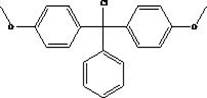
The landscape of nucleoside and nucleotide synthesis relies heavily on the availability of high-quality protecting groups, among which 4,4'-dimethoxytriphenylchloromethane, commonly known as DMT-Cl, plays a pivotal role. As the demand for oligonucleotide therapeutics surges globally, the pressure on supply chains to deliver intermediates with exceptional purity and consistency has never been higher. Patent CN107056590B introduces a transformative industrial method for preparing and purifying DMT-Cl that addresses critical bottlenecks in traditional manufacturing. By shifting away from hazardous Grignard reagents toward a robust Friedel-Crafts alkylation pathway, this technology offers a safer, more environmentally friendly, and economically viable route. For R&D directors and procurement specialists alike, understanding the nuances of this patent is essential for securing a reliable pharmaceutical intermediate supplier capable of meeting the rigorous quality standards of modern biopharmaceutical production.
The Limitations of Conventional Methods vs. The Novel Approach
The Limitations of Conventional Methods
Historically, the synthesis of DMT-Cl has been plagued by significant safety hazards and operational complexities that hinder large-scale commercialization. Traditional literature, such as reports from Physical Organic Chemistry in the late 20th century, describes routes involving the reaction of p-methoxy magnesium bromide with 4-methoxybenzophenone. This Grignard-based approach necessitates the use of diethyl ether or tetrahydrofuran as solvents, both of which present severe risks; diethyl ether carries a high potential for high-temperature explosions, while tetrahydrofuran is prohibitively expensive for bulk manufacturing. Furthermore, the Grignard reaction system is exquisitely sensitive to moisture, requiring strictly anhydrous conditions that are difficult and costly to maintain in an industrial setting. These factors combine to create a process that is not only dangerous but also economically inefficient, making it unsuitable for the high-volume production required by the growing oligonucleotide market.
The Novel Approach
In stark contrast, the methodology disclosed in patent CN107056590B utilizes anisole and trichlorotoluene as initial raw materials, bypassing the need for unstable organometallic reagents entirely. This novel approach employs a Lewis acid-catalyzed Friedel-Crafts reaction followed by hydrolysis and chlorination, creating a much more robust and controllable process window. The design eliminates the explosion risks associated with ether solvents and removes the stringent moisture constraints of Grignard chemistry. By optimizing the reaction conditions to operate between 0°C and 30°C, the process ensures thermal safety while maintaining high reaction efficiency. This shift represents a paradigm change in cost reduction in API manufacturing, allowing producers to utilize common, recyclable solvents instead of expensive, refined alternatives, thereby stabilizing the supply chain for this critical intermediate.
Mechanistic Insights into AlCl3-Catalyzed Friedel-Crafts Alkylation
The core of this industrial breakthrough lies in the precise execution of the Friedel-Crafts alkylation catalyzed by aluminum trichloride (AlCl3). In this mechanism, anisole acts as the nucleophile, attacking the electrophilic species generated from trichlorotoluene in the presence of the Lewis acid. The reaction is carefully controlled at temperatures between 0°C and 10°C to minimize side reactions such as poly-alkylation or isomerization, which could lead to difficult-to-remove impurities. Following the alkylation, a hydrochloric acid hydrolysis step is employed to quench the catalyst and separate the organic products from inorganic salts. This is followed by a chlorination step using reagents like thionyl chloride or oxalyl chloride under reflux, which converts the hydroxyl precursor into the final chloromethyl functionality. The synergy between the mild alkylation conditions and the efficient chlorination step ensures a high conversion rate, laying the foundation for the exceptional purity observed in the final product.
Beyond the primary reaction pathway, the patent details a sophisticated impurity control mechanism centered on solvent engineering and crystallization dynamics. The crude product, which already achieves a purity of greater than 98.5%, undergoes a specialized recrystallization process using a mixed solvent system of petroleum ether (Solvent B) and dichloromethane (Solvent C). The specific mass volume ratios—where Solvent C is 1.5 to 4.5 times and Solvent B is 8 to 20 times the mass of the crude product—are critical for selectively precipitating the target DMT-Cl while keeping impurities in the mother liquor. This fractional crystallization technique effectively strips away trace byproducts and unreacted starting materials. The ability to recover and recycle these solvents via concentration and GC quantification further enhances the process's sustainability, ensuring that the final DMT-Cl finished product consistently exceeds 99.9% purity, a threshold mandatory for high-quality biological nucleoside applications.
How to Synthesize 4,4'-Dimethoxytriphenylchloromethane Efficiently
Implementing this synthesis route requires strict adherence to the sequential processing steps outlined in the patent to ensure reproducibility and safety. The process begins with the careful charging of anisole and trichlorotoluene into a reactor, followed by the controlled addition of the aluminum trichloride catalyst to initiate the exothermic alkylation. Operators must monitor the temperature closely to prevent runaway reactions, maintaining the system within the optimal 0-30°C range. Subsequent steps involve aqueous workup, solvent extraction, and the final chlorination under reflux conditions. The critical final stage is the crystallization, where the choice of anti-solvent and cooling rate determines the crystal habit and purity of the isolated solid. For a detailed breakdown of the specific operational parameters, reagent quantities, and safety protocols required for successful execution, please refer to the standardized synthesis guide below.
- Conduct Friedel-Crafts alkylation of anisole and trichlorotoluene using aluminum trichloride catalyst at 0-30°C.
- Perform hydrochloric acid hydrolysis and solvent extraction to isolate the organic phase.
- Execute chlorination followed by recrystallization using petroleum ether and dichloromethane to achieve >99.9% purity.
Commercial Advantages for Procurement and Supply Chain Teams
For procurement managers and supply chain heads, the transition to this patented industrial method offers substantial strategic benefits that extend far beyond simple chemical yield. The elimination of hazardous Grignard reagents and explosive ether solvents drastically simplifies the safety infrastructure required for production, leading to lower insurance premiums and reduced regulatory compliance burdens. Furthermore, the reliance on commodity chemicals like anisole and trichlorotoluene, rather than specialized organometallics, insulates the supply chain from the volatility often seen in niche reagent markets. This stability is crucial for long-term contract manufacturing agreements where continuity of supply is paramount. The process design inherently supports scalability, allowing manufacturers to ramp up production from pilot batches to multi-ton annual capacities without encountering the thermal management issues that plague traditional methods.
- Cost Reduction in Manufacturing: The economic advantages of this process are driven primarily by the substitution of expensive, refined solvents with common, recyclable alternatives. Traditional methods often require high-purity tetrahydrofuran or diethyl ether, which incur high procurement and disposal costs. In this novel approach, solvents such as petroleum ether and dichloromethane are used in a closed-loop system where mother liquors are concentrated and reused. This significantly reduces the consumption of raw materials per kilogram of product. Additionally, the avoidance of complex moisture-control equipment and the use of robust catalysts like aluminum trichloride lower the capital expenditure and operational overhead, resulting in a markedly more cost-effective production model for high-purity pharmaceutical intermediates.
- Enhanced Supply Chain Reliability: Supply chain resilience is bolstered by the use of widely available starting materials. Anisole and trichlorotoluene are bulk chemicals produced by numerous global suppliers, reducing the risk of single-source dependency. The robustness of the reaction conditions, which tolerate a broader range of operating parameters compared to moisture-sensitive Grignard reactions, means that production schedules are less likely to be disrupted by minor environmental fluctuations or equipment variances. This reliability translates directly into shorter lead times for high-purity pharmaceutical intermediates, enabling downstream drug manufacturers to maintain tighter inventory controls and respond more agilely to market demands for nucleoside-based therapeutics.
- Scalability and Environmental Compliance: From an environmental perspective, the process is designed with green chemistry principles in mind, specifically regarding waste minimization. The ability to recycle both extraction and crystallization solvents significantly reduces the volume of hazardous waste generated per batch. This not only lowers disposal costs but also aligns with increasingly stringent global environmental regulations regarding volatile organic compound (VOC) emissions. The commercial scale-up of complex pharmaceutical intermediates is often bottlenecked by waste treatment capacity; however, this method's efficient solvent recovery system mitigates that constraint, facilitating smoother expansion of production capacity while maintaining a sustainable environmental footprint.
Frequently Asked Questions (FAQ)
The following questions address common technical and commercial inquiries regarding the implementation of this DMT-Cl synthesis technology. These insights are derived directly from the experimental data and beneficial effects described in patent CN107056590B, providing clarity on how this method outperforms legacy processes in terms of safety, purity, and operational efficiency. Understanding these details is vital for technical teams evaluating the feasibility of adopting this route for their own manufacturing pipelines or for procurement officers assessing the quality credentials of potential suppliers.
Q: What is the primary advantage of this DMT-Cl synthesis method over traditional Grignard routes?
A: The primary advantage is safety and cost. Traditional methods use explosive diethyl ether and moisture-sensitive Grignard reagents. This patent utilizes a stable Friedel-Crafts reaction with recyclable solvents, eliminating explosion risks and reducing raw material costs significantly.
Q: What purity levels can be achieved with this industrial purification process?
A: The process consistently yields a finished product with purity exceeding 99.9%. The crude product initially reaches over 98.5% purity, which is then refined through a specific solvent crystallization system to meet the stringent standards required for biological nucleoside synthesis.
Q: How does this method address environmental and waste disposal concerns?
A: The method is designed for solvent recovery. Both the extraction solvents and the crystallization mother liquors can be concentrated, quantified via GC, and recycled. This closed-loop approach minimizes hazardous waste discharge and lowers the overall environmental footprint of the manufacturing process.
Partnering with NINGBO INNO PHARMCHEM: Your Reliable 4,4'-Dimethoxytriphenylchloromethane Supplier
At NINGBO INNO PHARMCHEM, we recognize that the integrity of your final therapeutic product depends on the quality of every intermediate in your supply chain. Our technical team has extensively analyzed the pathways described in CN107056590B and possesses the expertise to implement this advanced purification technology at scale. We bring extensive experience scaling diverse pathways from 100 kgs to 100 MT/annual commercial production, ensuring that whether you need kilogram quantities for clinical trials or metric tons for commercial launch, our output remains consistent. Our facilities are equipped with rigorous QC labs and adhere to stringent purity specifications, guaranteeing that every batch of DMT-Cl we deliver meets the >99.9% purity threshold required for sensitive nucleoside coupling reactions.
We invite you to collaborate with us to optimize your supply chain for nucleoside synthesis. By leveraging our mastery of this industrial preparation method, we can offer you a Customized Cost-Saving Analysis that demonstrates exactly how switching to our optimized process can reduce your overall cost of goods. We encourage you to contact our technical procurement team today to request specific COA data from our recent batches and to discuss route feasibility assessments tailored to your specific project timelines. Let us be your partner in delivering high-quality chemical solutions that drive your innovation forward.