
Scalable Manufacturing of Pitavastatin Calcium: A Novel 7-Step Synthetic Route for Global API Supply
The pharmaceutical landscape for HMG-CoA reductase inhibitors continues to evolve, with Pitavastatin Calcium emerging as a potent agent for managing hypercholesterolemia. Patent CN103508948A discloses a groundbreaking seven-step synthetic methodology that addresses critical bottlenecks in the existing manufacturing processes of this vital cardiovascular drug. Unlike prior art which relied heavily on hazardous and expensive reagents, this invention utilizes 3-cyclopropyl-3-oxopropionate, (2-aminophenyl)(4-fluorophenyl)methanone, and a chiral dioxane derivative as starting materials to construct the complex molecular architecture. The significance of this patent lies not merely in the chemical transformation but in its strategic redesign of the process flow to enhance safety, reduce cost, and improve overall yield, making it a cornerstone for reliable pharmaceutical intermediates supplier networks aiming to secure the global supply chain of statin medications.
This technical breakthrough offers a robust alternative to legacy methods that struggled with scalability and environmental compliance. By shifting away from cryogenic reductions and toxic sulfur-based couplings, the disclosed route aligns perfectly with modern green chemistry principles while maintaining the rigorous purity standards required for Active Pharmaceutical Ingredients (APIs). For procurement managers and R&D directors alike, understanding the nuances of this synthesis is crucial for evaluating potential partners capable of delivering high-purity Pitavastatin Calcium without the logistical nightmares associated with older, less efficient technologies.
The Limitations of Conventional Methods vs. The Novel Approach
The Limitations of Conventional Methods
Historically, the synthesis of Pitavastatin Calcium has been plagued by significant technical hurdles that impede efficient large-scale production. Early methodologies, such as those cited in US5011930 and EP304063, depended on the reduction of quinolinate esters to alcohols using Diisobutylaluminum hydride (DIBAL-H). While chemically effective on a small scale, DIBAL-H is notoriously expensive, pyrophoric, and requires stringent low-temperature control, drastically increasing operational costs and safety risks. Furthermore, the post-reaction workup often results in the product being entrapped within inorganic aluminum salts, leading to substantial yield losses and complicated purification procedures that are ill-suited for industrial manufacturing. Other approaches attempted to link the quinoline ring to the side chain using Mitsunobu reactions involving thio-compounds, which pose severe environmental hazards and generate difficult-to-remove waste streams, further complicating the regulatory approval process for the final drug substance.
The Novel Approach
The methodology outlined in CN103508948A represents a paradigm shift by replacing these problematic reagents with conventional, scalable alternatives. Instead of DIBAL-H, the process employs sodium borohydride activated by calcium chloride or magnesium chloride, a combination that is not only significantly cheaper but also safer to handle and easier to quench. This substitution eliminates the issue of product entrapment in inorganic gels, thereby streamlining the isolation of the hydroxymethyl intermediate. Additionally, the critical coupling of the quinoline ring to the chiral side chain is achieved via a Wittig reaction followed by a sophisticated recrystallization protocol. This approach effectively separates the E and Z isomers without the need for preparative column chromatography, a technique that is economically unfeasible for multi-kilogram production. The result is a streamlined, seven-step sequence that delivers the target molecule with exceptional purity and yield, solving the technical bottlenecks that have long hindered cost reduction in API manufacturing.
Mechanistic Insights into Friedlander Condensation and Wittig Coupling
The core of this synthetic strategy relies on the precise execution of a Friedlander condensation to build the quinoline nucleus, followed by a stereoselective Wittig olefination. The process initiates with the acid-catalyzed cyclization of 3-cyclopropyl-3-oxopropionate and (2-aminophenyl)(4-fluorophenyl)methanone. This reaction forms the 2-cyclopropyl-4-(4-fluorophenyl)quinoline-3-carboxylate scaffold, a critical intermediate that sets the stage for subsequent functionalization. The choice of acid catalyst and polar solvent is paramount here, as it drives the equilibrium towards the cyclic product while minimizing side reactions. Following the formation of the quinoline ester, the reduction step utilizes an in-situ generated metal borohydride species. The interaction between sodium borohydride and calcium chloride creates a more reactive hydride donor capable of reducing the ester to the primary alcohol under reflux conditions, a transformation that is typically sluggish with sodium borohydride alone. This mechanistic nuance allows for high conversion rates without the need for exotic reducing agents.
The stereochemical integrity of the final product is secured during the Wittig coupling phase. The phosphonium salt, derived from the brominated quinoline intermediate, reacts with the chiral aldehyde side chain under basic conditions. A major challenge in Wittig reactions is the formation of Z-isomers alongside the desired E-isomer. Traditional methods often resort to chromatography to remove the unwanted isomer, which is a major bottleneck for scale-up. However, this patent introduces a clever solution: leveraging the solubility differences between the isomers in specific alcoholic solvents. By optimizing the recrystallization conditions, the process selectively precipitates the desired E-isomer with a liquid phase purity exceeding 99%. This mechanistic control over stereochemistry ensures that the final Pitavastatin Calcium meets the stringent enantiomeric and geometric purity requirements necessary for biological activity, all while avoiding the waste and cost associated with chromatographic separation.
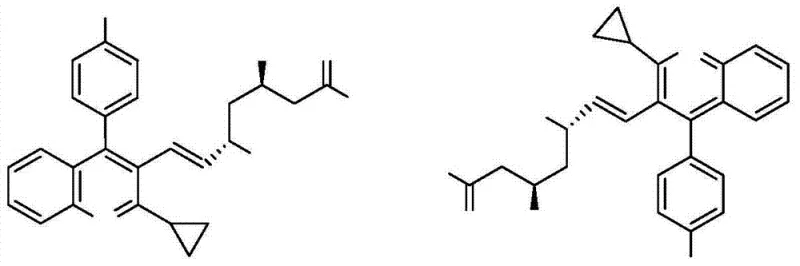
How to Synthesize Pitavastatin Calcium Efficiently
Executing this synthesis requires careful attention to reaction parameters, particularly temperature control and stoichiometry during the coupling and deprotection stages. The process is designed to be telescoped where possible, minimizing the isolation of unstable intermediates and reducing overall processing time. For R&D teams looking to replicate or adapt this chemistry, the key lies in the precise management of the hydrolysis and salt formation steps in the final stage. The removal of the acetonide protecting group and the subsequent saponification of the ester must be balanced to prevent degradation of the sensitive olefinic bond. Detailed standardized operating procedures for each of the seven steps, including specific solvent ratios and quenching protocols, are essential for ensuring batch-to-batch consistency.
- Condense 3-cyclopropyl-3-oxopropionate with (2-aminophenyl)(4-fluorophenyl)methanone under acidic conditions to form the quinoline ester core.
- Reduce the quinoline ester to the corresponding hydroxymethyl derivative using sodium borohydride and calcium chloride, followed by bromination.
- Form the phosphonium salt and couple with the chiral side-chain aldehyde via Wittig reaction, separating E/Z isomers through recrystallization.
Commercial Advantages for Procurement and Supply Chain Teams
From a commercial perspective, the adoption of this synthetic route offers profound benefits for supply chain stability and cost management. By eliminating the reliance on DIBAL-H and thio-compounds, manufacturers can significantly reduce raw material costs and mitigate the risks associated with sourcing hazardous chemicals. The simplified workup procedures, characterized by straightforward extractions and crystallizations rather than complex chromatographic separations, translate directly into shorter cycle times and higher throughput. This efficiency is critical for meeting the demanding delivery schedules of global pharmaceutical clients who require consistent volumes of high-quality intermediates. Furthermore, the use of common, non-proprietary reagents enhances supply chain resilience, reducing the vulnerability to disruptions in the availability of specialized catalysts or reagents.
- Cost Reduction in Manufacturing: The replacement of expensive reagents like DIBAL-H with commodity chemicals such as sodium borohydride and calcium chloride results in substantial cost savings per kilogram of produced API. Additionally, the avoidance of column chromatography removes a major cost driver associated with silica gel consumption, solvent usage, and labor-intensive purification processes. The high yields reported in each step, particularly the recrystallization-driven purification of the Wittig product, ensure that material loss is minimized, further driving down the overall cost of goods sold (COGS) and enabling more competitive pricing strategies in the generic drug market.
- Enhanced Supply Chain Reliability: The reliance on widely available starting materials and reagents ensures that production is not held hostage by the supply constraints of niche chemicals. The robustness of the reaction conditions, which tolerate mild temperatures and standard atmospheric pressure, allows for manufacturing in a broader range of facilities without requiring specialized cryogenic or high-pressure equipment. This flexibility enhances the reliability of supply, ensuring that downstream API manufacturers can maintain continuous production schedules without the risk of delays caused by reagent shortages or equipment failures, thereby securing the continuity of the global statin supply.
- Scalability and Environmental Compliance: The process is inherently designed for scale-up, with unit operations that translate seamlessly from pilot plant to commercial production. The elimination of toxic sulfur-containing byproducts and aluminum waste streams simplifies wastewater treatment and reduces the environmental footprint of the manufacturing process. This alignment with green chemistry principles not only lowers waste disposal costs but also facilitates regulatory compliance in jurisdictions with strict environmental standards. The ability to produce high-purity material with minimal waste generation makes this route an attractive option for sustainable manufacturing initiatives, appealing to stakeholders focused on corporate social responsibility and long-term operational viability.
Frequently Asked Questions (FAQ)
The following questions address common technical and commercial inquiries regarding the implementation of this novel synthesis route. These insights are derived directly from the patent specifications and are intended to clarify the operational advantages and chemical feasibility of the process for industry stakeholders. Understanding these details is vital for making informed decisions about technology transfer and vendor selection.
Q: How does this new method improve upon traditional DIBAL-H reduction?
A: Traditional methods utilize expensive and hazardous DIBAL-H for reducing quinolinate esters, leading to difficult workups and lower yields due to inorganic salt entrapment. This novel protocol employs sodium borohydride with calcium chloride, offering a safer, cost-effective alternative with superior yield and easier purification suitable for large-scale production.
Q: How is the E/Z isomer purity controlled in the Wittig coupling step?
A: The process avoids complex column chromatography, which is impractical for ton-scale manufacturing. Instead, it utilizes a specialized solvent recrystallization technique post-coupling to effectively separate the desired E-isomer from the Z-isomer, ensuring high stereochemical purity (>99%) essential for API quality.
Q: Is this synthesis route suitable for industrial scale-up?
A: Yes, the route is specifically designed for scalability. It replaces hazardous reagents like DIBAL-H and environmentally harmful thio-compounds with conventional, benign chemicals. The elimination of column chromatography and the use of robust recrystallization steps make it highly viable for commercial manufacturing from 100 kgs to multi-ton batches.
Partnering with NINGBO INNO PHARMCHEM: Your Reliable Pitavastatin Calcium Supplier
At NINGBO INNO PHARMCHEM, we recognize the critical importance of robust synthetic routes in securing the global supply of life-saving medications. Our team of expert chemists possesses extensive experience scaling diverse pathways from 100 kgs to 100 MT/annual commercial production, ensuring that the transition from laboratory bench to industrial reactor is seamless and efficient. We are committed to delivering high-purity Pitavastatin Calcium that adheres to stringent purity specifications, supported by our rigorous QC labs equipped with state-of-the-art analytical instrumentation. Our capability to implement the advanced seven-step synthesis described in CN103508948A allows us to offer a product that is not only chemically superior but also commercially viable, meeting the exacting demands of the international pharmaceutical market.
We invite you to collaborate with us to optimize your supply chain and reduce your manufacturing costs. Contact our technical procurement team today to request a Customized Cost-Saving Analysis tailored to your specific volume requirements. We are ready to provide specific COA data and route feasibility assessments to demonstrate how our advanced manufacturing capabilities can support your long-term business goals. Let us be your partner in delivering high-quality pharmaceutical intermediates with the reliability and precision your organization deserves.