
Advanced Acid-Catalyzed Synthesis of Prothioconazole Intermediates for Global Agrochemical Supply Chains
Introduction to Next-Generation Prothioconazole Intermediate Manufacturing
The global demand for high-efficacy fungicides continues to drive innovation in agrochemical intermediate synthesis, particularly for broad-spectrum triazolethione bactericides like prothioconazole. As a critical HPPD inhibitor, prothioconazole plays a pivotal role in modern crop protection by blocking the biosynthesis of prenyl quinone in plants. However, the manufacturing of its key precursor, 2-(1-chlorocyclopropyl)-1-(2-chloro-phenyl)-2-hydroxy-3-(1,2,4-triazolidine-5-thion-1-yl)-propane, has historically faced significant challenges regarding environmental impact and process efficiency. The recent disclosure in patent CN111892547A introduces a transformative synthetic methodology that addresses these bottlenecks through a novel acid-catalyzed approach. This technology not only enhances reaction kinetics and yield but also fundamentally resolves the persistent issue of excessive salt content in process wastewater. For R&D directors and supply chain leaders, this represents a critical opportunity to optimize production lines for both regulatory compliance and cost efficiency.
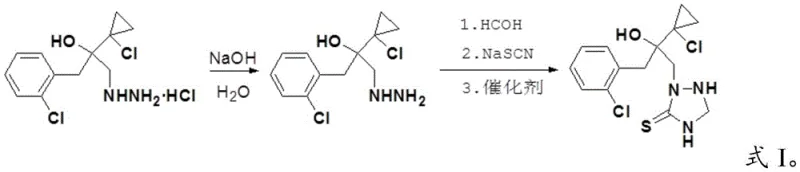
The Limitations of Conventional Methods vs. The Novel Approach
The Limitations of Conventional Methods
Traditional synthetic routes for prothioconazole intermediates have long been plagued by inefficient stoichiometry and severe environmental burdens. In conventional processes, the cyclization step often generates substantial quantities of inorganic salts as byproducts, leading to wastewater with extremely high salinity. This high salt content complicates downstream processing, necessitating energy-intensive evaporation or specialized membrane filtration systems to meet discharge standards. Furthermore, the accumulation of salts in the reaction matrix can interfere with product crystallization, resulting in lower purity profiles and requiring additional recrystallization steps that erode overall yield. From a procurement perspective, these inefficiencies translate into higher operational expenditures due to increased utility consumption for waste treatment and longer batch cycle times. The reliance on harsh conditions to drive conversion in older methods also poses safety risks and equipment corrosion issues, further impacting the total cost of ownership for manufacturing facilities.
The Novel Approach
The methodology outlined in patent CN111892547A offers a sophisticated solution by integrating a controlled acid-catalysis strategy into the cyclization phase. Instead of relying on conditions that generate excessive salt load, this novel approach utilizes precise molar ratios of inorganic or organic acid catalysts to facilitate the ring-closure reaction between the hydrazone intermediate and sodium thiocyanate. By carefully tuning the acidity of the reaction medium, the process achieves high conversion rates without the concomitant generation of vast amounts of saline waste. The use of composite acid catalysts, such as mixtures of sulfuric acid and formic acid, creates a synergistic effect that stabilizes the transition state of the cyclization, thereby improving selectivity. This results in a cleaner reaction profile where the target intermediate precipitates efficiently upon water addition, allowing for simple vacuum filtration. This shift from salt-heavy protocols to catalytic precision marks a significant leap forward in green chemistry for agrochemical manufacturing.
Mechanistic Insights into Acid-Catalyzed Triazole Cyclization
The core innovation of this synthesis lies in the mechanistic pathway of the triazole ring formation, which is critically dependent on the protonation state of the reactants. In the initial stage, the hydrazine hydrochloride salt is neutralized by a base such as sodium hydroxide or potassium carbonate in a biphasic solvent system containing water and an organic solvent like toluene. This step liberates the free hydrazine base, which is then condensed with formaldehyde at low temperatures (0-15°C) to form a reactive hydrazone species. The subsequent addition of sodium thiocyanate in the presence of the acid catalyst triggers the nucleophilic attack and cyclization. The acid catalyst serves a dual purpose: it activates the electrophilic centers within the hydrazone framework and facilitates the elimination of leaving groups necessary for ring closure. The patent specifies that maintaining the acid catalyst to hydrazine salt molar ratio between 0.4:1 and 1:1 is crucial; deviations from this range can lead to incomplete conversion or the formation of polymeric impurities. This precise control over the catalytic environment ensures that the reaction proceeds smoothly at mild temperatures ranging from 5°C to 35°C, preserving the integrity of the sensitive chlorocyclopropyl moiety.
Impurity control is another vital aspect of this mechanistic design, particularly concerning the stability of the triazolidine-thione ring. The choice of solvent and the specific composition of the acid catalyst play a decisive role in minimizing side reactions such as hydrolysis or over-alkylation. For instance, the use of composite acids helps buffer the reaction pH, preventing localized acidity spikes that could degrade the product. Additionally, the sequential addition of reagents—first the thiocyanate, followed by the acid catalyst—allows for the gradual buildup of the active catalytic species, reducing the risk of exothermic runaways. The final isolation step involves diluting the reaction mixture with water, which drastically reduces the solubility of the target intermediate, causing it to crash out of the solution as a high-purity solid. This crystallization-driven purification effectively excludes soluble salt impurities and unreacted starting materials, yielding a product with purity levels exceeding 97% without the need for chromatographic separation. Such robust impurity rejection mechanisms are essential for meeting the stringent quality specifications required by global agrochemical registrars.
How to Synthesize Prothioconazole Intermediate Efficiently
The synthesis protocol described in the patent provides a clear, scalable roadmap for producing high-quality prothioconazole intermediates suitable for commercial application. The process begins with the preparation of the free base hydrazine in a toluene-water system, followed by a controlled condensation with formaldehyde to generate the key hydrazone intermediate. The final and most critical step involves the acid-catalyzed cyclization with sodium thiocyanate, where temperature control and catalyst selection are paramount for success. Detailed standard operating procedures regarding reagent addition rates, stirring speeds, and specific work-up parameters are essential for replicating the high yields reported in the patent examples. For technical teams looking to implement this route, adhering to the specified molar ratios and temperature windows is non-negotiable to ensure batch-to-batch consistency. The detailed standardized synthesis steps are provided in the guide below.
- Neutralize [1-(2-chlorophenyl)-2-(1-chlorocyclopropyl)-2-hydroxy]-propylhydrazine hydrochloride with alkali in a solvent-water mixture at 30-60°C.
- Cool the reaction material to 0-15°C and add formaldehyde dropwise to form the hydrazone intermediate.
- Add sodium thiocyanate and an acid catalyst (inorganic or organic composite) at 5-35°C to induce cyclization and isolate the product via filtration.
Commercial Advantages for Procurement and Supply Chain Teams
For procurement managers and supply chain heads, the adoption of this acid-catalyzed synthesis route offers compelling strategic advantages that extend beyond mere chemical yield. The primary value proposition lies in the drastic simplification of the waste management infrastructure. By solving the problem of high salt content in wastewater, manufacturers can significantly reduce the capital and operational expenditures associated with effluent treatment plants. This reduction in environmental liability translates directly into lower overhead costs per kilogram of product, enhancing the overall competitiveness of the supply chain. Furthermore, the simplified isolation procedure, which relies on straightforward filtration rather than complex extraction or distillation sequences, shortens the manufacturing cycle time. This efficiency gain allows for faster throughput and improved asset utilization, enabling suppliers to respond more agilely to fluctuating market demands for fungicide intermediates.
- Cost Reduction in Manufacturing: The elimination of high-salt byproducts removes the need for expensive desalination units or extensive wastewater evaporation processes, leading to substantial utility savings. Additionally, the use of readily available and inexpensive acid catalysts replaces more costly or hazardous reagents used in legacy methods. The high purity of the crude product obtained directly from filtration minimizes the need for resource-intensive recrystallization steps, further driving down the cost of goods sold. These cumulative efficiencies create a leaner manufacturing model that is resilient against raw material price volatility.
- Enhanced Supply Chain Reliability: The robustness of this synthetic route, characterized by mild reaction conditions and tolerance to slight variations in reagent quality, ensures consistent production output. The use of common industrial solvents like toluene and standard inorganic acids mitigates the risk of supply disruptions associated with specialty chemicals. Moreover, the simplified process flow reduces the number of unit operations, thereby decreasing the probability of mechanical failures or process upsets that could delay shipments. This reliability is crucial for maintaining uninterrupted supply to downstream formulation plants, especially during peak agricultural seasons.
- Scalability and Environmental Compliance: The process is inherently designed for scale-up, with heat transfer and mixing requirements that are easily manageable in large-scale reactors. The significant reduction in saline wastewater aligns perfectly with increasingly stringent global environmental regulations, future-proofing the manufacturing site against tighter discharge limits. This proactive approach to sustainability not only avoids potential regulatory fines but also enhances the brand reputation of the supplier as a responsible partner in the agrochemical value chain. The ability to scale from pilot batches to multi-ton production without fundamental process changes ensures a smooth transition to commercial volumes.
Frequently Asked Questions (FAQ)
The following questions address common technical and commercial inquiries regarding the implementation of this patented synthesis method. These insights are derived directly from the experimental data and process descriptions found in the patent literature, providing a factual basis for decision-making. Understanding these nuances is essential for R&D teams evaluating technology transfer and for procurement professionals assessing supplier capabilities. The answers highlight the practical implications of the acid-catalyzed mechanism on product quality and operational efficiency.
Q: How does the new acid-catalyzed method improve wastewater management compared to traditional processes?
A: The patented method significantly reduces the salt content in the reaction system and subsequent wastewater. By optimizing the catalyst loading and reaction conditions, it eliminates the need for complex desalination steps, thereby lowering environmental compliance costs and simplifying effluent treatment.
Q: What specific catalysts are effective for this cyclization reaction?
A: The process utilizes inorganic acids such as sulfuric, hydrochloric, or phosphoric acid, or organic acids like formic and acetic acid. Notably, composite acid catalysts (mixtures of inorganic and organic acids) have shown superior performance in improving reaction rates and yields while maintaining high product purity.
Q: Is this synthesis route suitable for large-scale commercial production?
A: Yes, the method is explicitly designed for industrial scalability. It operates at mild temperatures (5-60°C), uses readily available raw materials, and features a simple isolation step involving vacuum filtration, making it highly robust for metric-ton scale manufacturing.
Partnering with NINGBO INNO PHARMCHEM: Your Reliable Prothioconazole Intermediate Supplier
At NINGBO INNO PHARMCHEM, we recognize the critical importance of efficient and sustainable manufacturing pathways for high-value agrochemical intermediates like prothioconazole derivatives. Our technical team has extensively analyzed the advancements presented in patent CN111892547A and possesses the expertise to implement this acid-catalyzed route at an industrial scale. We boast extensive experience scaling diverse pathways from 100 kgs to 100 MT/annual commercial production, ensuring that the theoretical benefits of this novel chemistry are fully realized in tangible output. Our facilities are equipped with rigorous QC labs and advanced analytical instrumentation to guarantee stringent purity specifications, consistently delivering intermediates that meet the exacting standards of global crop protection companies.
We invite you to collaborate with us to leverage this cutting-edge synthesis technology for your supply chain. By partnering with NINGBO INNO PHARMCHEM, you gain access to a Customized Cost-Saving Analysis tailored to your specific volume requirements and logistical needs. We encourage you to contact our technical procurement team today to request specific COA data and comprehensive route feasibility assessments. Let us demonstrate how our commitment to process innovation and quality excellence can drive value and security for your agrochemical manufacturing operations.