
Advanced Heterogeneous Catalysis for Commercial Menthone Production: Overcoming Traditional Limitations
Advanced Heterogeneous Catalysis for Commercial Menthone Production: Overcoming Traditional Limitations
The global demand for high-purity mint flavors continues to drive innovation in the synthesis of key terpene intermediates, specifically menthone. Patent CN107721833B introduces a groundbreaking methodology for preparing menthone through the heterogeneous catalytic conversion of isopulegol. This technology leverages a specialized palladium-ruthenium (Pd-Ru) catalyst system that operates under exceptionally mild conditions, addressing long-standing inefficiencies in industrial terpene processing. Unlike traditional routes that suffer from harsh operating parameters or complex catalyst activation, this novel approach utilizes a cluster-like compound structure to achieve superior catalytic efficiency. The process is particularly notable for its ability to handle various stereoisomers of the starting material, ensuring flexibility in raw material sourcing while maintaining rigorous product quality standards essential for the flavor and fragrance sector.
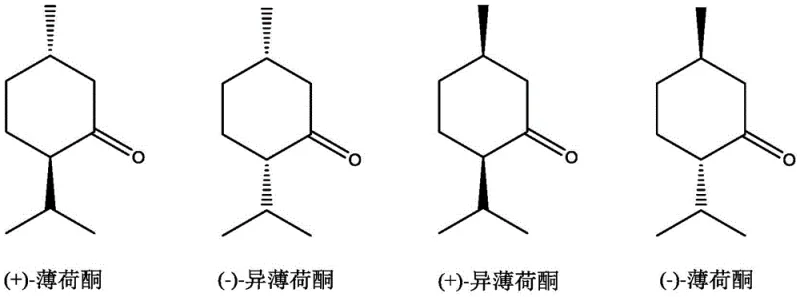
Menthone exists in multiple stereoisomeric forms, each contributing differently to the sensory profile of the final fragrance application. The patent explicitly defines the scope of "menthone" to include any possible stereoisomer, acknowledging the complexity of the molecular landscape. By employing a catalyst with specific spatial constraints, the described method ensures high selectivity towards the desired ketone structures while minimizing the formation of unwanted byproducts. This level of control is critical for manufacturers aiming to produce consistent, high-quality batches for downstream compounding. The ability to precisely manage stereochemistry through catalytic design rather than extensive purification steps represents a significant leap forward in process chemistry, offering a reliable flavor & fragrance intermediate supplier pathway that aligns with modern green chemistry principles.
The Limitations of Conventional Methods vs. The Novel Approach
The Limitations of Conventional Methods
Historically, the industrial synthesis of menthone has been plagued by significant technical and economic hurdles that hinder scalable production. Early methods, such as those described in patent US3124614, relied on the hydrogenation of thymol using palladium catalysts. However, this route is fundamentally flawed due to the difficulty in sourcing high-quality thymol and the requirement for extremely harsh reaction conditions that demand expensive, high-specification equipment. Similarly, gas-phase methods utilizing activated oxidative copper catalysts, as seen in patent CN106061933A, introduce operational complexities; the copper catalyst requires a繁琐 (tedious) pre-activation step, and the activation effect fluctuates wildly, leading to inconsistent reaction yields that are unacceptable for large-scale manufacturing. Furthermore, homogeneous catalytic systems using phosphine ligands often fail to achieve high turnover numbers (TON), resulting in short catalyst lifespans and prohibitive costs due to the expensive nature of the ligands and metals involved.
The Novel Approach
The methodology disclosed in CN107721833B fundamentally disrupts these legacy constraints by introducing a robust heterogeneous Pd-Ru catalyst system. This novel approach eliminates the need for complex pre-activation procedures associated with copper catalysts and avoids the stability issues of homogeneous phosphine complexes. The core innovation lies in the catalyst's ability to function efficiently under mild temperatures ranging from 10°C to 40°C during the hydrogenation phase, drastically reducing energy consumption compared to high-temperature gas-phase alternatives. Moreover, the system achieves a remarkable turnover number (TON) ranging from 60,000 to 90,000, which signifies a massive improvement in catalyst utilization efficiency. This high TON directly translates to cost reduction in fine chemical manufacturing, as less catalyst is required per unit of product, and the heterogeneous nature allows for simple filtration and recovery, enabling the catalyst to be recycled at least 10 times without significant attenuation of catalytic performance.
Mechanistic Insights into Pd-Ru Cluster Catalyzed Isomerization and Oxidation
The exceptional performance of this synthesis route is rooted in the unique mechanistic behavior of the palladium-ruthenium cluster-like compounds. Unlike simple metal salts, these precursors form a special spatial conformation when supported on aluminum hydroxide, creating an active site that interacts specifically with the substrate. The steric constraints of this cluster structure allow for selective complexation with isopulegol, where the palladium and ruthenium atoms specifically bind to the double bond and oxygen atom of the substrate respectively. Under high hydrogen partial pressure, this specific binding orientation facilitates the attack of hydride ions on the double bond, effectively converting the starting material into a menthol intermediate. This precise geometric alignment is crucial for minimizing side reactions and ensuring that the hydrogenation proceeds with high regioselectivity, laying the foundation for the subsequent oxidation step.
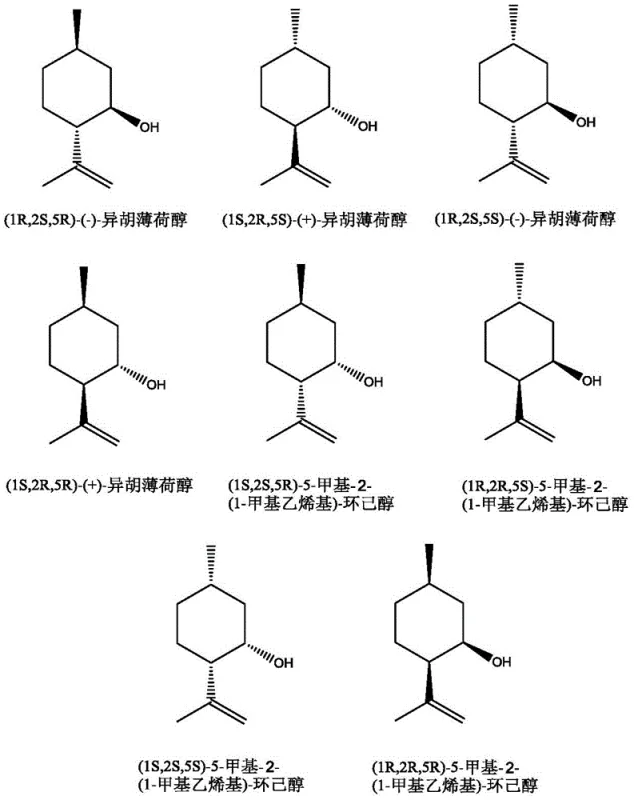
Following the initial hydrogenation, the mechanism shifts to an oxidation phase driven by compressed air under low hydrogen partial pressure conditions. In this stage, the alcoholic hydroxyl hydrogen of the intermediate is readily released to generate the final menthone ketone. A critical feature of this catalytic cycle is the weakened adsorption force between the generated menthone and the metal cluster atoms. This weak interaction promotes the rapid desorption of the product from the catalyst surface, preventing over-oxidation or further unwanted reactions that could degrade product quality. This enzyme-mimetic chemical cycle ensures that the catalyst active sites are quickly regenerated for the next substrate molecule, contributing to the observed high conversion rates of 90% to 99.9%. The ability to accommodate various stereoisomers of isopulegol, as depicted in the structural variations, further demonstrates the robustness of this catalytic system against feedstock variability.
How to Synthesize Menthone Efficiently
The synthesis of menthone via this patented route involves a streamlined two-step sequence that is highly amenable to industrial scale-up. The process begins with the preparation of the specialized Pd-Ru catalyst, followed by the sequential hydrogenation and oxidation of isopulegol in a standard reactor setup. The operational simplicity is a key advantage, as it removes the need for exotic equipment or dangerous reagents often found in alternative synthetic pathways. Detailed standardized synthesis steps, including specific precursor ratios, temperature ramps, and pressure controls, are outlined below to guide process engineers in replicating these high-efficiency results.
- Preparation of the Pd-Ru cluster catalyst supported on aluminum hydroxide via co-precipitation using specific palladium and ruthenium precursors.
- Hydrogenation of isopulegol in a reactor with the catalyst under mild temperature (10-40°C) and pressure (0-1.0 MPaG) to form the intermediate.
- Oxidation of the intermediate using compressed air at elevated temperatures (50-150°C) to finalize the conversion to menthone with high selectivity.
Commercial Advantages for Procurement and Supply Chain Teams
For procurement managers and supply chain directors, the adoption of this Pd-Ru catalytic technology offers profound strategic benefits that extend beyond mere chemical yield. The shift from homogeneous to heterogeneous catalysis fundamentally alters the cost structure of menthone production by eliminating the loss of expensive metal complexes into the waste stream. The ability to recover and reuse the catalyst multiple times creates a circular economy within the production facility, drastically reducing the recurring expenditure on precious metal inputs. Furthermore, the mild reaction conditions reduce the thermal load on production facilities, lowering energy costs and extending the lifespan of reactor vessels and ancillary equipment. These factors combine to create a more resilient and cost-effective supply chain capable of withstanding market volatility in raw material prices.
- Cost Reduction in Manufacturing: The implementation of this heterogeneous catalyst system drives substantial cost savings by maximizing the utility of every gram of palladium and ruthenium used. With a turnover number reaching up to 90,000, the effective cost of the catalyst per kilogram of product is minimized significantly compared to low-TON homogeneous systems. Additionally, the elimination of complex pre-activation steps and the reduction in solvent usage lower the overall operational expenditure, allowing for a more competitive pricing structure in the global marketplace without compromising on margin.
- Enhanced Supply Chain Reliability: Supply continuity is bolstered by the robustness of the catalyst, which maintains activity over at least 10 recycling cycles. This durability reduces the frequency of catalyst replenishment orders, mitigating the risk of supply disruptions associated with the sourcing of specialized organometallic precursors. The process tolerance for various stereoisomers of isopulegol also provides procurement teams with greater flexibility in sourcing raw materials, allowing them to capitalize on market opportunities for different grades of feedstock without requiring process re-validation.
- Scalability and Environmental Compliance: The environmental profile of this process is markedly superior to traditional methods, facilitating easier regulatory compliance and reducing waste disposal costs. By operating without the need for large volumes of organic solvents and avoiding the generation of phenolic waste associated with other ruthenium catalysts, the process simplifies wastewater treatment requirements. The mild operating pressures and temperatures further enhance safety profiles, making the commercial scale-up of complex terpenes safer and more straightforward for plant operators managing large-volume production campaigns.
Frequently Asked Questions (FAQ)
The following questions address common technical and commercial inquiries regarding the implementation of this advanced catalytic technology. These insights are derived directly from the experimental data and comparative analysis provided in the patent documentation, offering clarity on performance metrics and operational feasibility. Understanding these details is essential for technical teams evaluating the integration of this process into existing manufacturing lines or new facility designs.
Q: What are the primary advantages of the Pd-Ru heterogeneous catalyst over traditional copper or homogeneous systems?
A: The Pd-Ru heterogeneous catalyst offers significantly higher turnover numbers (TON up to 90,000) compared to traditional systems, eliminates the need for complex pre-activation required by copper catalysts, and allows for easy recovery and reuse for at least 10 cycles without performance loss.
Q: Does this process require harsh reaction conditions or expensive solvents?
A: No, the process operates under remarkably mild conditions, with hydrogenation occurring between 10-40°C and oxidation between 50-150°C. Furthermore, the system is designed to be solvent-free or use minimal solvent, reducing environmental impact and downstream purification costs.
Q: How does the catalyst design influence the selectivity towards menthone?
A: The unique cluster-like spatial configuration of the Pd-Ru compound allows for specific complexation with the substrate. This steric constraint facilitates hydride attack on the double bond while weakening the adsorption of the final menthone product, preventing over-reaction and ensuring high chemical selectivity.
Partnering with NINGBO INNO PHARMCHEM: Your Reliable Menthone Supplier
At NINGBO INNO PHARMCHEM, we recognize the transformative potential of the Pd-Ru heterogeneous catalytic route for producing high-value flavor intermediates. As a dedicated CDMO partner, we possess extensive experience scaling diverse pathways from 100 kgs to 100 MT/annual commercial production, ensuring that the theoretical benefits of this patent are fully realized in a commercial setting. Our facilities are equipped with stringent purity specifications and rigorous QC labs capable of verifying the high selectivity and conversion rates promised by this technology, guaranteeing that every batch meets the exacting standards required by the global flavor and fragrance industry.
We invite you to collaborate with our technical procurement team to explore how this innovative synthesis method can optimize your supply chain. By requesting a Customized Cost-Saving Analysis, you can gain a detailed understanding of the economic impact of switching to this catalytic system. We encourage potential partners to contact us directly to obtain specific COA data and route feasibility assessments tailored to your specific volume requirements, ensuring a seamless transition to a more efficient and sustainable production model.